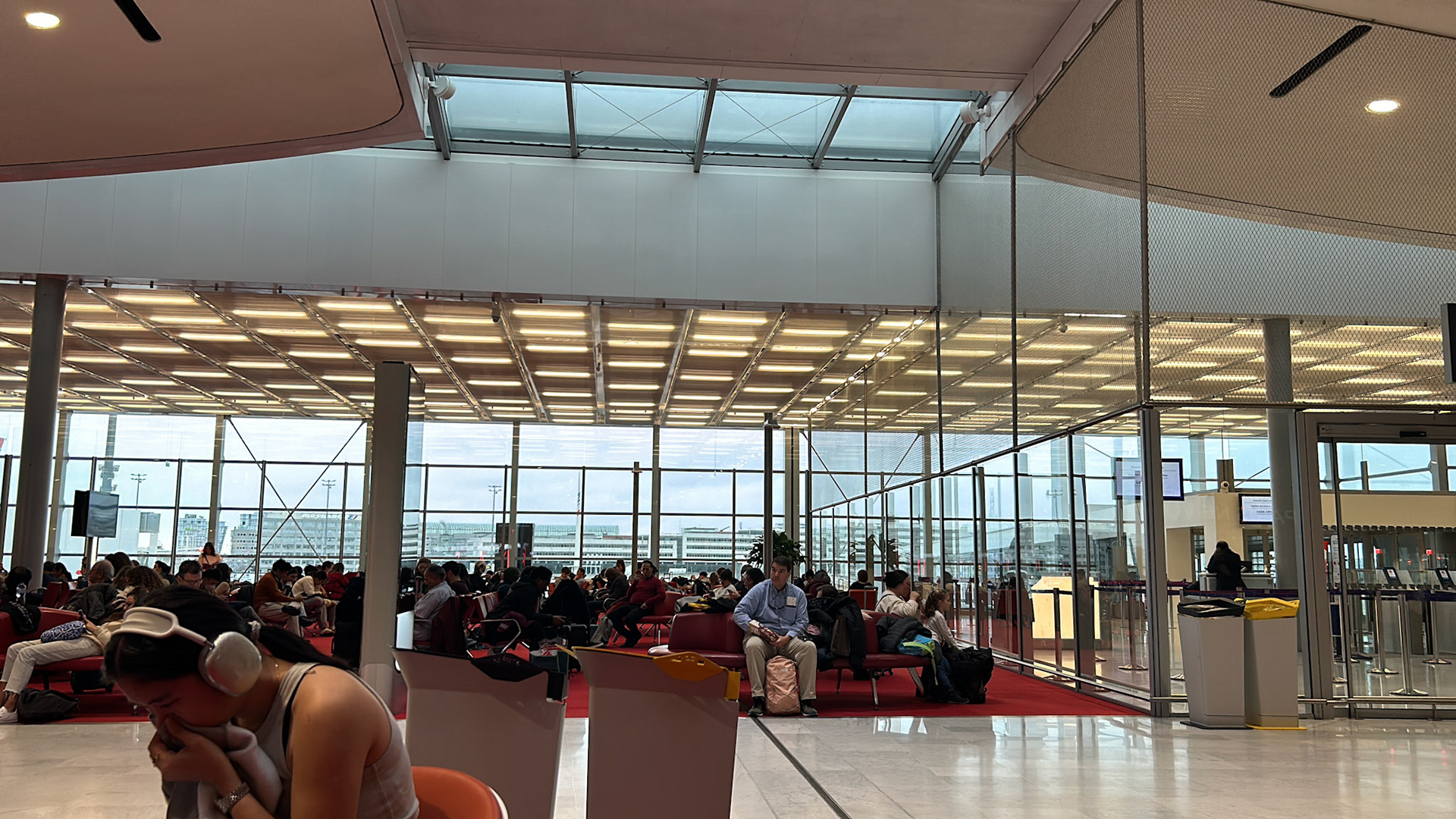
I had leave built up by December, so in the second week of December, I decided to knock something off my bucket list: take two days to visit three countries in Europe during Christmastime and take a train trip through Europe.
However, this was my first solo trip and my first trip to Europe. In some ways, it went very well. In many ways, it did not go well at all.
In hindsight, I should have researched more about HOW to travel in Europe. This trip was a huge learning curve about the best way to travel through Europe, the importance of "faking it until you make it," and learning that I was far more resilient and resourceful than I previously knew.
Let's begin!
Timeline:
Thursday, Dec 21: Morocco to Frankfurt, Germany
Friday, Dec 22: Germany to Ljubljana, Slovenia
Saturday, Dec 23: Ljubljana, Slovenia
Sunday, Dec 24: Slovenia to Paris, France
Sunday, Dec 25: Paris, France to Morocco
I have had countless people tell me that the Christmas markets in Germany are some of the best in the world, so I wanted to try to visit one on this trip. I'd also been invited to spend some time with a TDYer who was in Ljubljana, Slovenia. So I decided to do both of those, and then take a train from Ljubljana to Paris to spend Christmas Eve in France.
I booked myself on a multi-city ticket out of Casablanca CMN Airport to Frankfurt, then from Frankfurt to Ljubljana, Slovenia, and then from Paris, France, back to Casablanca. Then I bought a 2-day Eurail pass to get from Ljubljana to Paris.
Google map to locations: https://maps.app.goo.gl/8qpDUjGvN523VN5F9
Best Practices Learned:
- Luggage needs to be light, small, and portable
- Research your locations in advance and be prepared for transportation issues; having passes in advance helps.
- Have a backup plan in place if your first method of transportation does not work and you need to take an alternate method of transportation.
- Ensure that you have a variety of payment methods or carry cash to exchange into local currency
- Ensure that you will have communication/connectability in the new countries; get a local e-SIM if needed
- Know some basic words and pleasantries in the languages of the countries you are visiting; ensure that you have read/understood local customs
- Watch YouTube videos to see how locals are dressed so that you blend in
- Invest in a small, multi-plug 110V to 220V transformer with a plug that fits the country you are in
Frankfurt Germany
Thursday, December 21
I reached out to an Orientation colleague who was stationed in Frankfurt, Germany, and was excited to meet up with her and visit a Christmas market there.
My flight was on Royal Air Maroc from 12:55 to 4:35 PM. I'd packed a full-size suitcase with enough cold-weather clothing for four days and hand-carried my winter coat. One half of the suitcase was empty for souvenirs.
The trip began without any hiccups - all was moving along smoothly.
When I landed at Frankfurt, I decided to take an Uber to the Marriott Moxy Hotel instead of walking, as it was cold and the sky was threatening rain. I was using my accumulated points to spend a free night and wanted to be close to the airport for my 8:00 AM flight the next morning.
However, that first night would teach me many lessons.
Pro Tip #1: Have Backup Methods of Communication
~6:00 PM
I had been texting my parents in the Uber to let them know I had landed safely and had left it in my lap - meaning it fell out of my lap when I exited the vehicle. I checked into the hotel as usual and went to pull out my personal phone to give the check-in desk the confirmation number (only to realize I had dropped my phone). I was able to check in with my personal email and show my passport, so that worked out in my favor.
Pro Tip #2: Don't have 2-Factor Authentication on only one device
Cue a minor bout of panic when I used my laptop to find my phone in Find My Friends, and could not log into my Apple ID to set it up on my laptop.
I had to contact my sister to see where my phone was, which was now moving all over Frankfurt in the Uber. It took almost an hour to get into my Apple account, which allowed me to put my phone in "Lost" mode - which meant that no one could access it and it would show a message on the lock screen that it was lost, with my contact information for how to give it back.
I also texted my personal phone from my work phone with a message to please send the phone back to the Moxy Hotel by the Frankfurt Airport.
I tried to log in to my Uber account on my laptop to send the driver a message, but 2-Factor Authentication was set to send codes to my personal phone (which I didn't have). This is when I realized that my work phone didn't have international roaming either, so I tried to call the Uber help desk to get into my account.
Workaround? Using my Microsoft Teams phone number on WiFi to call the Uber help desk to get into my account, and to mark my phone as "missing" to the driver. The help desk assured me they would call the driver and ask them to search for the phone.
I sent a message to my colleague apologizing that I was going to be delayed - I would still try to meet up with her, but I had no communication device with me and wanted to be at the hotel in case it was brought back.
~7:00 PM
I asked the hotel to call the driver - explaining the situation to them. They tried to call, but the driver did not pick up.
I managed to send a text to my parents on my work phone (still on spotty hotel wifi) and let them know the situation.
Why was losing my phone a problem? Well, I had all of my flight information for the next few days on that phone. I had photos of my passport and all my apps on my phone. It was hard for someone to break into because I had a password and Face ID enabled, as well as shared location with all of my family members.
Pro Tip #3: Have backup copies of flights, either as screenshots in a central drive accessible via the cloud or printed copies
With a wait ahead of me for my phone to show up, I ordered some dinner and sat in the lobby. My sister, who spoke a few phrases in German and who was 9 hours behind us, tried to call my phone a few times and managed to get a hold of the driver and tried to tell him to bring my phone back to the hotel (a minor miracle as he did not speak English).
However, I realized yet another learning curve when I went to pay. The hotel did not take cash, so I pulled out my debit card.
Which did not work. Nor did my first credit card. Or my second credit card. Why? Because it was flagged as a suspicious charge, since I wasn't usually in Germany and my cards were flagged for travel to Morocco, not Germany. I had brought $500 in USD to exchange for Euros, but had not done so yet.
Pro Tip #4: Tell your banks when you travel
The hotel was kind enough to charge the meal to my room, which was associated with my card.
~9:15 PM
It was at this point that the cloudy Frankfurt skies opened up and unleashed a hellish downpour of freezing sleet at a 45-degree angle, dashing all plans to meet up with my coworker. The weather matched my mood - I had to cancel plans to go to the Christmas market with my colleague, my cards weren't working, I'd lost my personal phone, and my work phone didn't work unless I was on Wi-Fi.
Altogether, a terrible situation to be in.
I then went online to my banks to let them know that I was going to be traveling - except because I was a public wifi network I could not access my accounts without - you guessed it - 2 Factor Authentication on the phone I didn't have.
I was almost in tears at this point.
But then I heard a voice call my name, and one of the hotel front desk personnel walked up to me and asked me if the phone in his hand was mine. I took a look, and the lock screen was a familiar one, with 35 notifications, all of which were either password codes, 2-Factor Authentication text messages, or my own text messages.
~10:30 PM
My phone was back!
The Uber driver had made his way into the hotel and dropped it off - somehow missing me completely, where I was staged by the entrance in case he came in.
It was at this point that I unlocked everything and added my most-used email addresses to my 2-Factor Authentication apps and accounts. I also added my debit and credit cards to the Apple Wallet, allowing me to use them on my Apple Watch. I also logged into my banking apps and let the banks know I would be in Europe, which hopefully meant I would be able to pay. I also planned to exchange my USD for Euros at the first opportunity I had at the airport.
Sleeping was in order now that everything had been resolved, with an alarm set for 5:30 AM to make it to the airport by 6:00 AM for check-in.
Friday, December 22
~6:00 AM
Lufthansa has my heart as my favorite airline so far in terms of check-in and ease of access.
Germans are well-known for their efficiency, and Frankfurt Airport was an excellent example. Check-in was effortless and mostly automated, and the Lufthansa app even gave me walking directions through the airport to my gate.
~8:40 AM
The flight left at 8:40 AM and landed in Ljubljana at 9:50 AM. The view of the mountains were stunning as we broke cloud cover.
Ljubljana, Slovenia
~10:30 AM
A useful feature of the Ljubljana airport is their bus transfer - if you are staying in a major hotel, they have set routes that can drop you off at your hotel for a minor cost. I opted in and the cashier offered to take my picture while I waited for the next bus to arrive. My route was only 30 minutes and gave me a nice view of the countryside as we drove into the city.
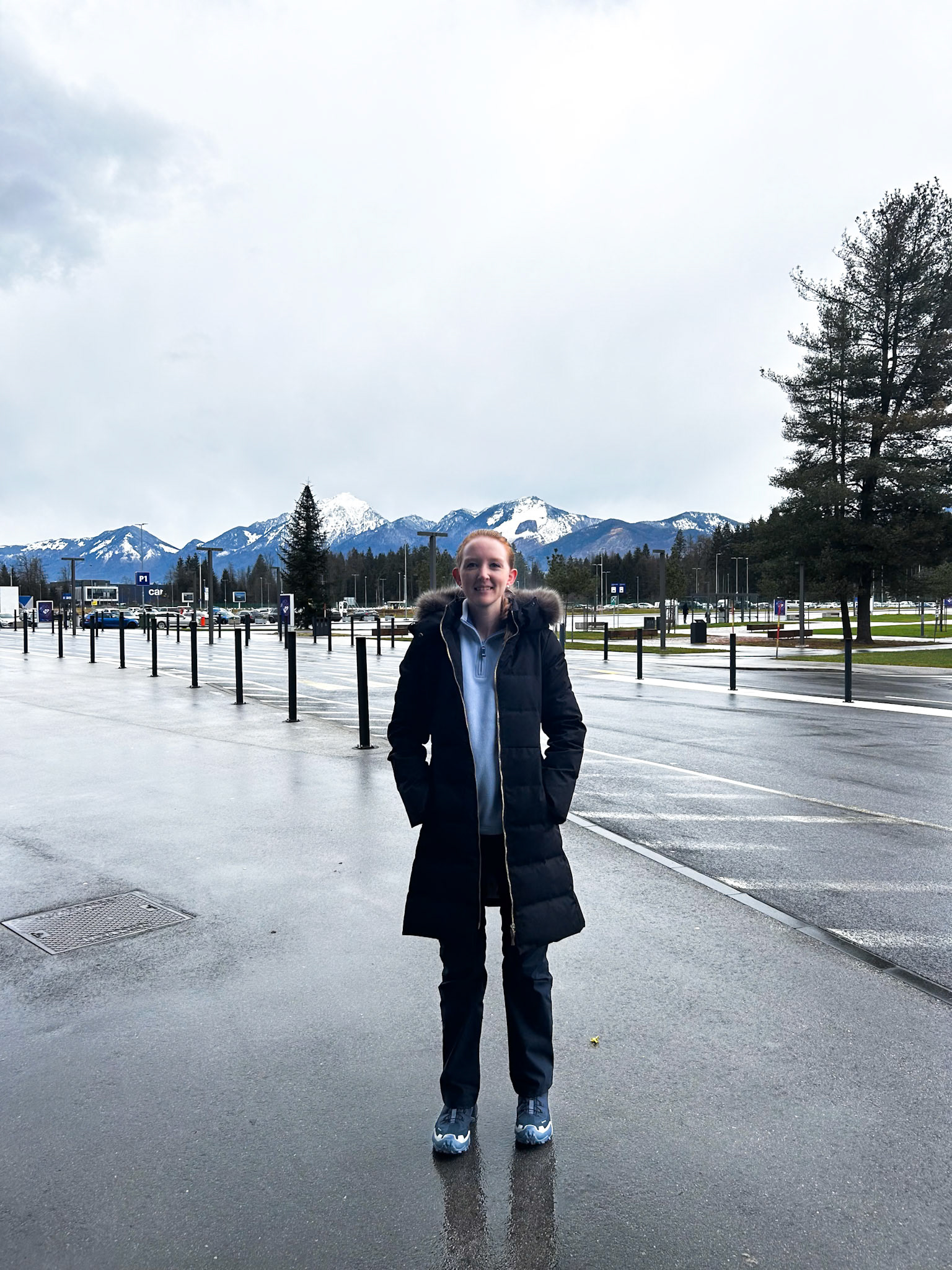
Ljubljana Bus Waiting Area
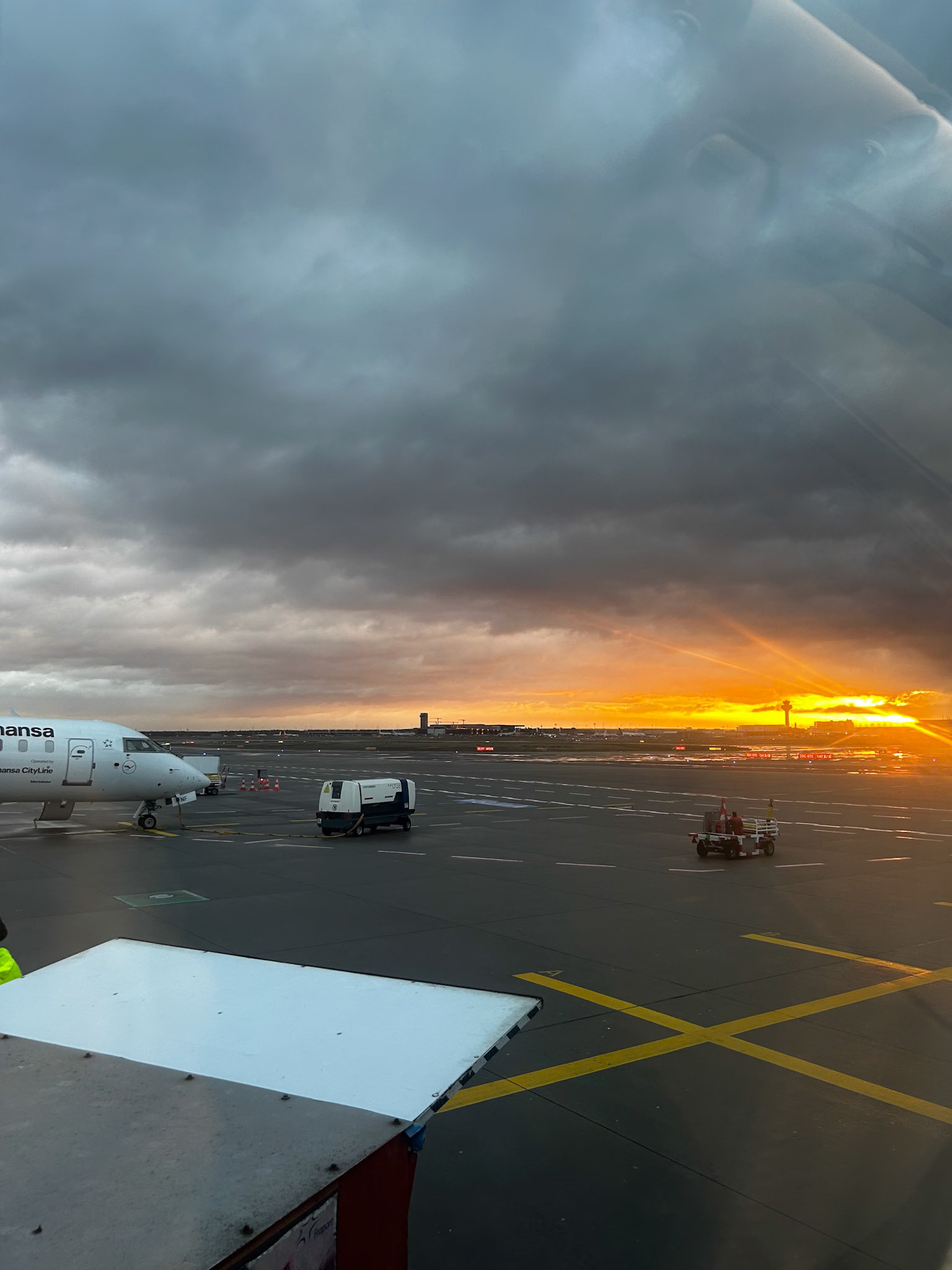
Lufthansa at Frankfurt Airport
I stayed at the Intercontinental and was amazed at how nice and big the room was for only $110. Definitely recommend! The hotel desk even changed my room to give me a view of the city, which was lovely. I picked that hotel because of it's relative closeness to the city center, and mostly for it's 7-minute walk to the train station, which I would be using to leave Slovenia to head to Paris.
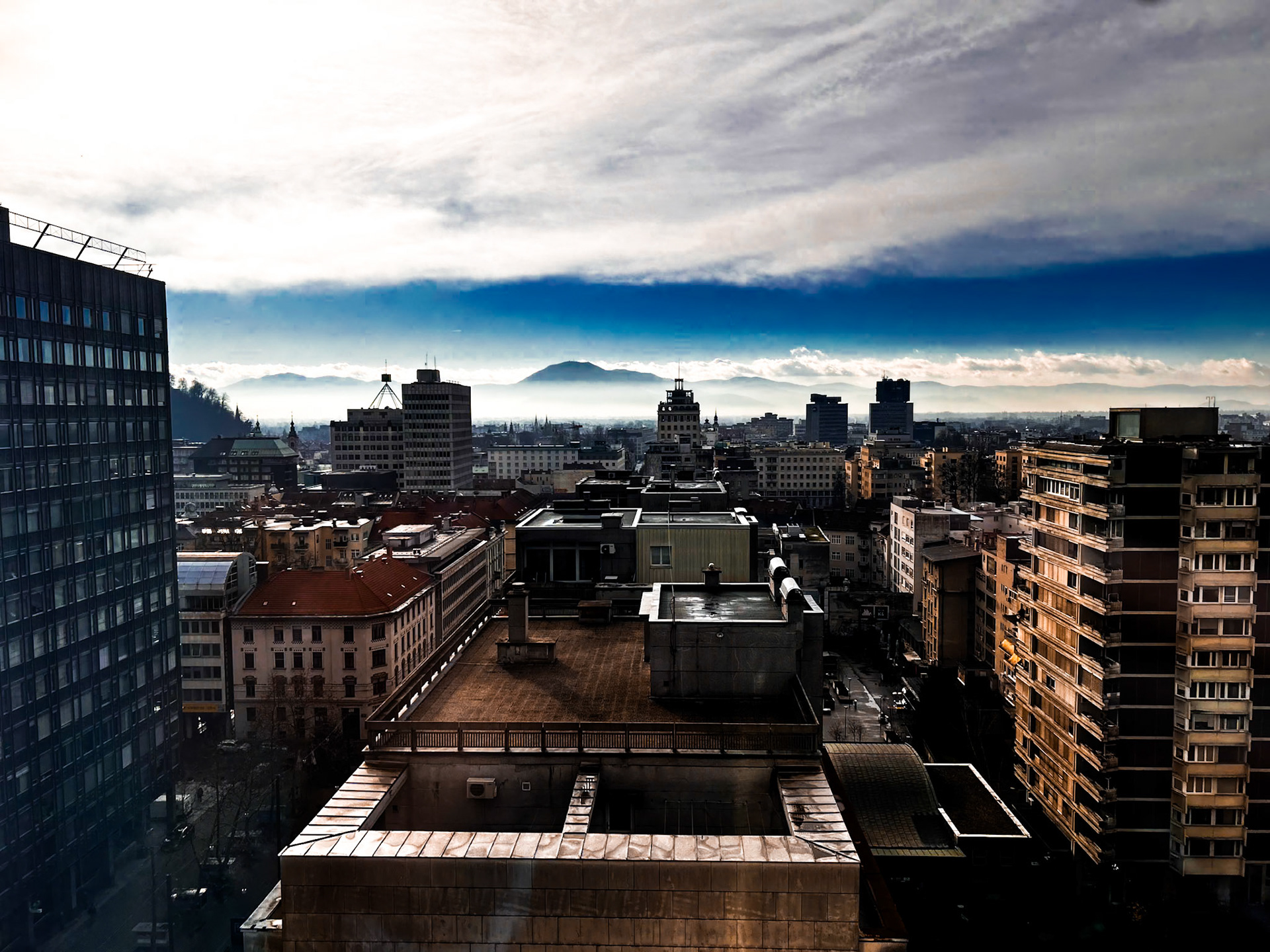
My view from my hotel room
~11:00 AM
By the time I got to the hotel, it was around 11:00 AM. I decided to hit the sights and set out on foot from the hotel, making my way into the city center since it was only about a 25-minute walk. I was scheduled to have dinner with a colleague, so I had around seven hours to spend exploring Ljubljana.
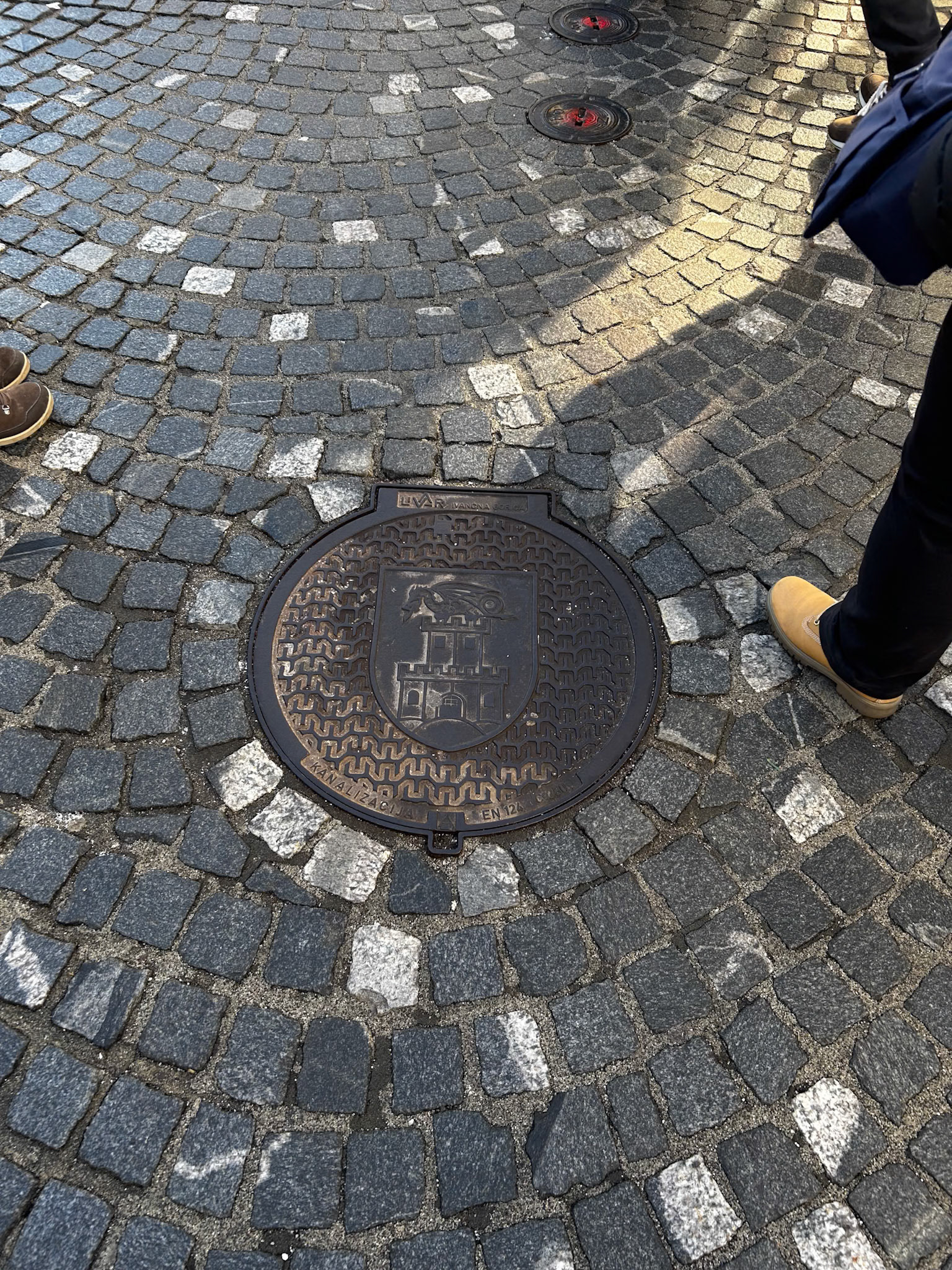
There are dragon motifs everywhere - but it is only fitting for the "City of Dragons."
Ljubljana is called the "City of Dragons" because the dragon is its official symbol, rooted in the legend of Jason and the Argonauts. According to the myth, Jason's crew encountered and defeated a dragon in the area while on their journey, and the creature became the city's protector. This legend is prominently represented throughout the city, especially on its coat of arms and the iconic Dragon Bridge.
Mythology: The legend of Jason defeating a dragon has been linked to Ljubljana since at least the 17th century. The dragon is said to have retreated to the site of the current Ljubljana Castle after its defeat and is considered the city's protector.
Symbolism: The dragon represents power, courage, and resilience for the city.
Visual presence: Dragons are a pervasive symbol, appearing on the city's official coat of arms and flag. They are also featured on the city's most famous landmark, the Dragon Bridge, which is adorned with four dragon statues.
Pro Tip #5: Plan out Google Map stops while in transit and pre-set them for personal walking tours
~11:45 AM
I walked through some of the main avenues and shopping centers, then took the funicular up to Ljubljana Castle to have lunch. If you plan to visit and take a tour of the Castle, book online as it includes the cost of the funicular railway up to the castle. If you only want to see the gift shop, a round-trip funicular ticket costs only 3.30 euros.
~12:30 PM
If you have time, stop by the Michelin Bib Gourmand restaurant at the castle - Restaurant Gostilna Na Gradu, open noon to 5:00 PM Monday-Friday. The cod dish is one of the best that I've tried, and the food was fresh and well-seasoned. I recommend making a reservation in advance, as I did.
For reservation, please call +386 0820 51931 or write them an email at ljubljanskigrad@jezersek.si
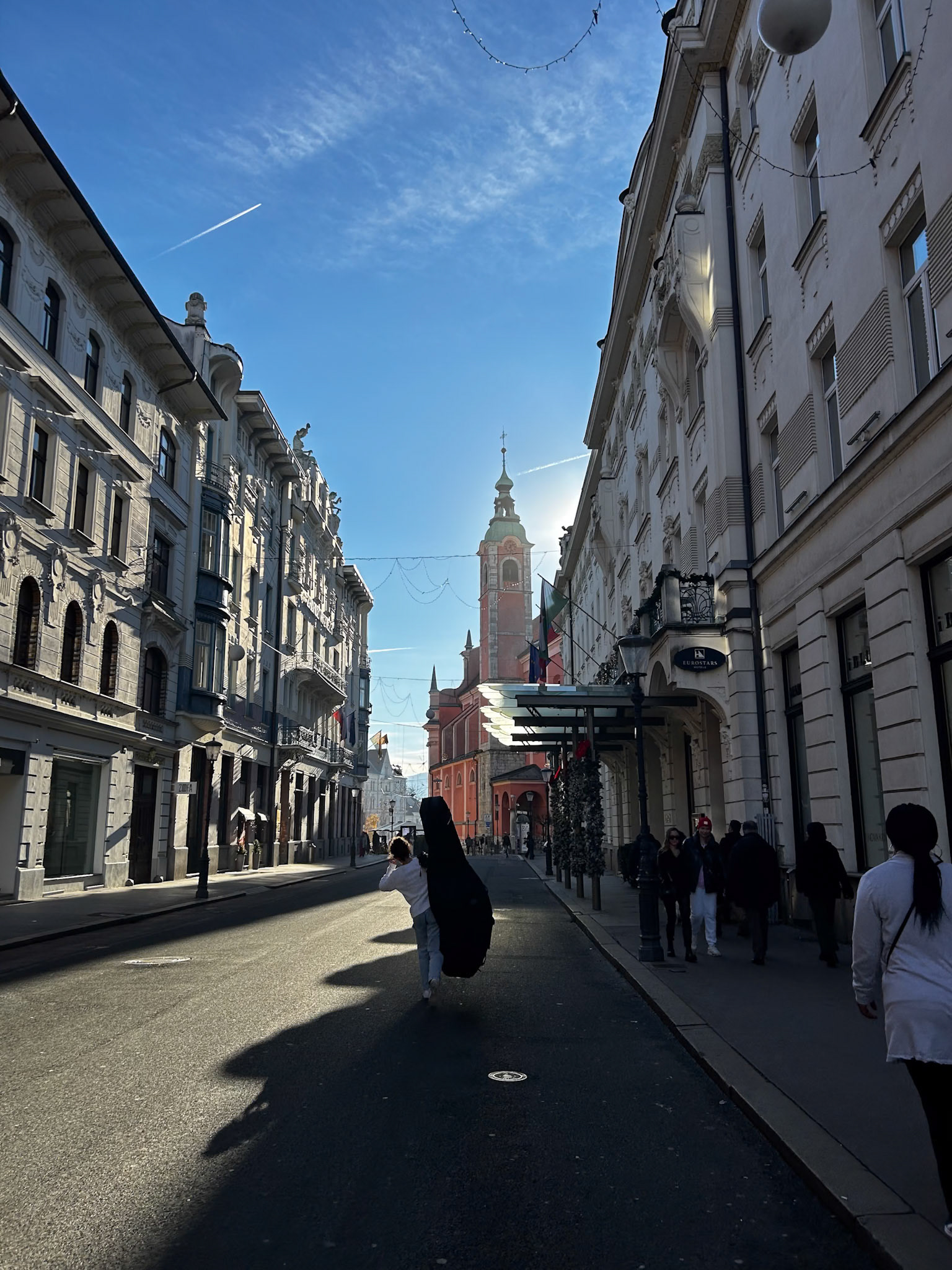
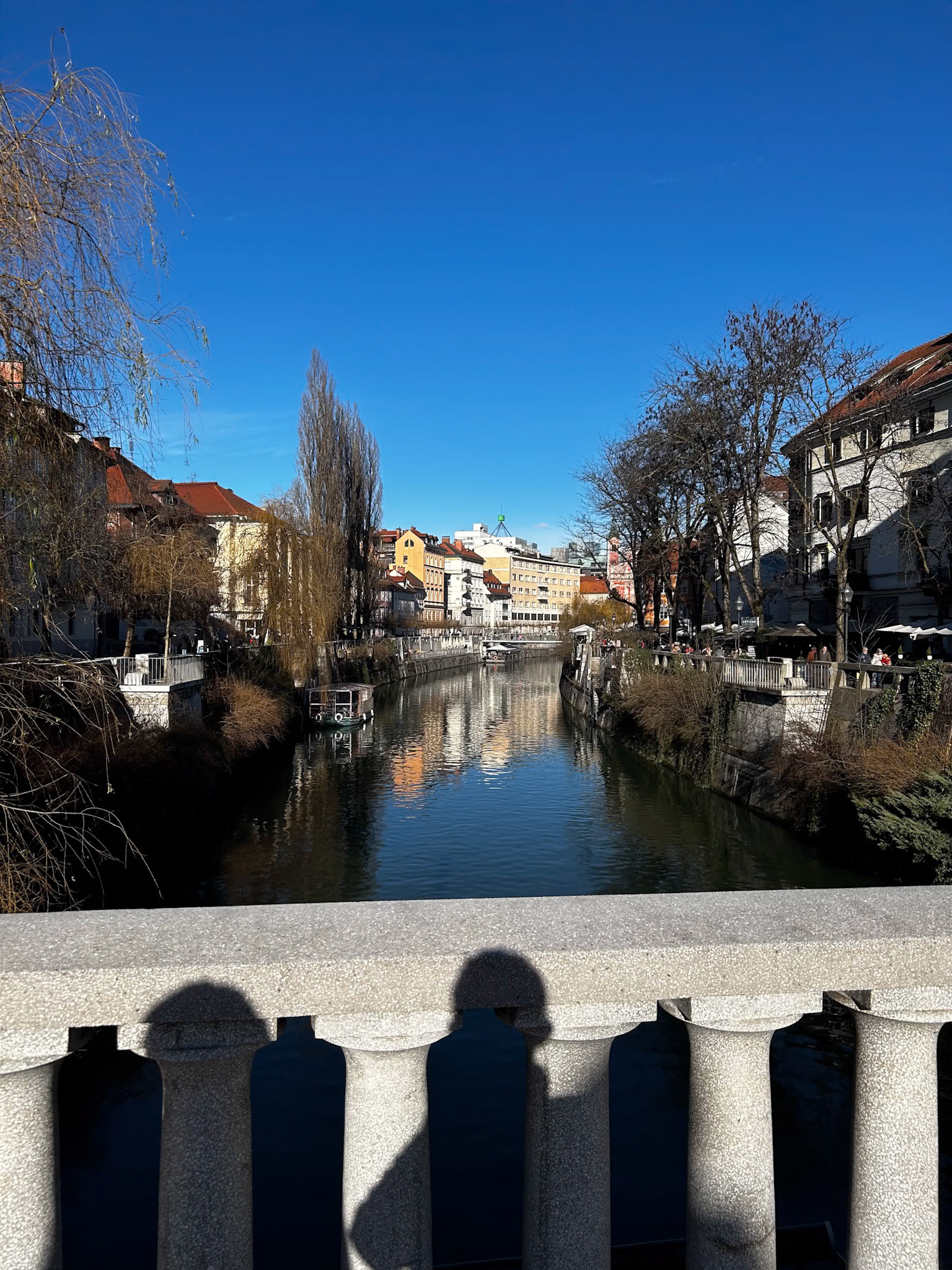
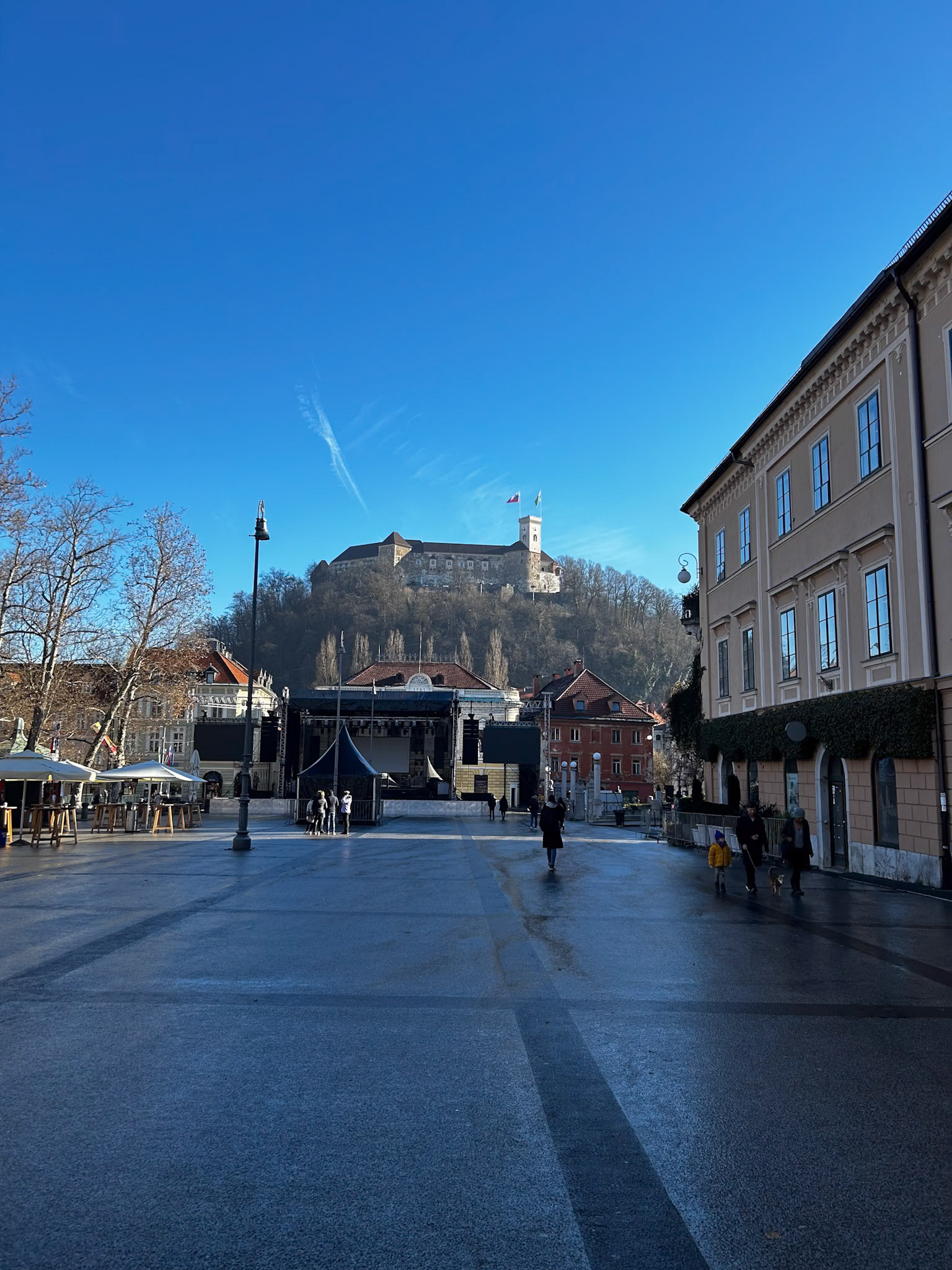
Ljubljana Castle
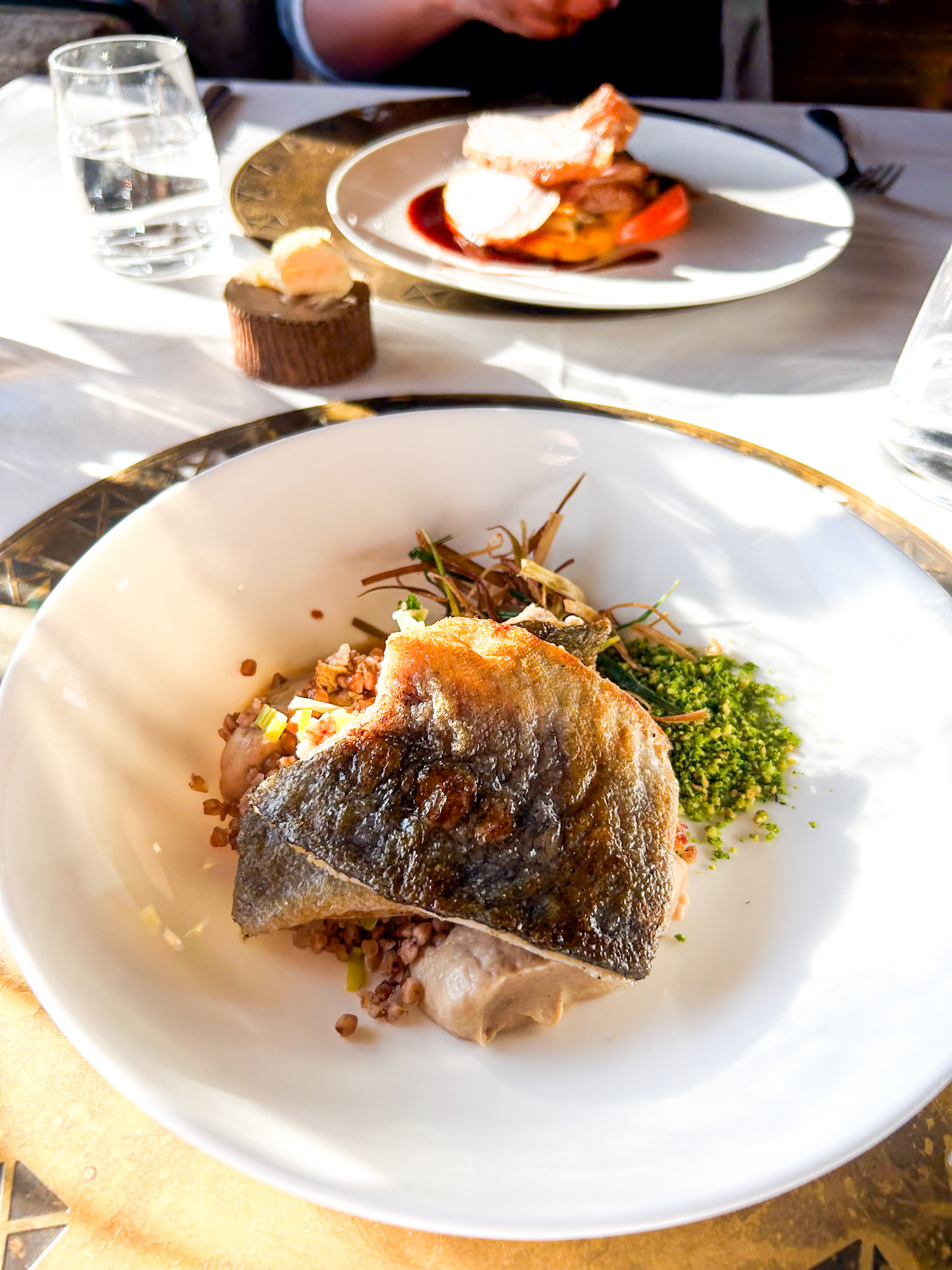
Gostilna Na Gradu at the Castle
~13:30 PM
With time to kill, I decided to do a tour of the castle since I was there. If you purchase online via the website, you can get 10% off the ticket price and receive a return funicular railway ticket included. If you include the funicular, an adult ticket costs 19 euros, but there are often sales. Without the funicular, an adult ticket costs 15 euros. It is an e-ticket sent to your email, and you scan the barcode for entry.
The tour is expansive and lets you into most areas of the castle, including the Observation tower (be mindful that many steps are narrow), a 4D film about the castle, a video mapping of the Casemate, the Museum of Puppetry, a permanent exhibit on Slovenian history, and several temporary exhibition halls.
The Castle offers stunning views of the Capital city below. Don't forget to look out for the castle mascot!
There was even a UNESCO exhibit showing off the puppet and dolls of Slovenia - a dying art.
I covered the museums rather quickly, as there was more to Ljubljana that I wanted to see.
~14:30 PM
I exited via the Funicular back down to the city center. If the weather is nice, there is a walking trail that will lead down to the city.
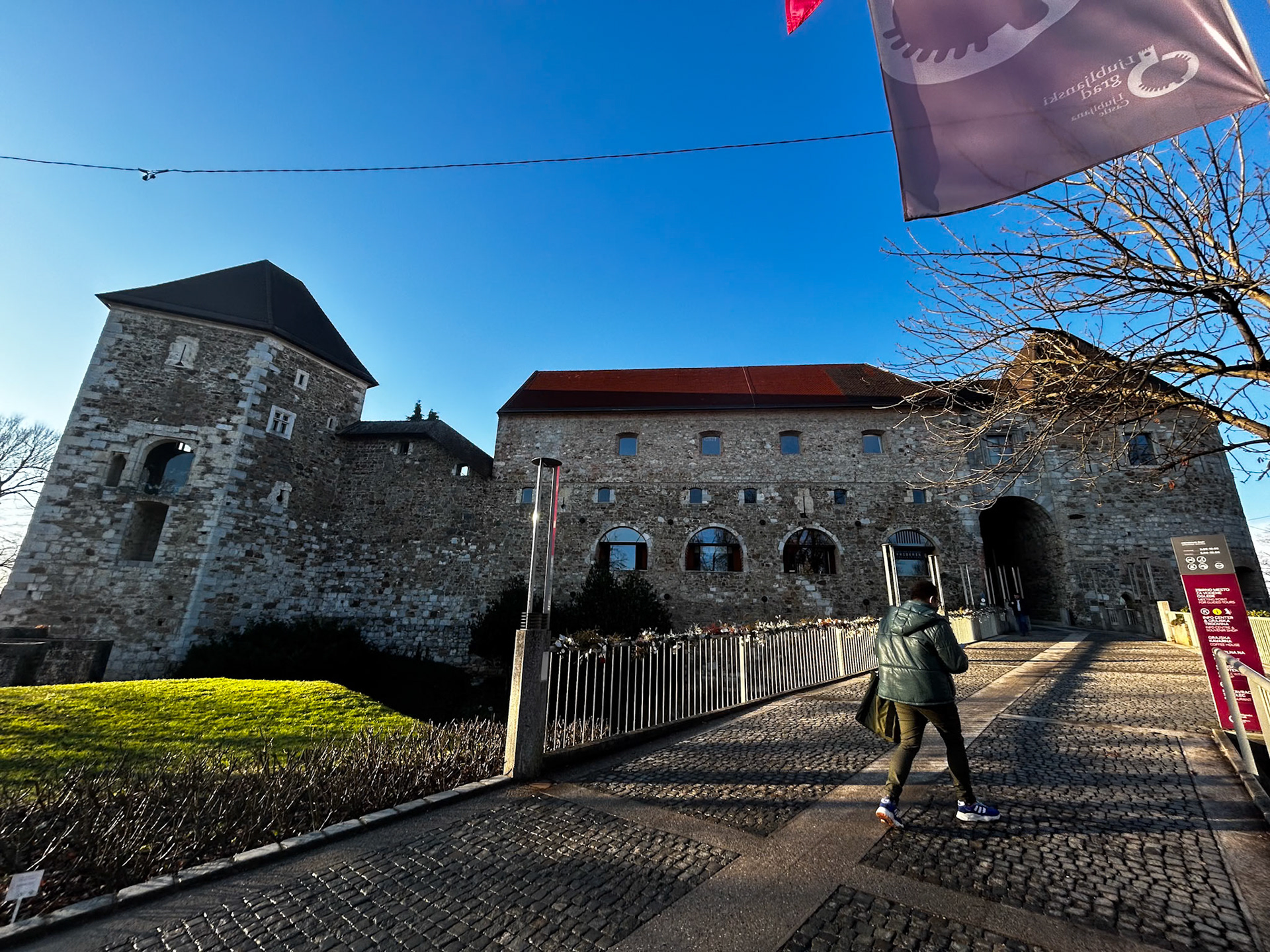
Entrance to Ljubljana Castle
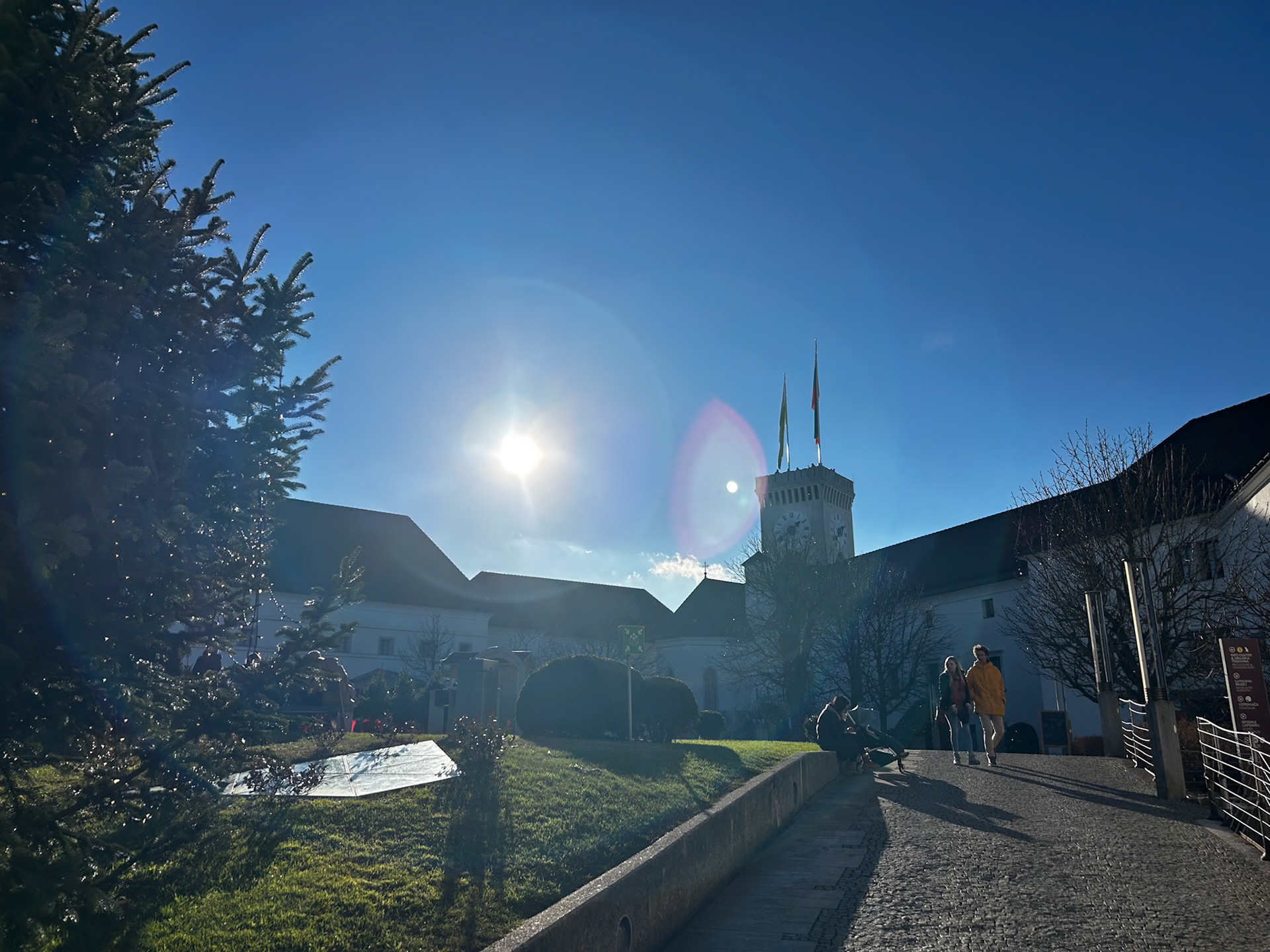
Main Square of Ljubljana Castle
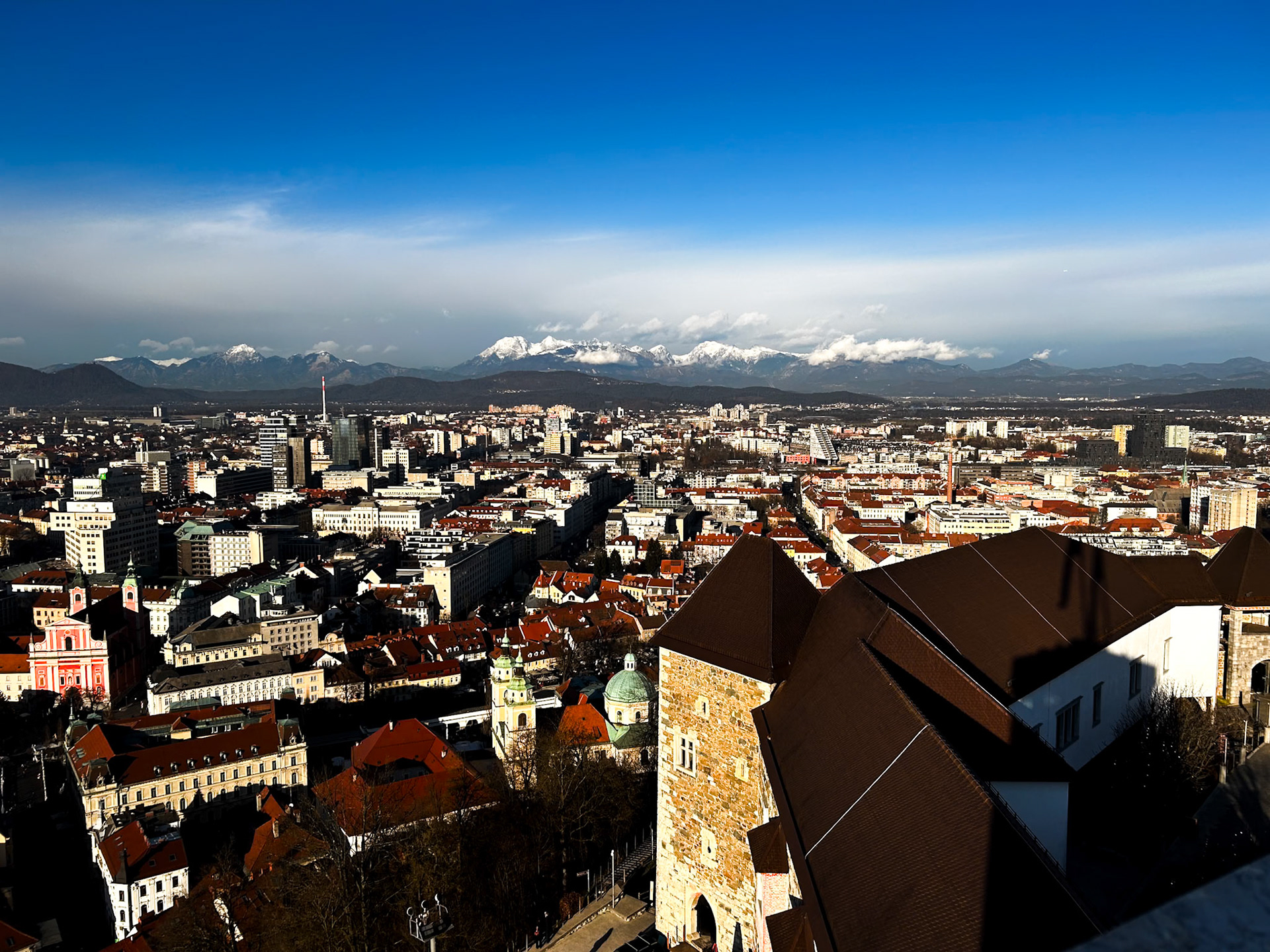
View from the Castle tower
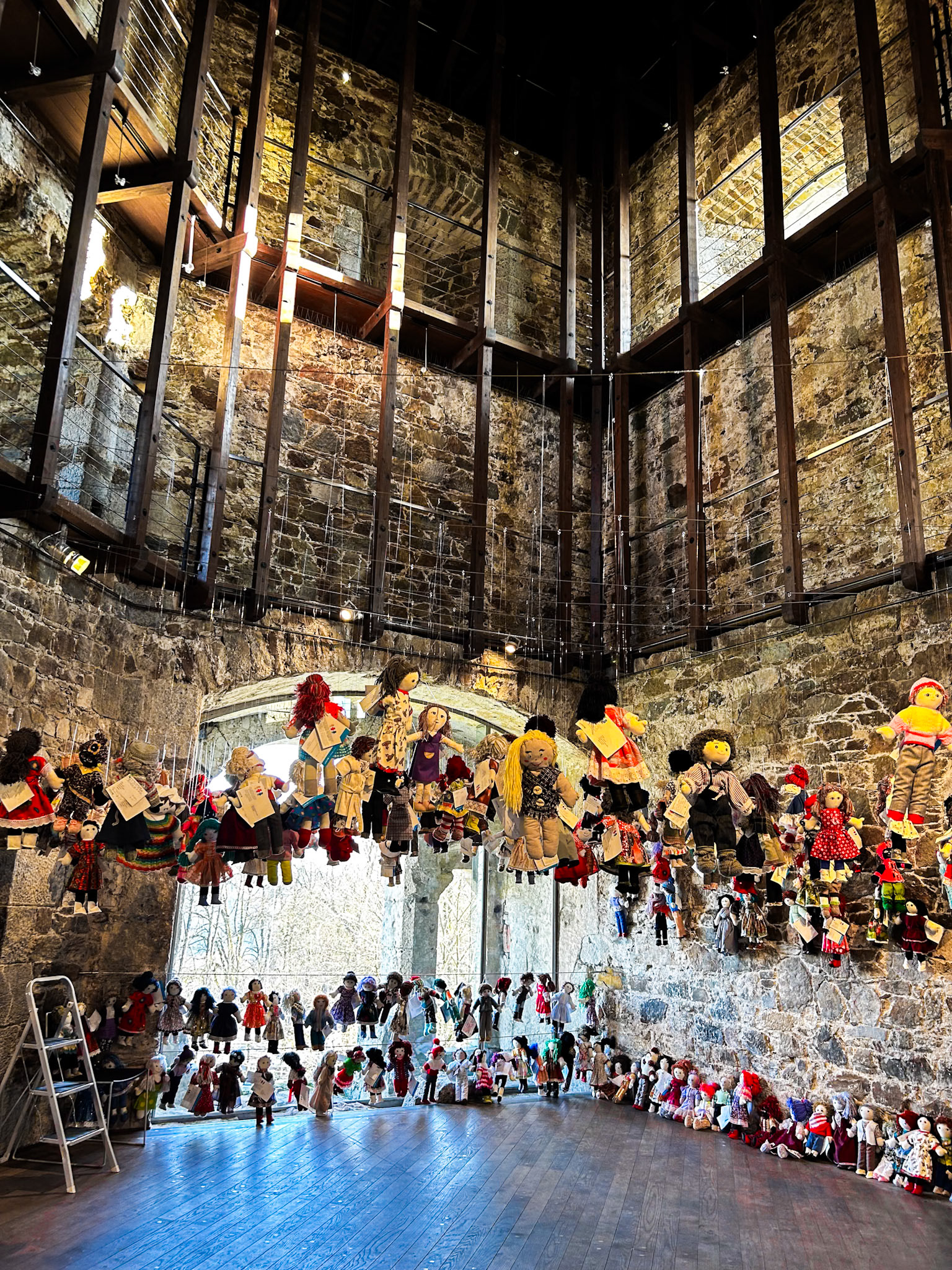
Museum of Puppetry
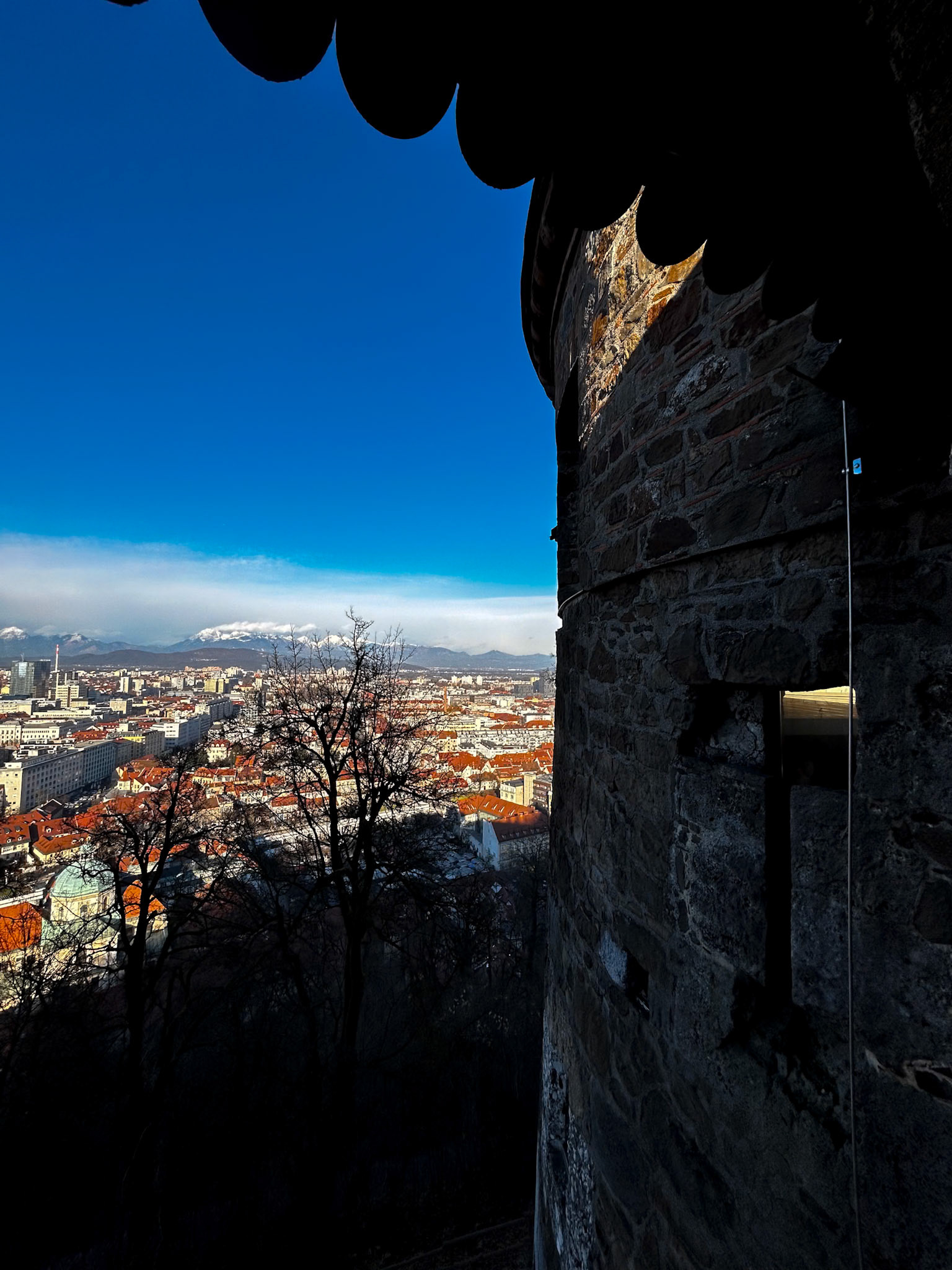
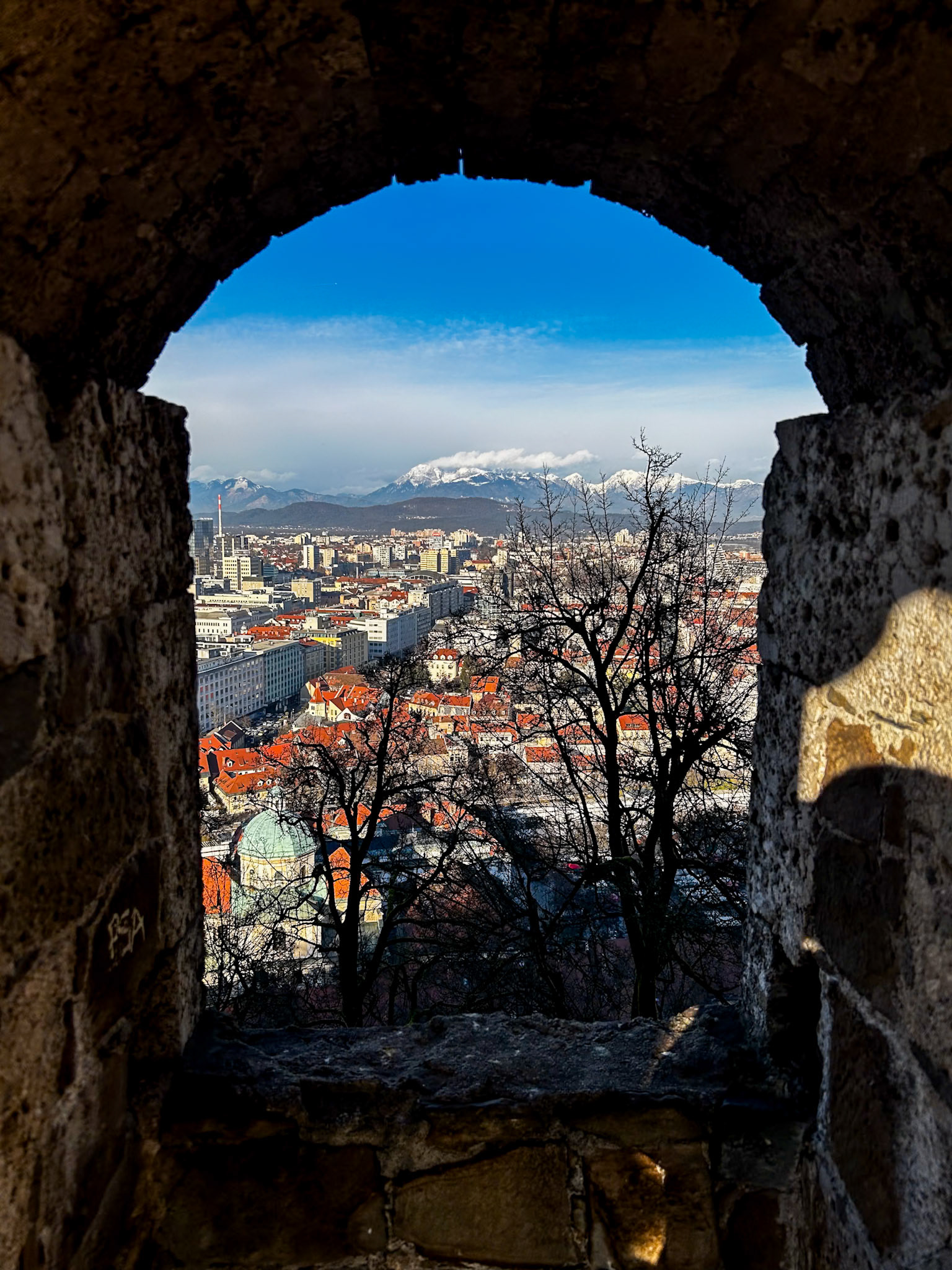
View of Ljubljana
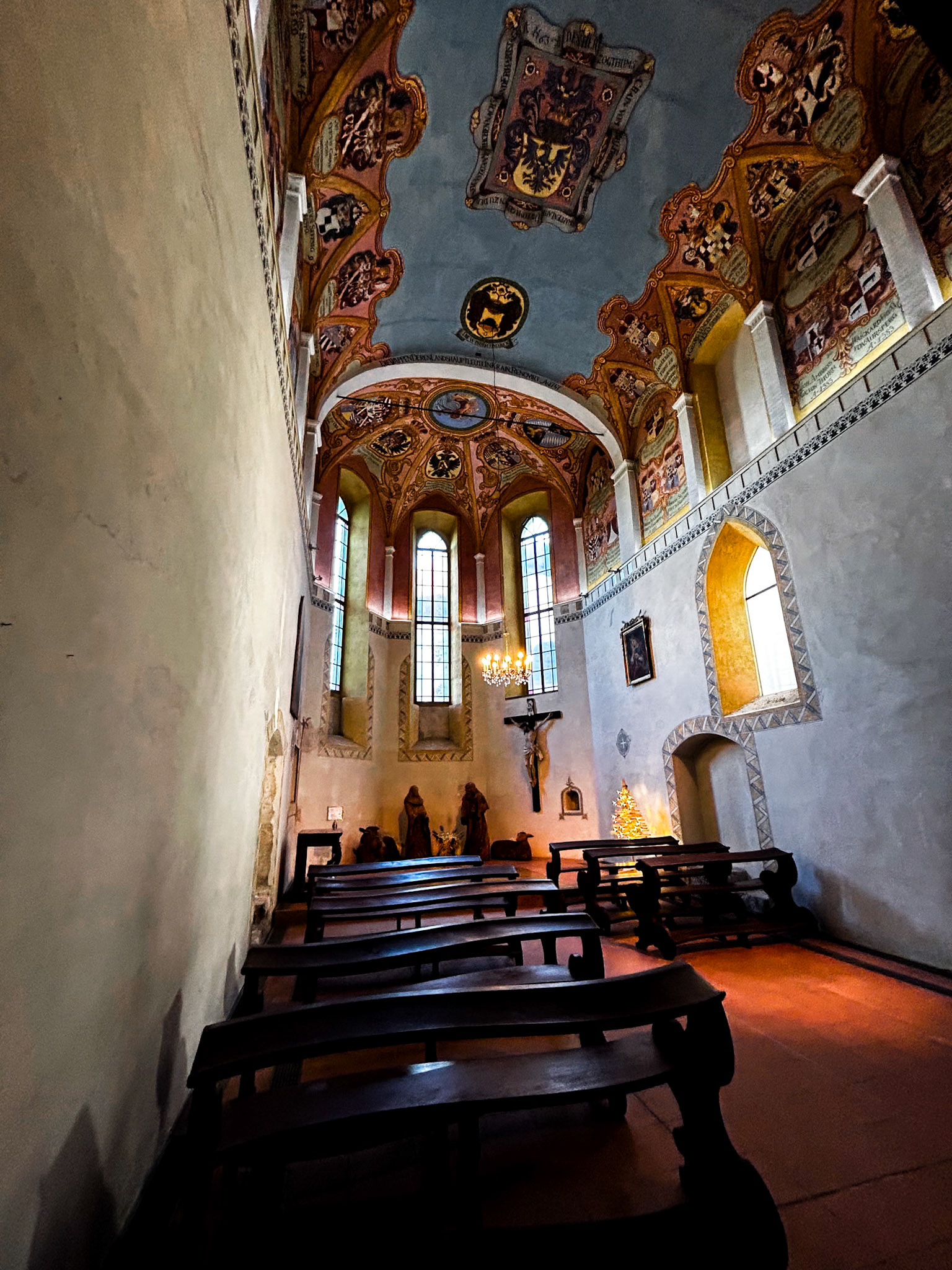
Small church inside of the Castle
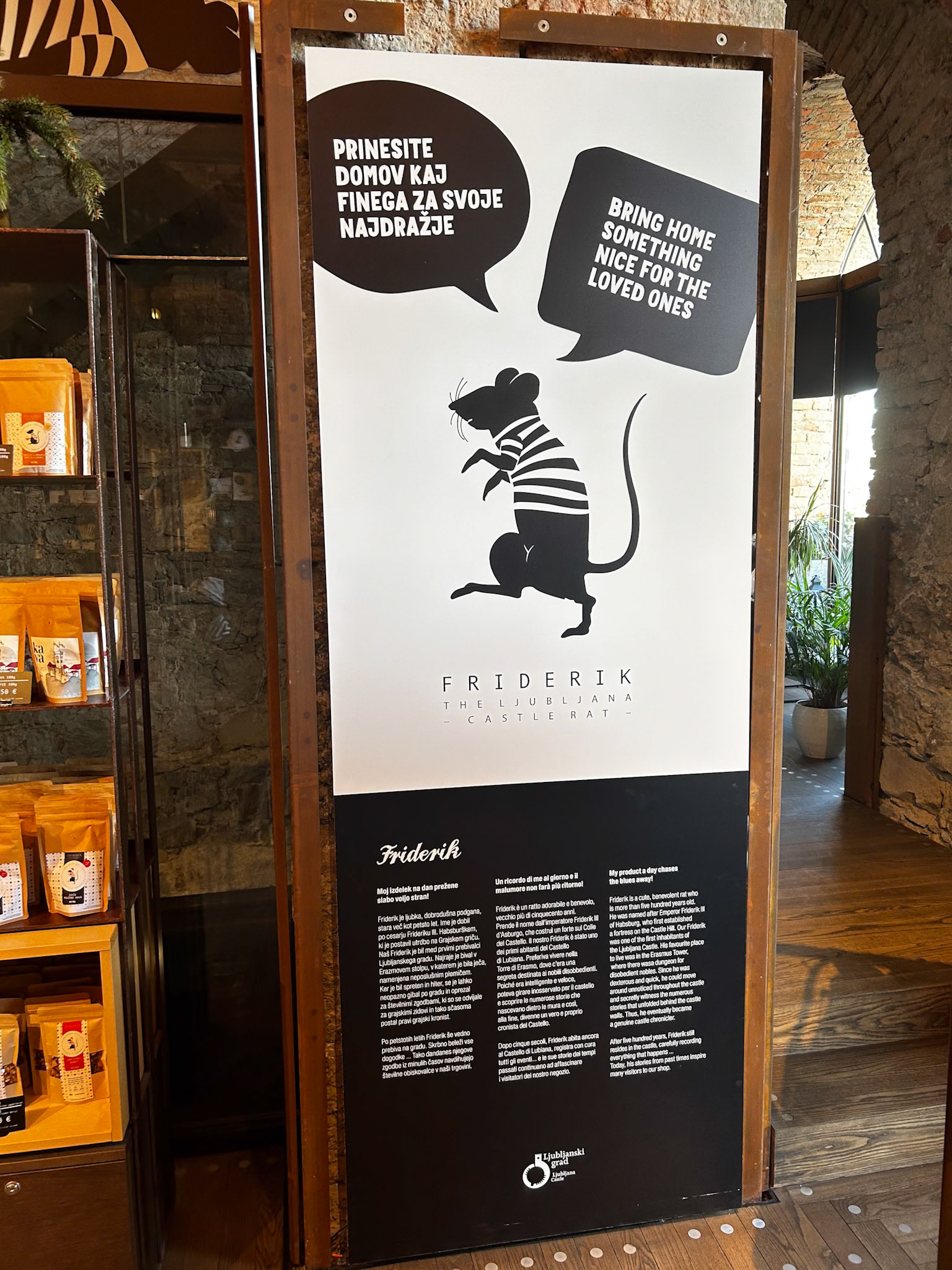
The infamous Castle Mascot
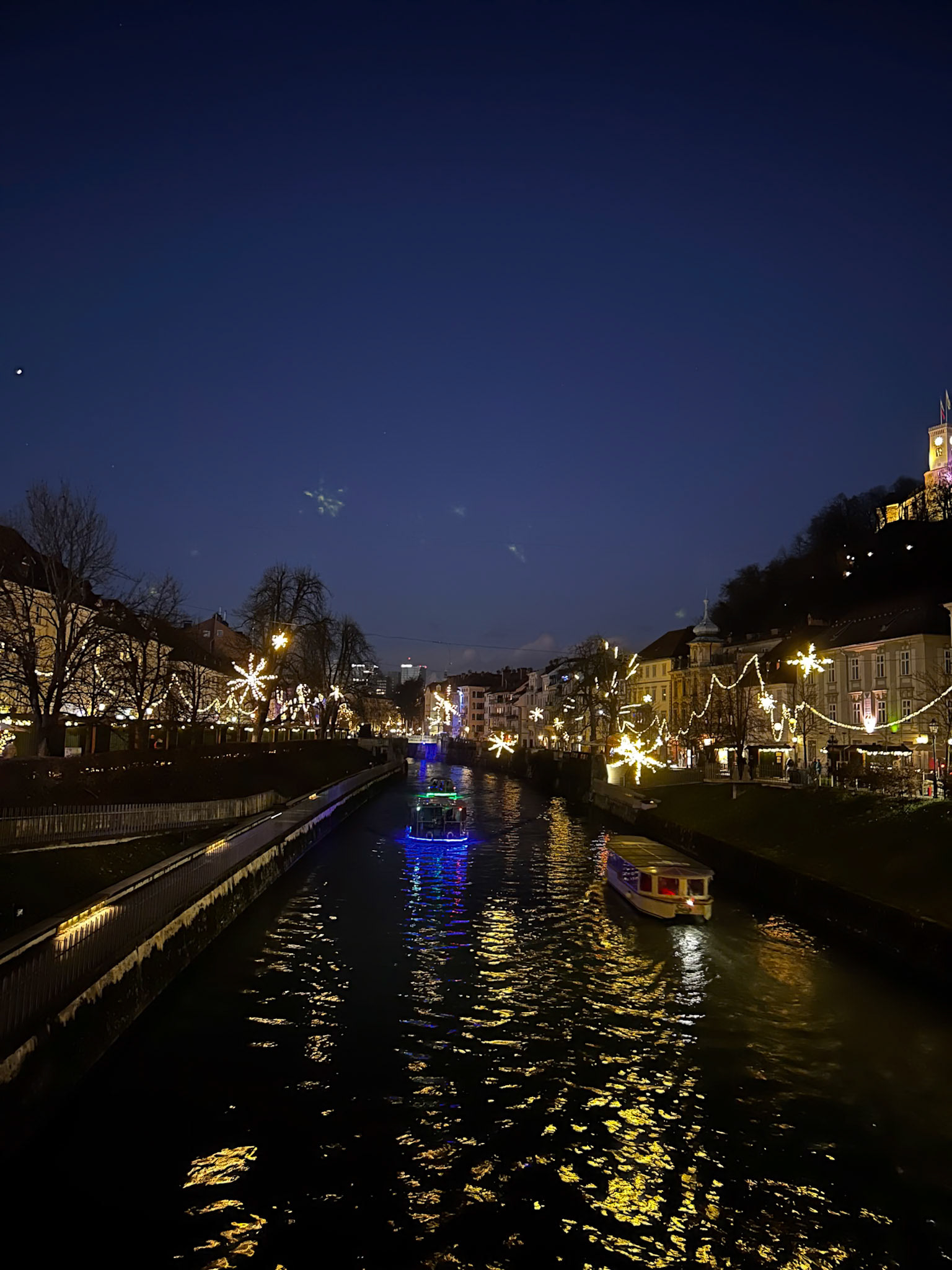
Because I was there during the holidays, there were several Christmas markets stretched along the river, so I decided to peruse them to find souvenirs. I wanted to find a Ljubo dragon - and there were many handcrafted items to choose from, glass, embroidery, art, or stuffed textiles.
~17:00 PM
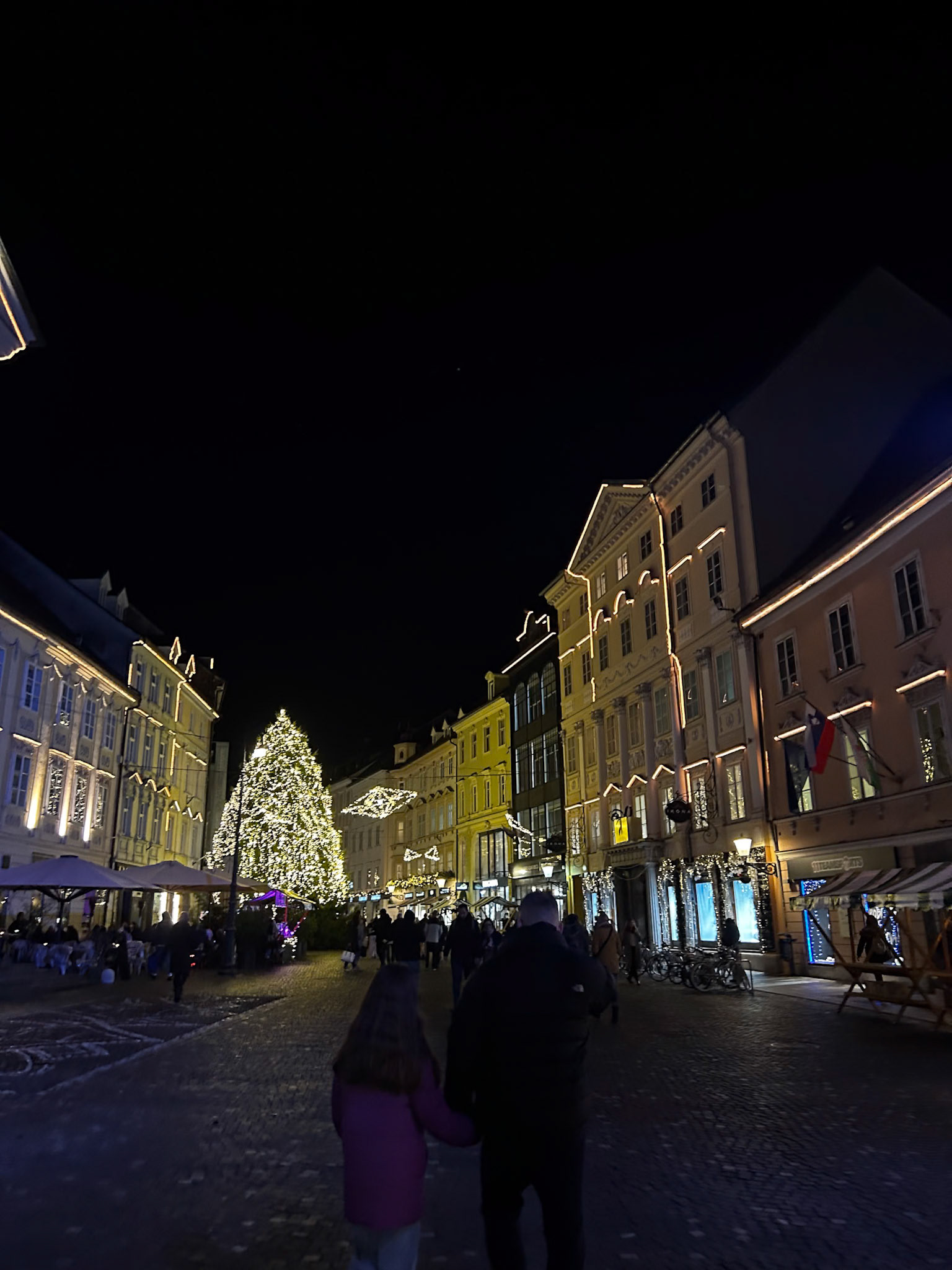
I heard from my colleague when she left work, so I met up with her near the American Embassy and got a walking tour of the shopping district, which includes many traditional or European restaurants. It was beautiful to see all the Christmas lights on the buildings as the sun set and the city twinkled.
One thing that surprised me, in a good way, was the fluency in English amongst Slovenians. I had no trouble anywhere I went, though I did learn the Slovenian words for "Thank You" and "Please."
We ate dinner at Gostilna As, a traditional Slovenian restaurant. It is a small restaurant, so make a reservation in advance. The food was excellent, and the vibe was immaculate—definitely a local spot as it filled up quickly during the dinner rush.
After dinner, we finished walking through the commercial district, loading up on souvenirs such as tea and flavored sugar, chocolate, and ornaments. We tried ice cream and roasted walnuts for dinner, and both were phenomenal. My colleague walked me to my hotel, and that was the end of a busy day.
We planned to spend the next day doing a more robust walking tour and trying some of the Slovenian local foods.
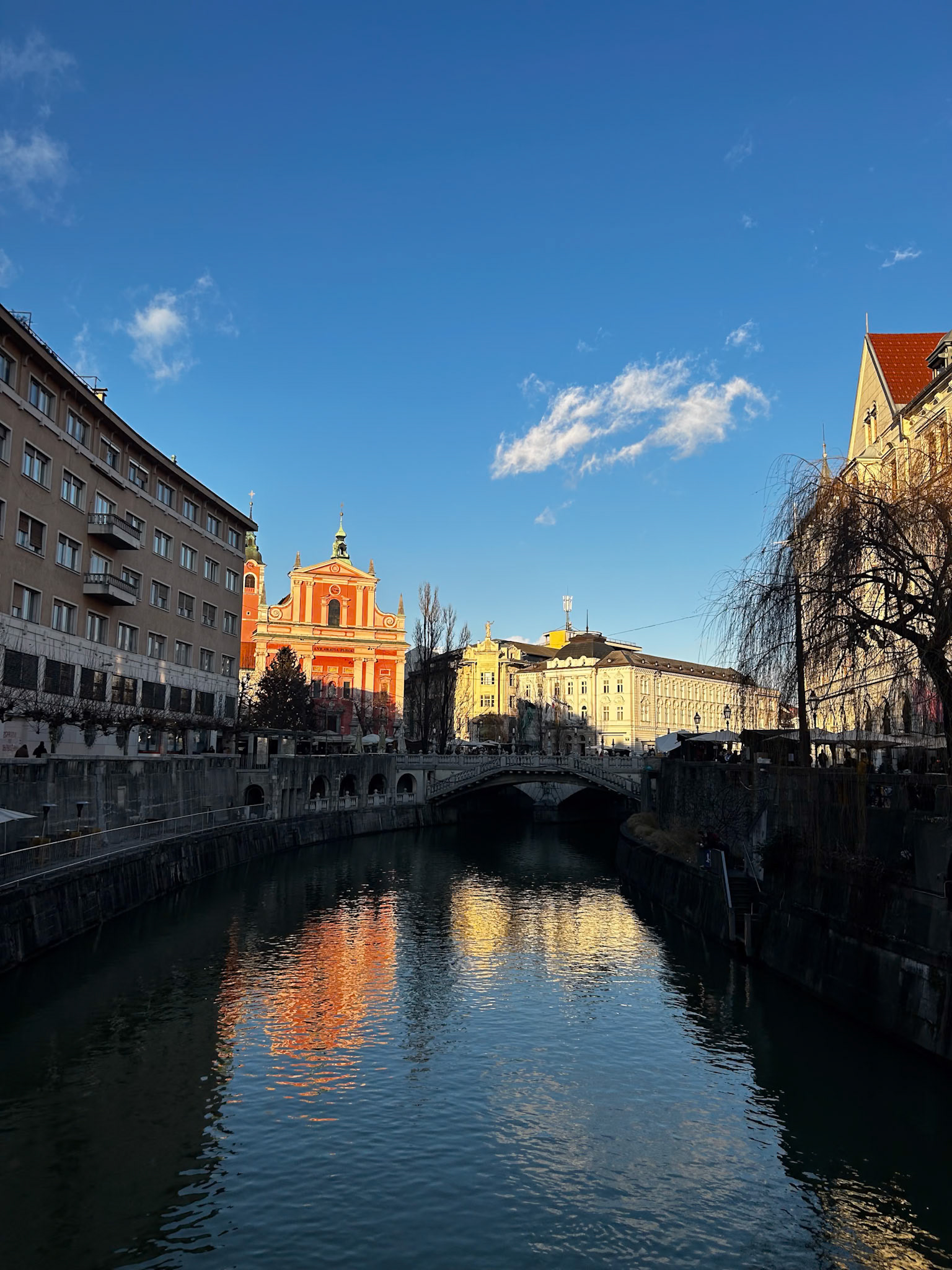
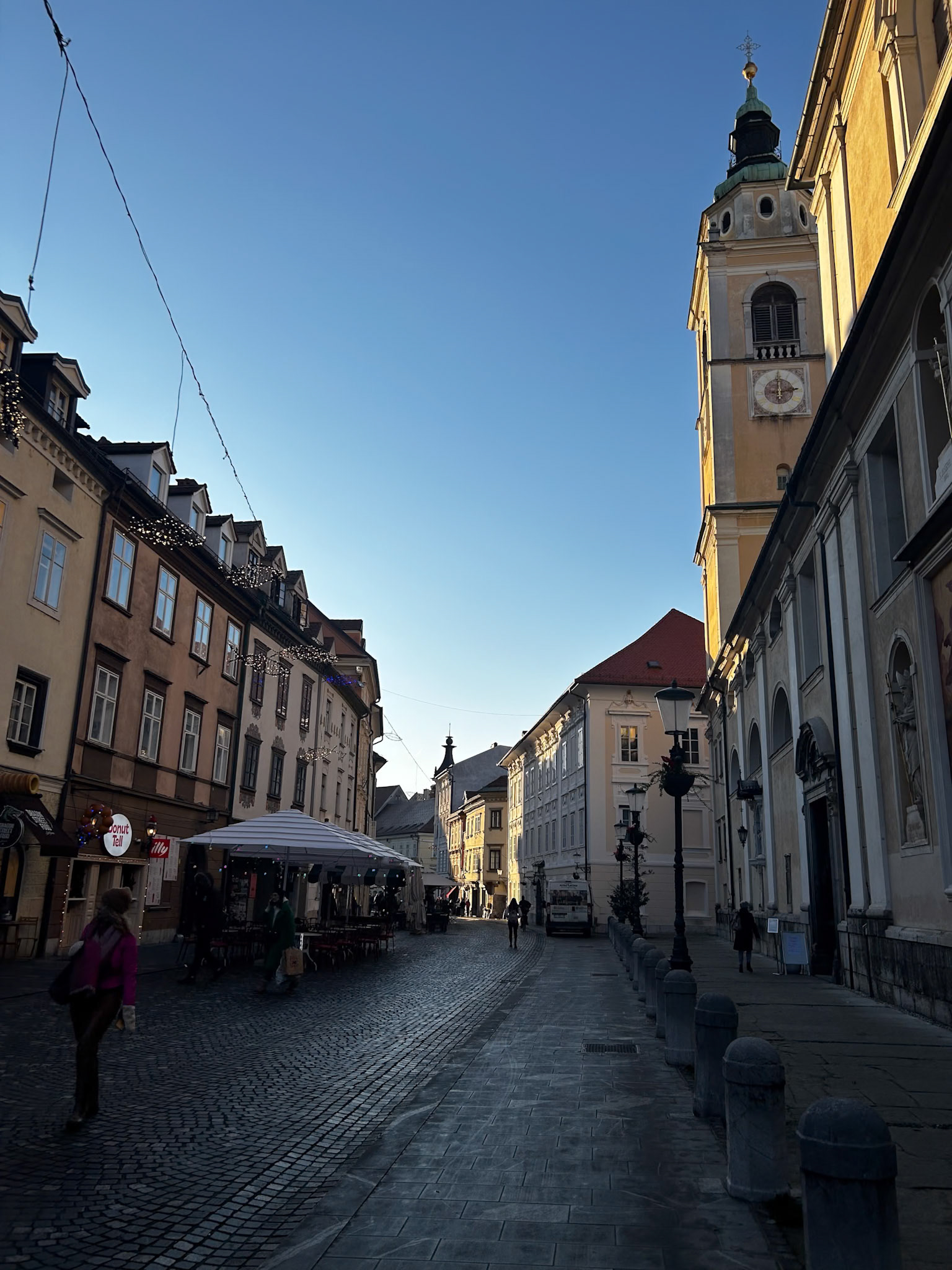
Shopping district of Ljubljana
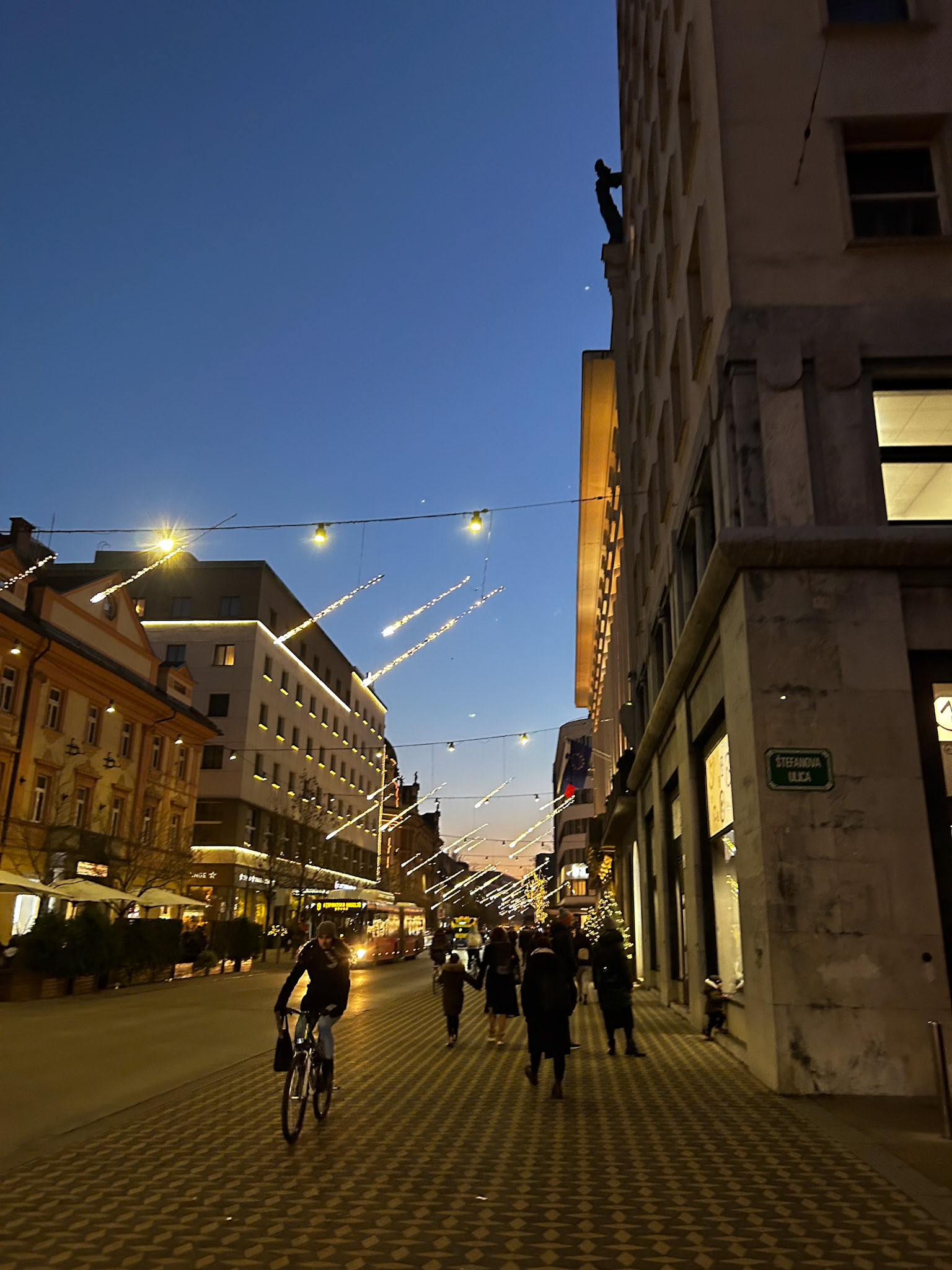
Christmas Lights twinkling as the sun sets
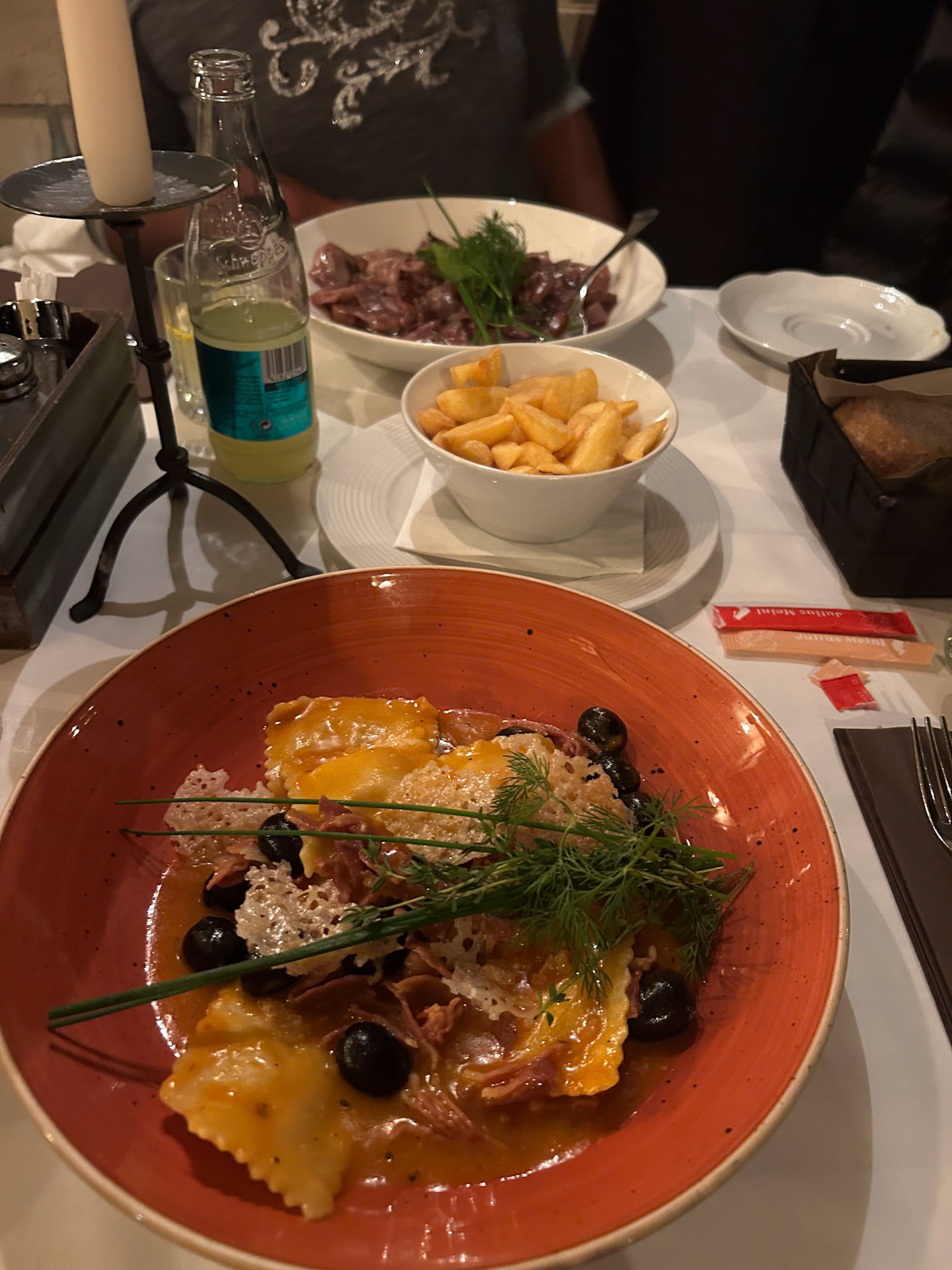
Gostilna As
Saturday, December 23
~10:00 AM
We met up around 10:00 AM and walked back through the shopping district we had gone through before, this time with all the shops open. I was pleasantly surprised that the weather was warm enough to allow for only a light jacket - my second day in Ljubljana was clear as well, but warmer.
Another stop by the dragons - this time lit by the clear skies and sunshine to enable a photo. (One must act like a tourist sometimes, I suppose).
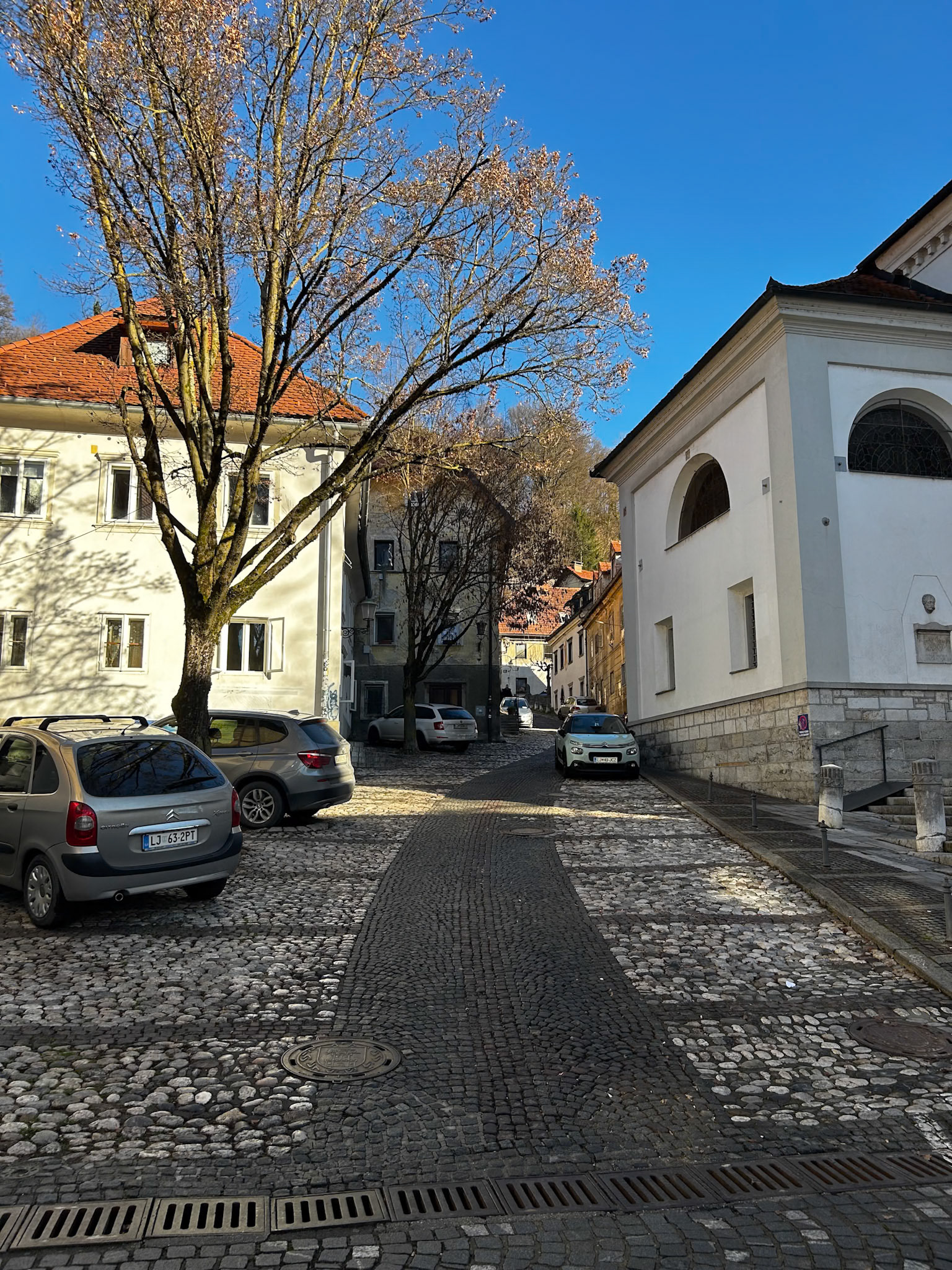
Near the Dragon Bridge is the main square of Ljubljana, near which are two landmarks you should see. Or take a moment to watch as Slovenians go about their day-to-day lives.
I was brought to the Odprta Kuhna Street Food Market, which had so many amazing booths featuring local meats, cheeses, and bakery items. The fresh bread was terrific, and my colleague let me try some of the loaf she bought for the week.
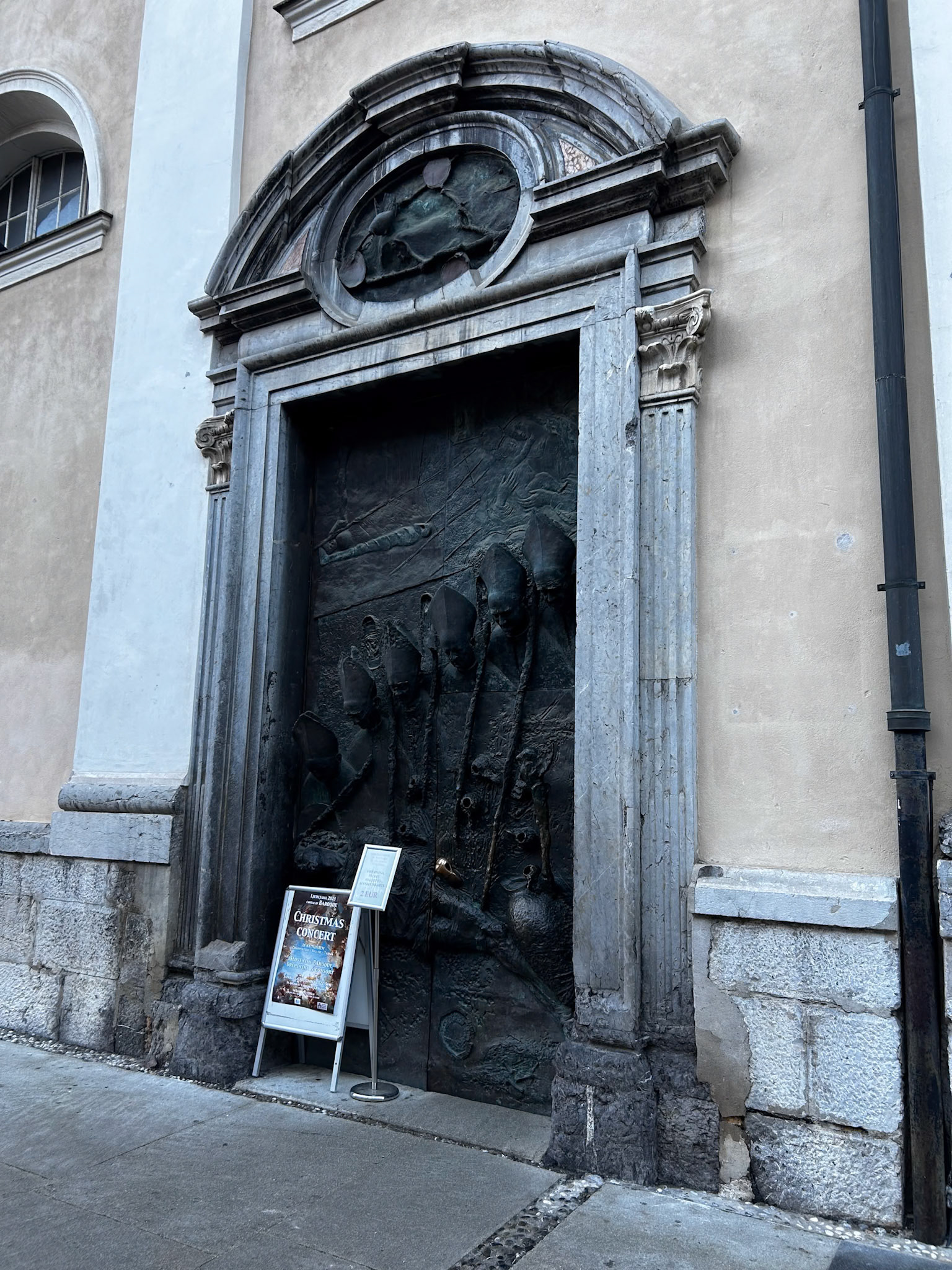
Also in the square is Saint Nicholas's Cathedral or Stolnica Sv. Nikolaj. While you are not allowed to take photos inside, I received two pictures that another tourist accidentally took. It is a stunning view on the inside, and tourists are allowed to step inside the main foyer.
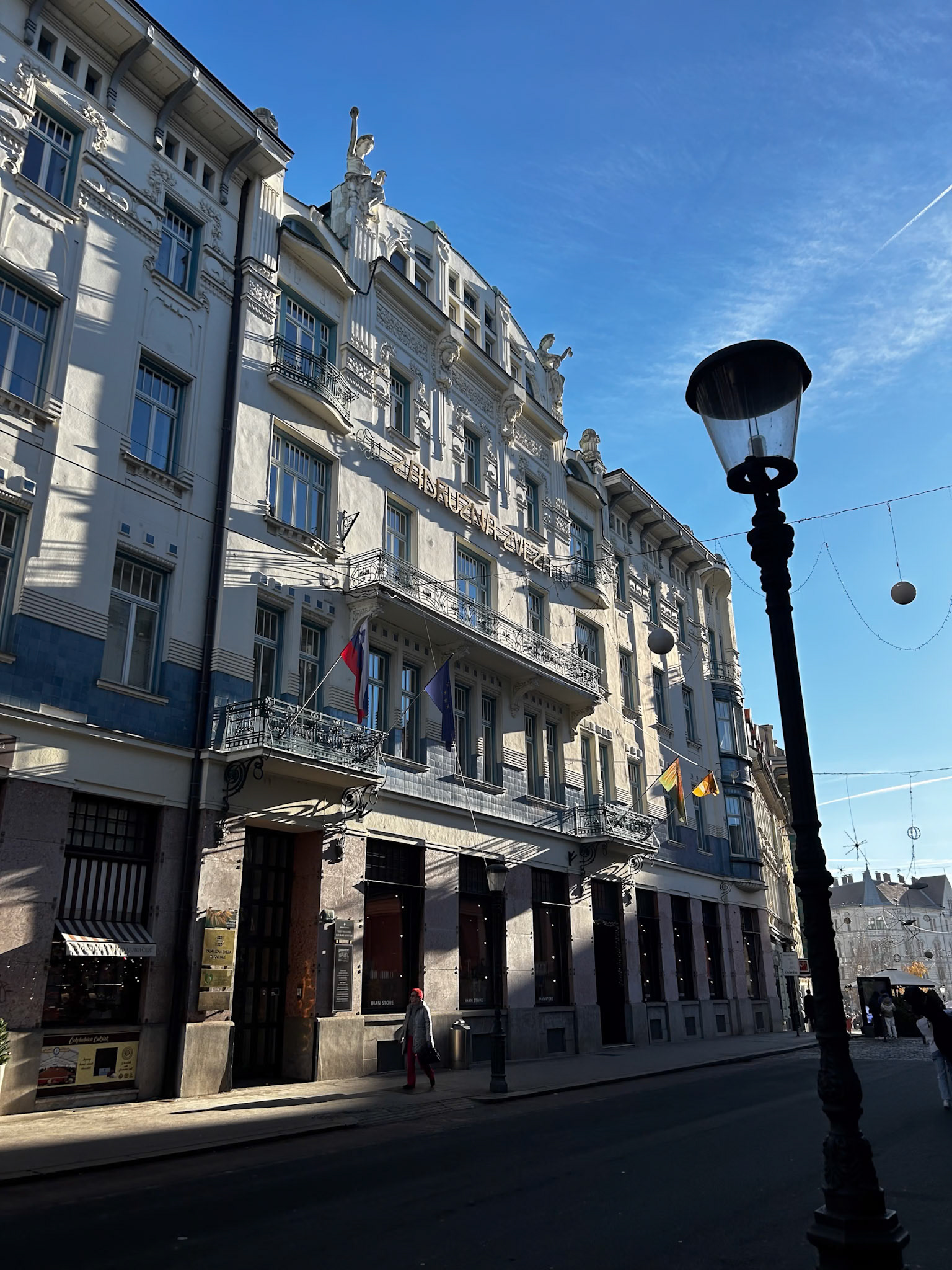
Next up - walking through the streets of the shopping district - take the street Ciril Metodov trg to Mestni trg to go down one of the main shopping lanes. See if you can spot one of the many dragon shield drain covers!
~12:30 PM
For lunch, we headed back towards the hotel to try out Burek, a traditional Balkan pastry. There are two main types - meat and cheese. Burek is a savory pastry made from thin, flaky layers of dough (usually yufka or phyllo) with various fillings. It is a popular dish in the Balkans and the Mediterranean regions, often filled with meat, cheese, or vegetables such as spinach. It can be made in different shapes, such as coils, triangles, or cigars, and is sometimes served with a side of plain yogurt.
For meat burek, we took out a spiral-shaped "dry" burek from Nobel Burek. Then, headed to Burek Olympija to try a pie-shaped wedge of the "wet" cheese Burek. According to my colleague, locals have their favorite of the two, and it is a hotly contested debate as to which is better.
While both were delicious - the meat burek full of warm spices and the cheese burek dripping with salty cheese flavors - I think my favorite was the cheese burek. Try both and see which side you ally with!
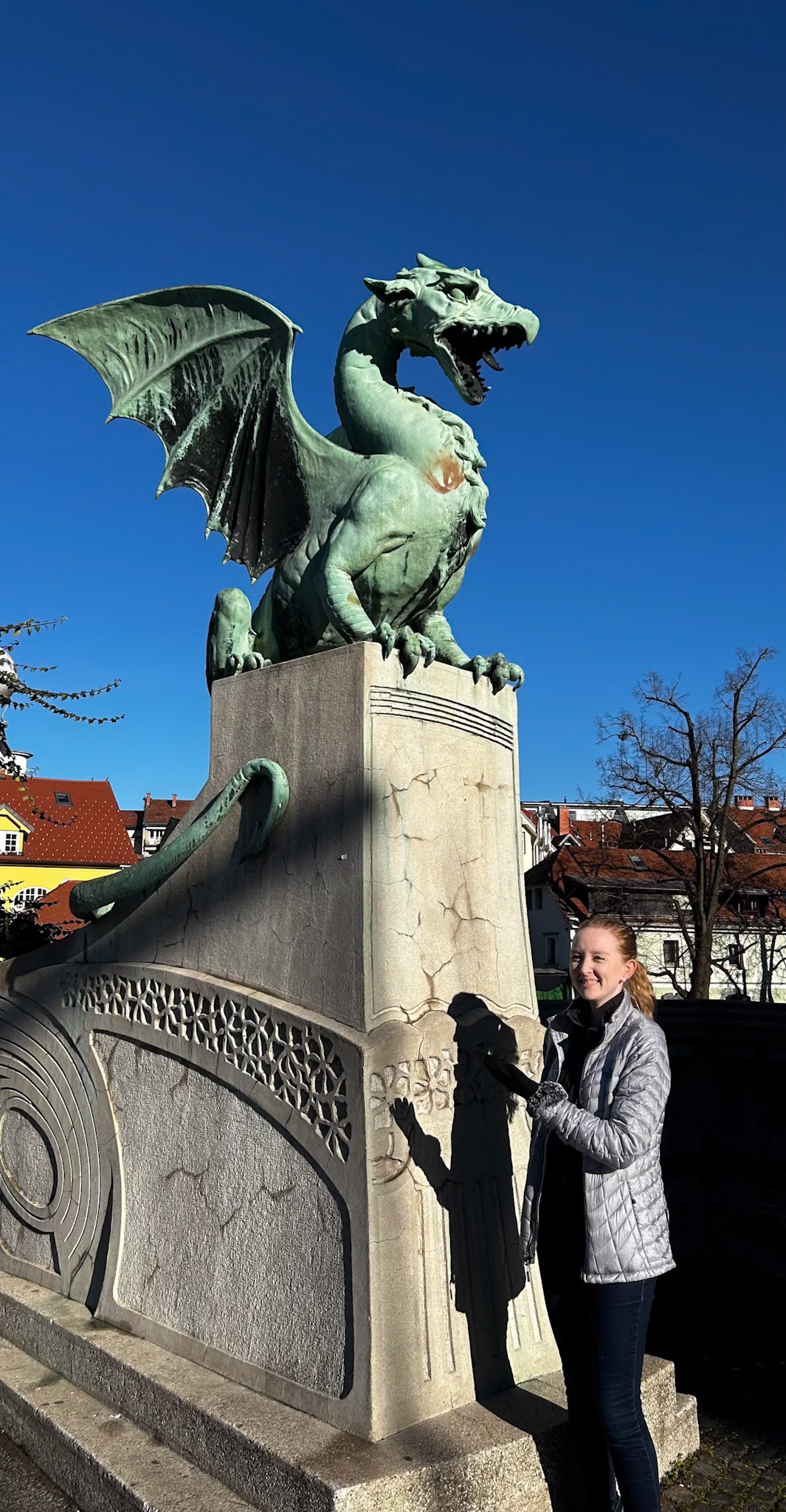
Dragons Bridge
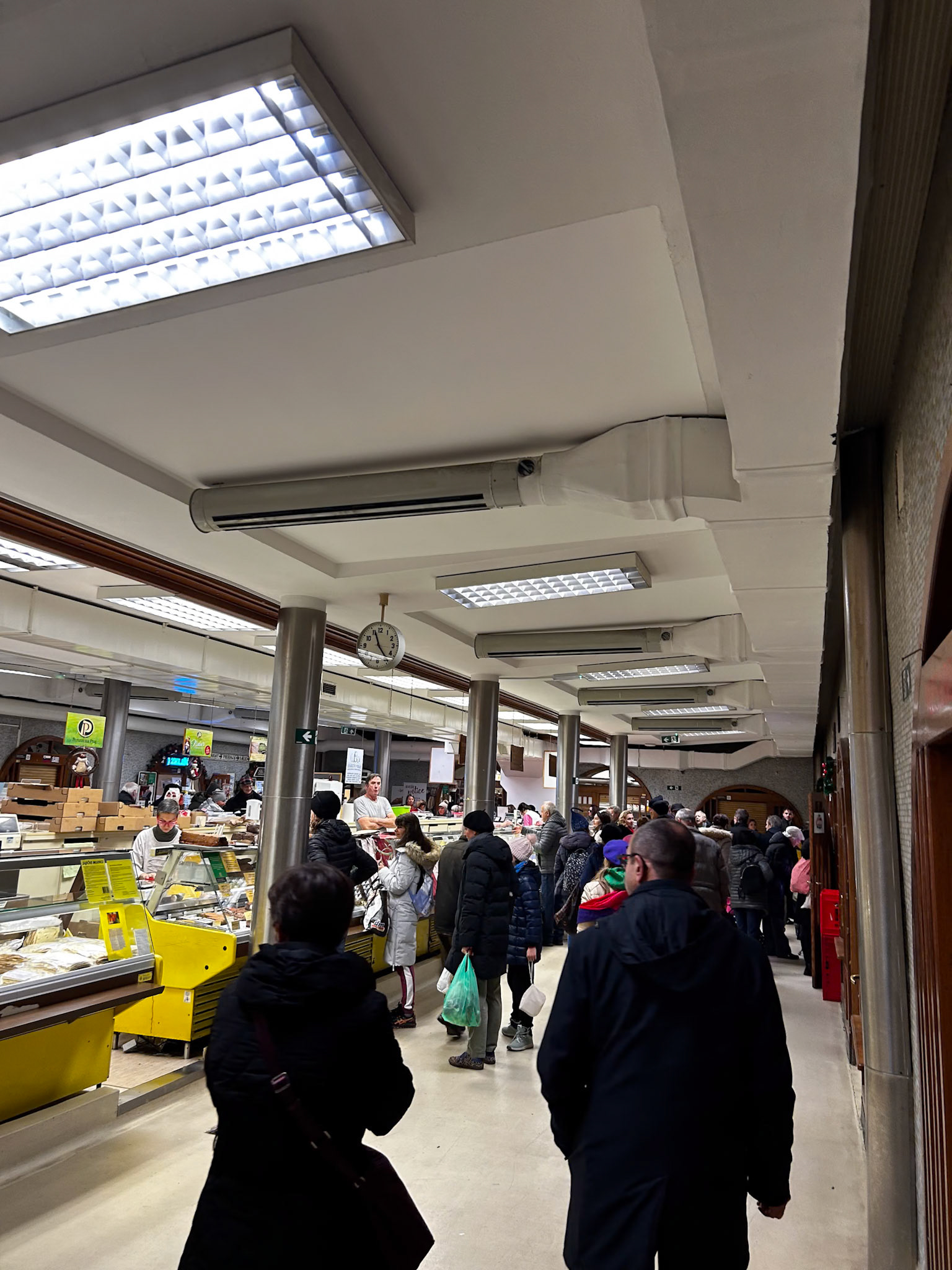
Food market
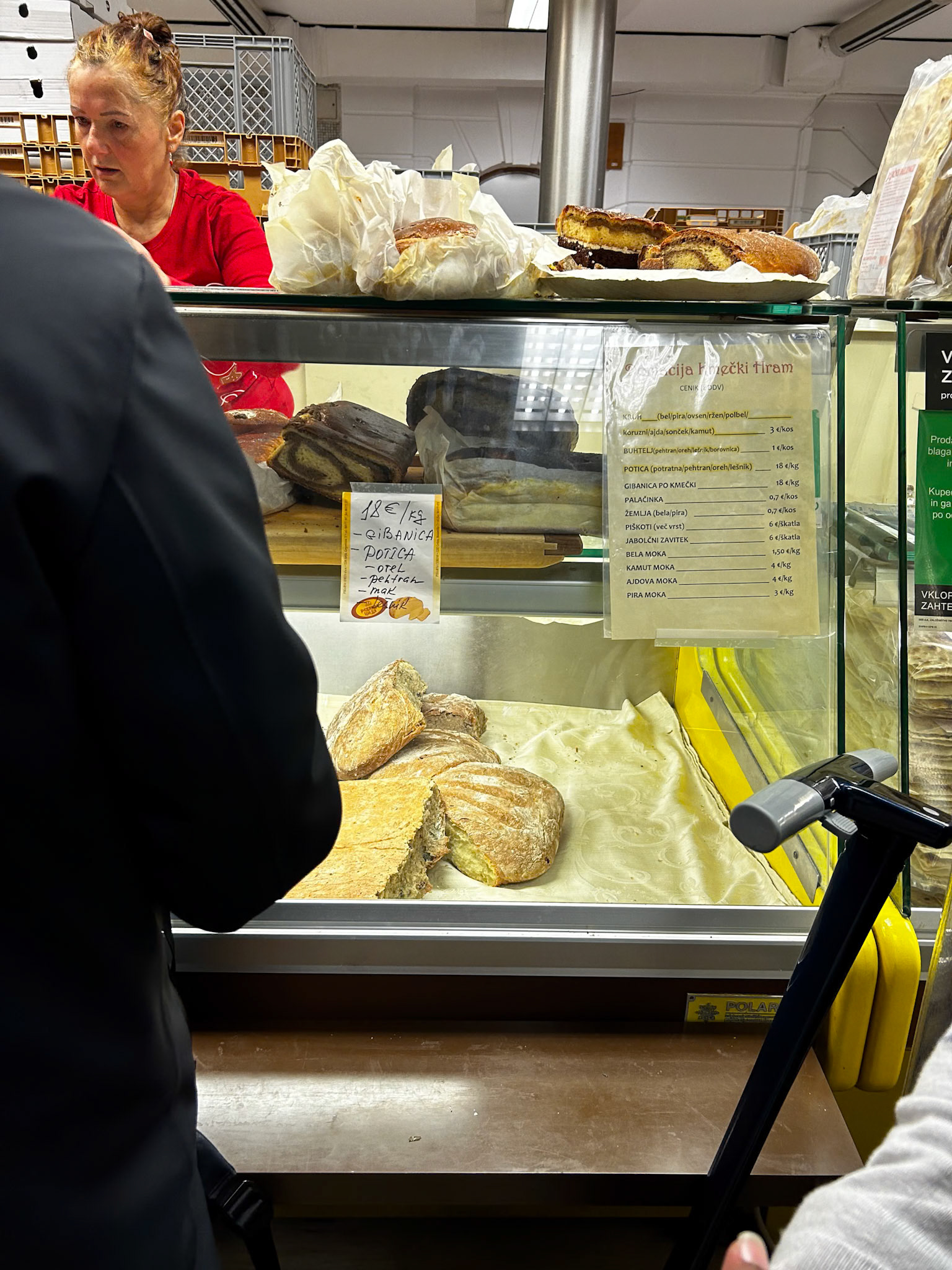
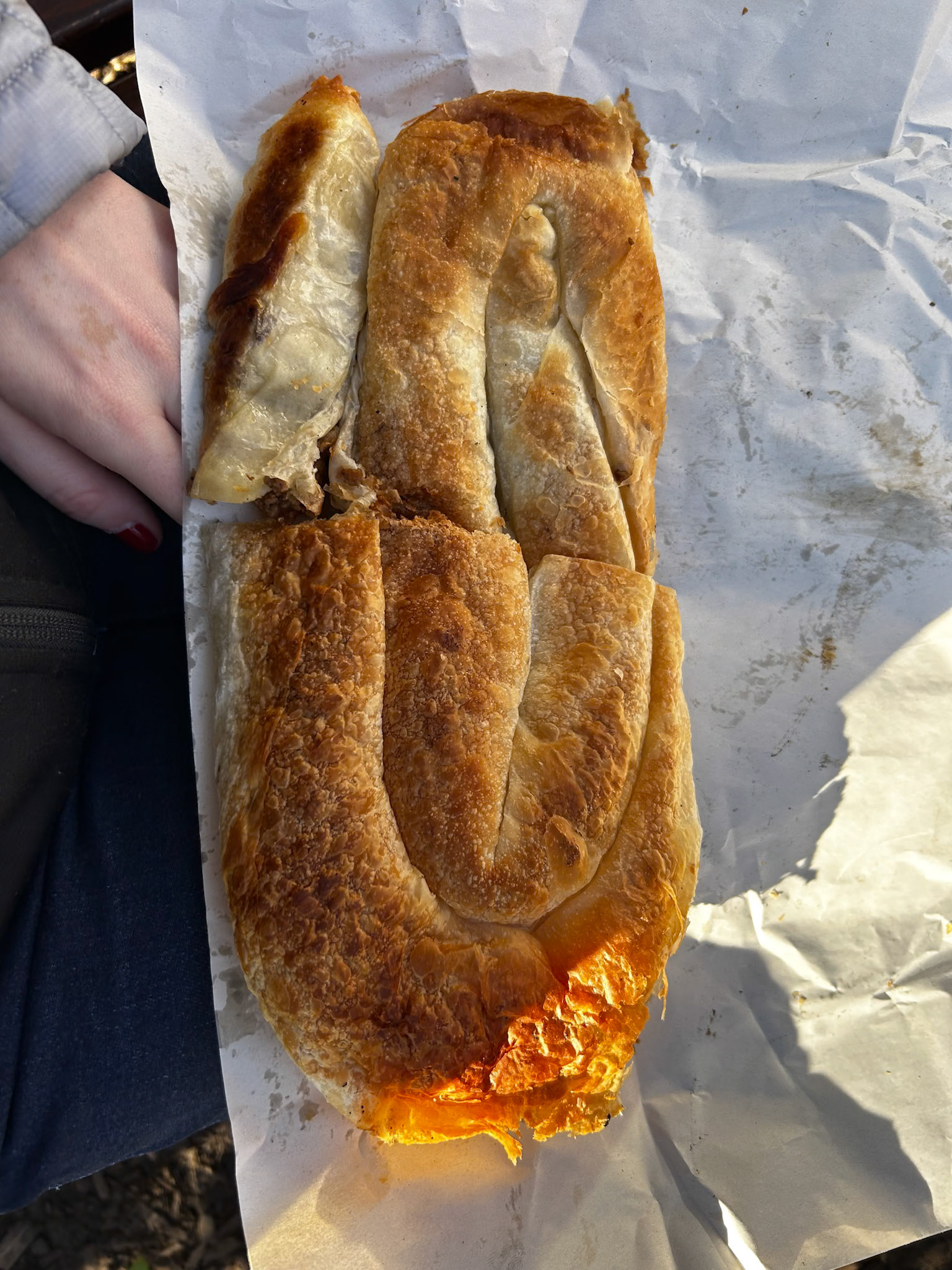
Meat Burek
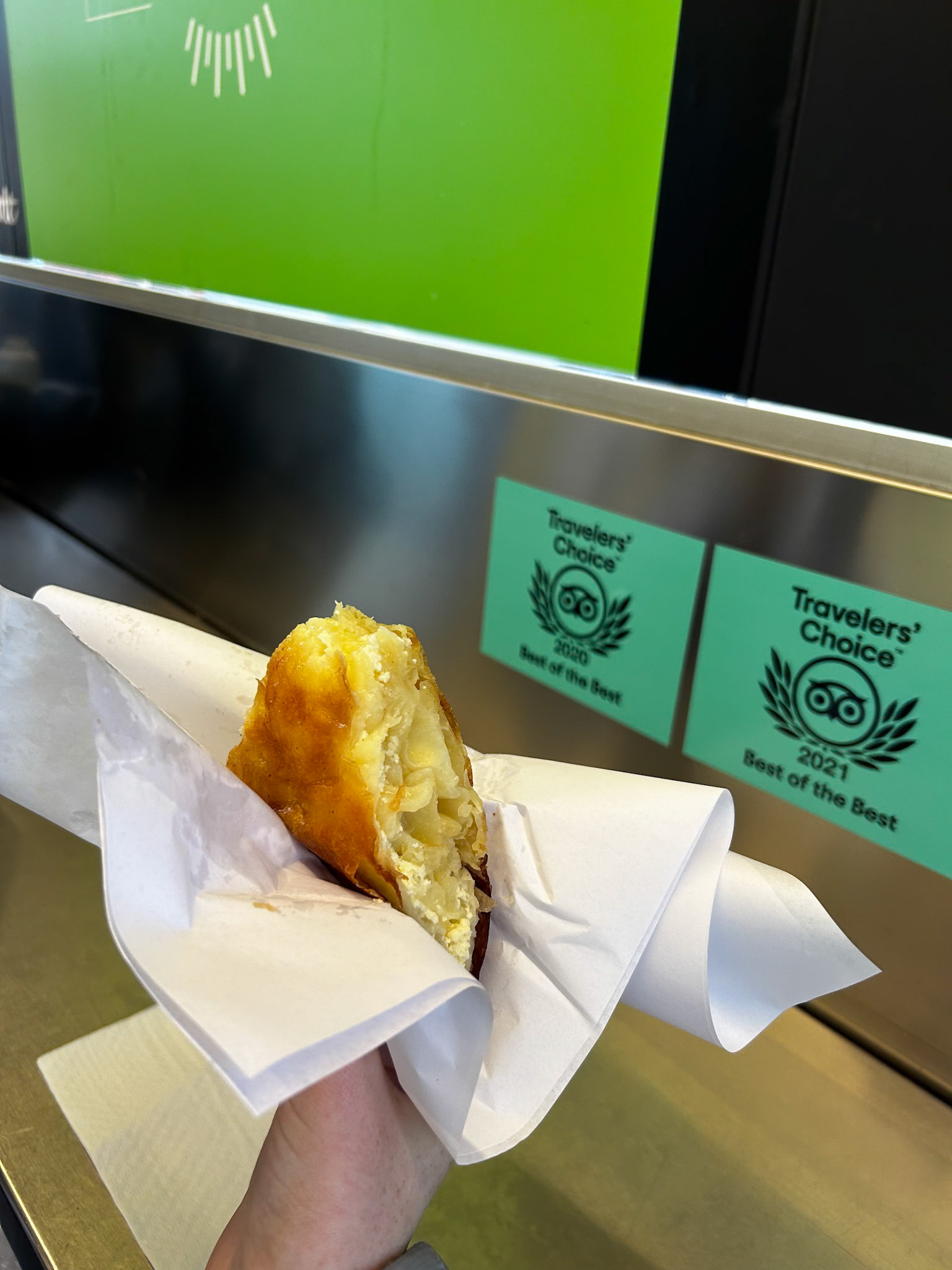
Cheese Burek
~14:00 PM
Next up - sightseeing local landmarks.
We headed back towards the American Embassy and stopped by a Spomenik revolucije monument, built in the Socialist Federal Republic of Yugoslavia from roughly 1960 to 1990 (structures commonly referred to as 'Spomeniks'), which are now, after the breakup of that country in the 1990s, scattered across the present-day regions of Croatia, Slovenia, N. Macedonia, Serbia, Kosovo, Bosnia i Herzegovina and Montenegro.
We kept going to Tivoli Park, a massive public park with 5 square kilometers of walking trails. We stopped in the old Tivoli mansion for tea and pastries, which now houses modern art exhibits.
~16:00 PM
We finished up the walking tour by heading back to the hotel so that I could collect my bags and head to the train station.
It was during the 12-minute walk to the train station in falling temperatures with my full-sized rolling suitcase that I realized walking with a massive suitcase was not the best way to travel. This was the start of another round of lessons learned.
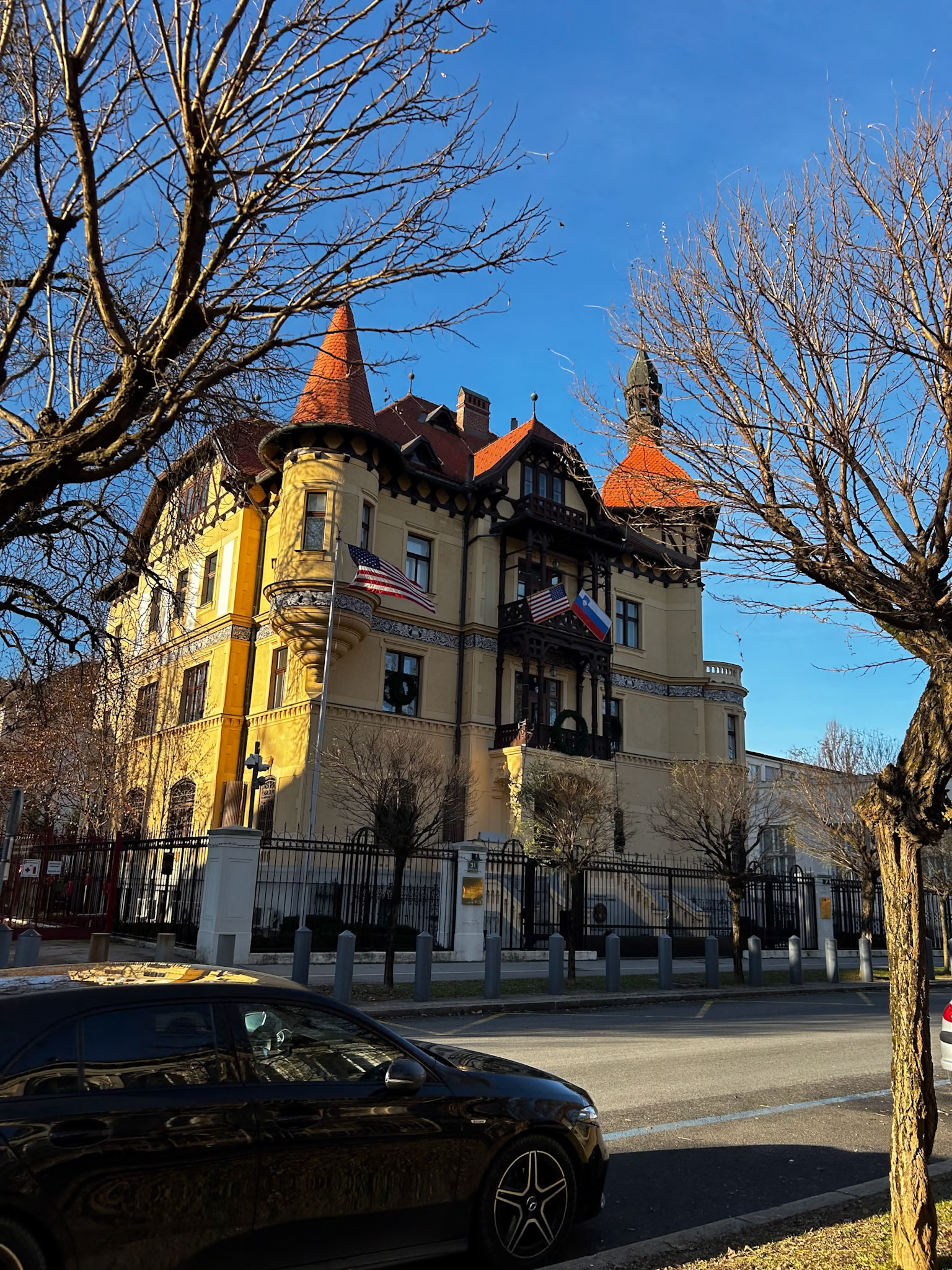
American Embassy Ljubljana
Pro Tip #6: Travel as light and portable as possible
I had purchased a EuRail two-day pass, which allows you to look up timetables of all trains in the network, switch trains if needed, and get digital QR codes to scan as your tickets. Everything in the network is included, with the only additional charges being seat selection if that train requires it. This app and the ability to change trains were going to be my saving grace in what was going to be a very long night.
My original series of trains was the following:
17:15 Ljubljana - 20:38 Salzburg HBF
21:00 Salzburg HBF - 00:43 Stuttgart HBF
06:52 Stuttgart HBF - Paris EST 10:06 AM
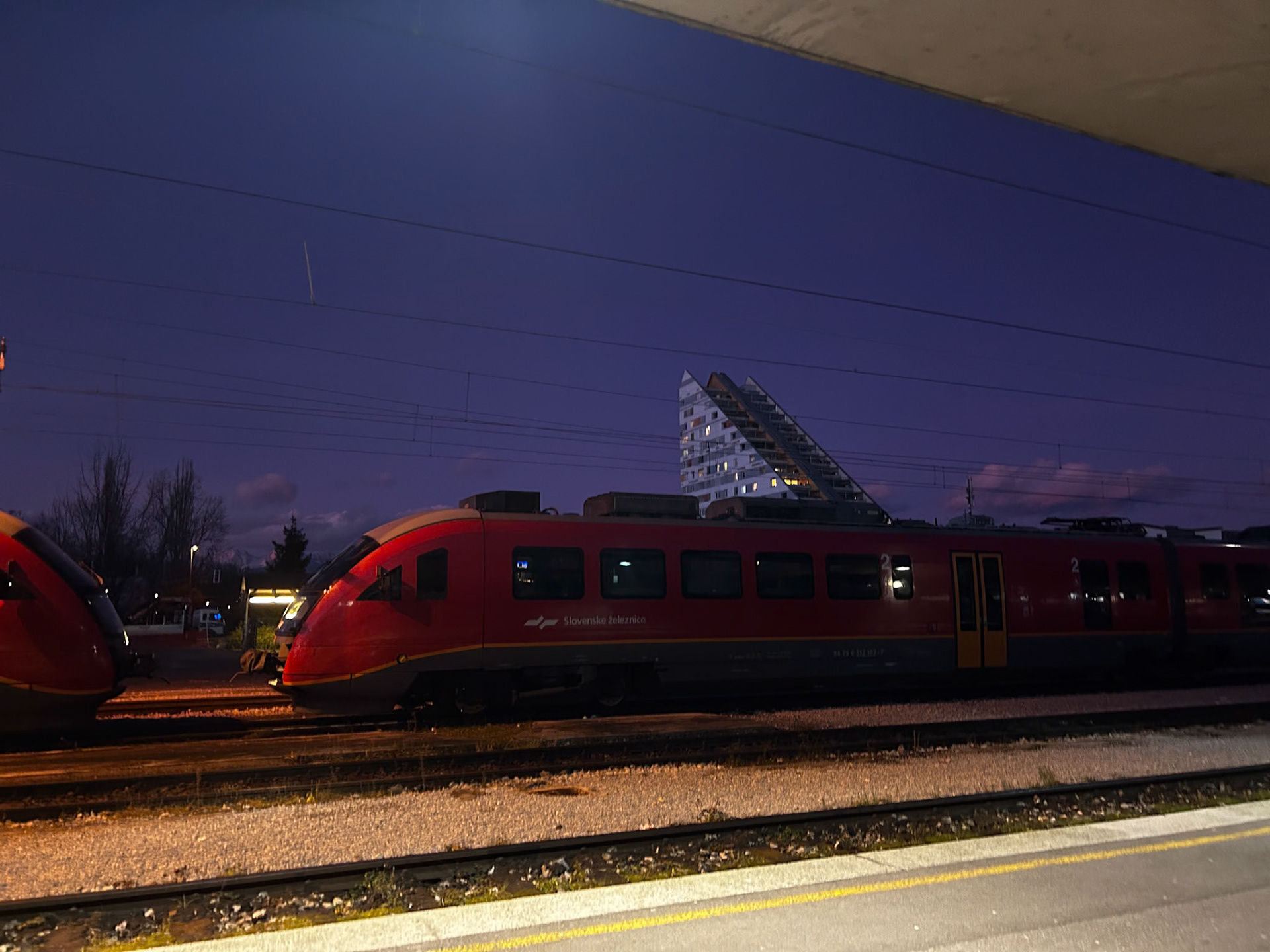
I entered the original train as scheduled at 17:15 in Ljubljana and settled in. However, had I planned better, I would have left that morning, when I could actually see the Alps, as we were going to cross through them. Lessons learned for next time! Do not travel overnight if you want to see views. If you are country-hopping and are willing to stay up all night, then definitely do an overnight series of train hops.
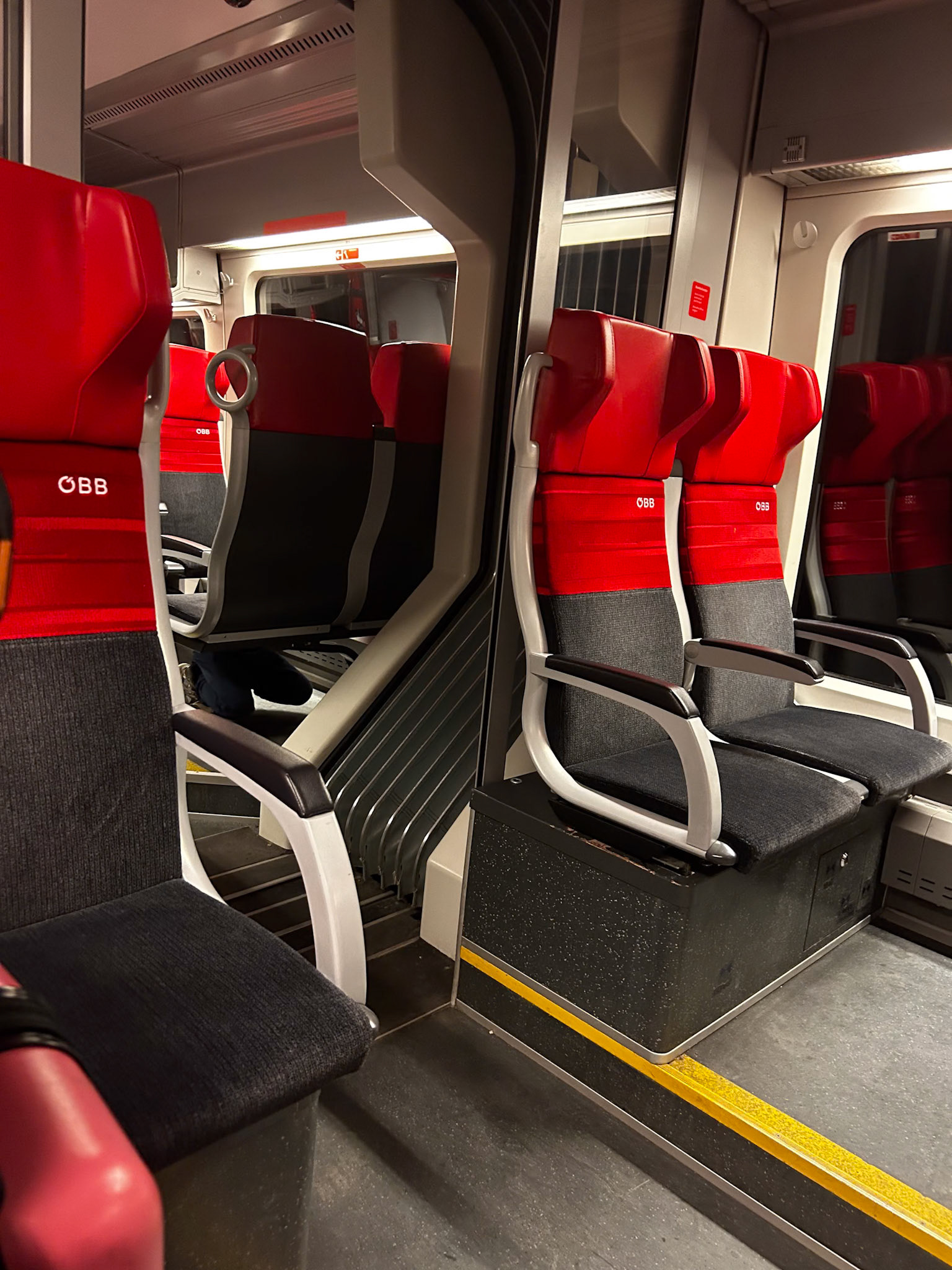
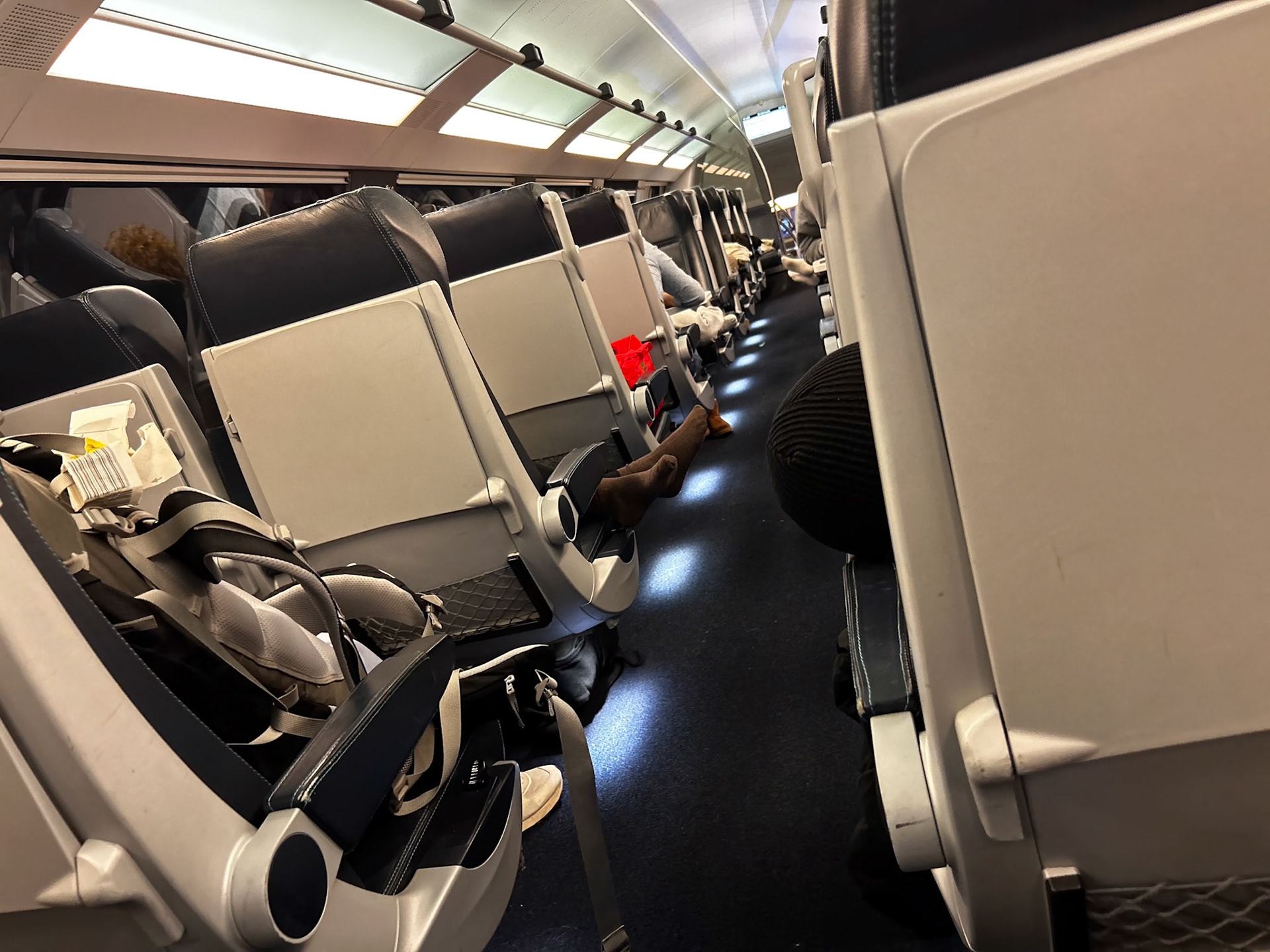
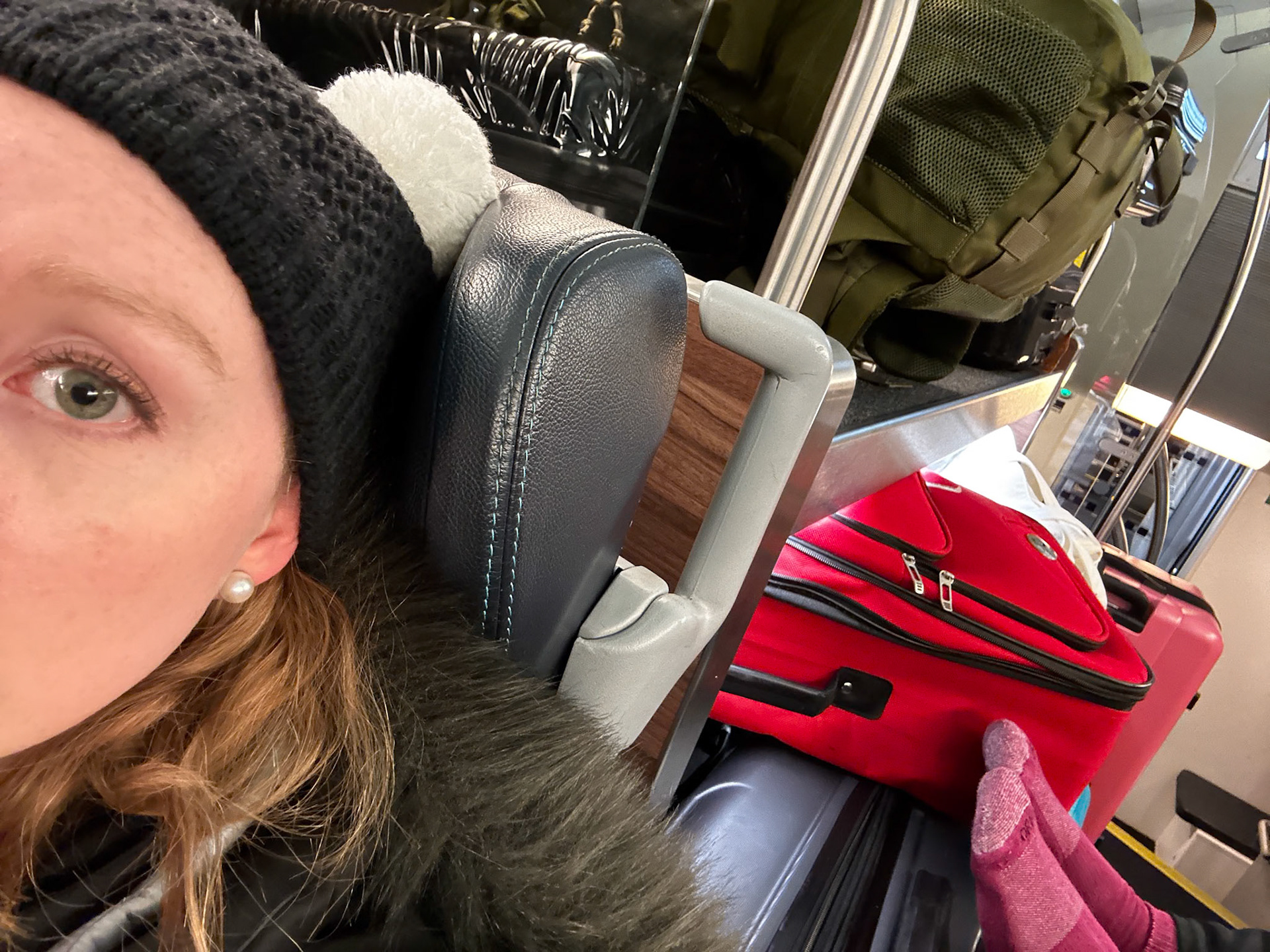
However, during the holidays, European trains are packed. Overhead storage areas are designed for a small backpack or purse at best. Full-sized luggage can rarely be stashed at your feet and must instead be stored in luggage racks near the car doors, which means lugging it up flights of narrow stairs to reach upstairs compartments or leaving it out of sight.
Also, many European train stations lack elevators or escalators, so if you have a full-sized suitcase, you will be lugging it up and down stairs as you board and exit trains.
All was going well until we hit the Austrian border, where the train was stopped for 30 minutes as Austrian border control officers boarded and checked every passenger's ticket and passport. If there was an explanation given, it was not in English. I still do not know why we were delayed. To my chagrin, I realized that, due to the delay, I would miss my connection in Salzburg and would have to reroute.
Pro Tip #7: Be Prepared for Changes; Have a Backup Plan
The only other routing available? Go through Austria to re-route through Germany. If I could make it to Karlsruhe, Germany, by 9:00 AM, I could book a seat on the last available train to Paris. If I didn't make it to that train, I would have had to change my plans to head to Strasbourg, France, and fly home from there on Christmas Eve. The schedule below is what I ended up taking to get myself to Paris.
I think the biggest thing I learned from this ordeal was patience and staying calm. I also had let my parents know that I would be changing plans, and my father kept a loose eye on my location as I routed through Europe.
17:15 Ljubljana - Villach HBF, Austria 19:08 (1 hr 53 min ride).
Because we'd been delayed at the border, I got off at the Villach stop to wait for another train. Many train stations have outdoor covered areas, but they offer only a barrier to the wind. Temperatures dropped to below freezing, so waiting outside for two hours was brutal. Thankfully, I'd brought a knee-length puffer jacket, gloves, and a hat, so I didn't freeze to death.
21:16 Villach HBF Austria > Salzburg HBF Austria 23:55 (2 hr 39 min ride)
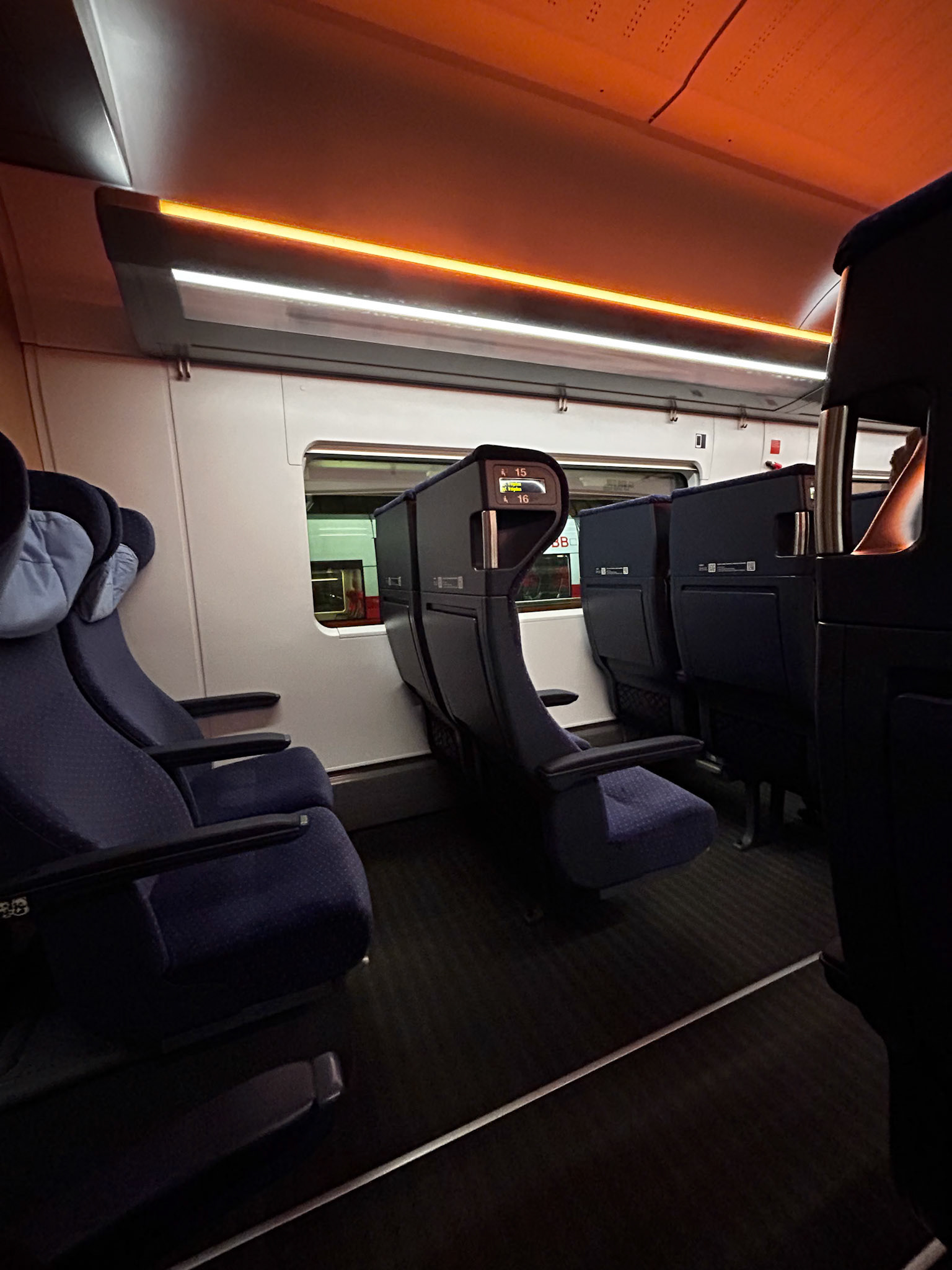
I ate a small dinner on this train, and it was less crowded than the others, so I managed to catch a few hours of sleep. I originally only had a 15-minute connection in Salzburg, but the next train I was on was delayed by almost 50 minutes, so I had a longer connection.
Sunday, December 24, 2025
00:51 Salzburg HBF Austria > Stuttgart HBF Germany 05:50 (4 hr 17 min ride)
Because of the delay in starting, we pulled into Stuttgart around 5:50 AM.
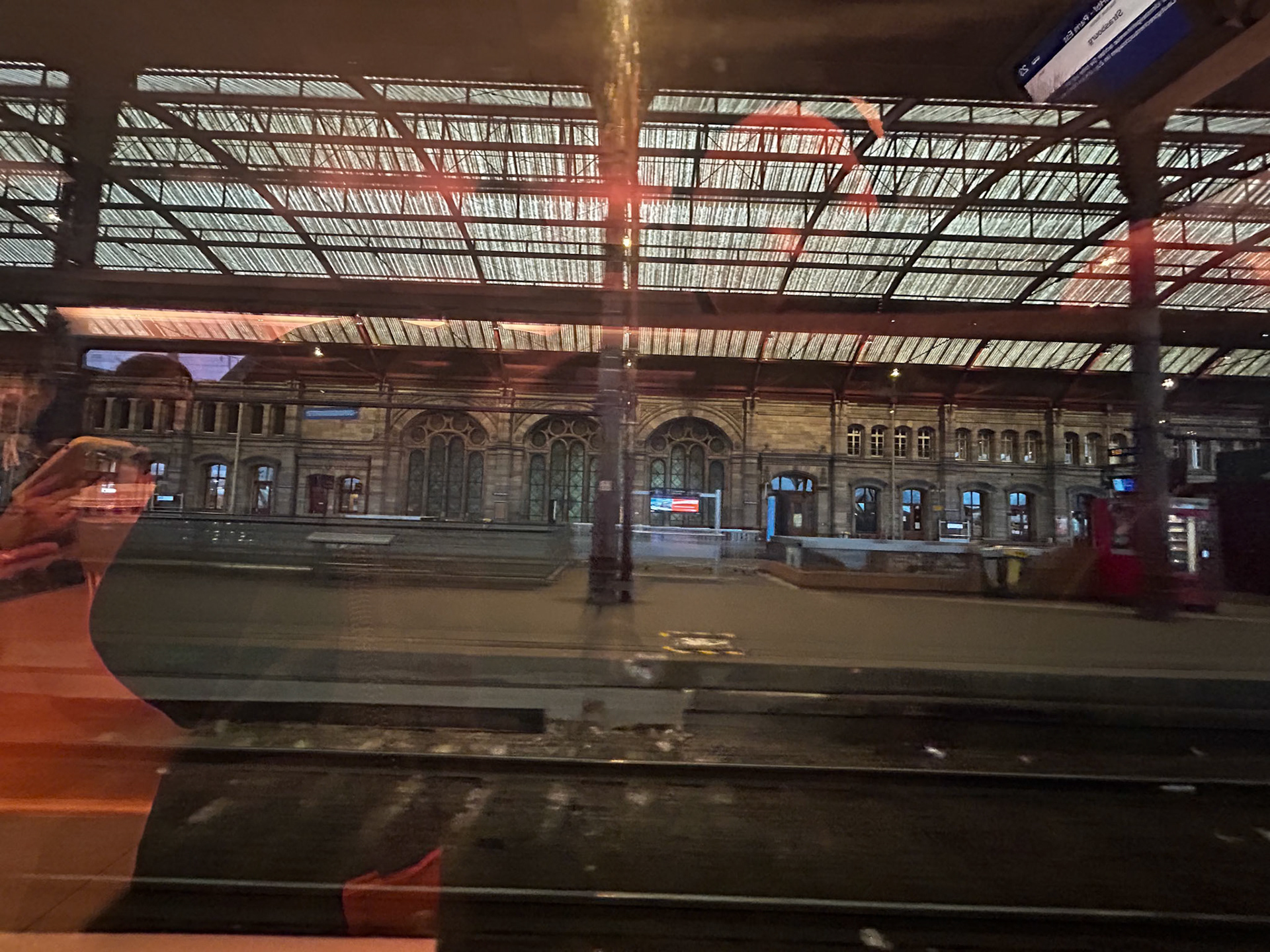
Due to miscommunications with the announcements being in German and the train stopping at a station that was not on the original list (and being half-asleep), I accidentally got off at Stuttgart-Bad Cannstatt. Thankfully, the EuRail app also includes metros.
I exited the train station at 5:55 AM, and it was abandoned. I used Google Translate to figure out the signs to get to the metro, and by a minor miracle, managed to get on the right metro going the right direction and get off at the next stop, Stuttgart HBF. Keep in mind, this was with a full-sized suitcase.
~6:00 AM
When I exited the metro, it was 6:00 AM, I was three stories deep underground, and everything was in German. I had 25 minutes to catch my next train, which was somewhere above me. I found an elevator after 10 minutes of walking up and down the metro terminal, and went up a floor to find yet another metro terminal. Back into the elevator to the ground floor, which was deserted and dark, save for a small newspaper booth on the far side with a faint light and an attendant sitting at the counter. I beelined across the train station, which was under construction, and held up my phone with the train ticket and pointed to it.
"You speak English?" she asked me, with a look of pity in her eyes.
I almost cried from relief.
After an ecstatic "yes," she explained that to reach the train terminals, I would have to leave the station and walk around the entire construction to the back of the station, where the train lines were.
So I beelined it out of the station with 15 minutes to make my train, while not knowing exactly where it was.
Outside was bitterly cold, 20 degrees, pitch-black, and it started to snow. A genius German had painted a two-inch-wide green line on the sidewalk with sporadically spaced train icons every hundred or so feet, and an arrow pointing the way into the darkness. So off I went for a half-mile around a huge station in the dark.
~6:20 AM
I made it with only a few minutes to spare - my train was waiting in the first terminal. I was nervous, however, when we were delayed yet again, starting by almost forty minutes. I was beginning to learn that German trains are rarely on time, which, while annoying, was working in my favor. However, I hadn't been able to book seats on the later train, so I opted to try to make it to my original Stuttgart-to-Paris train.
06:52 Stuttgart HBF Germany > Karlsruhe EST 07:52 AM (53 mins)
This was my second-to-last train in the altered schedule. I'd been up all night and was exhausted, but couldn't relax yet. This train was a short regional train with very little space and uncomfortable seats.
My arrival in Karlsruhe was on time, and I had to race across the station to my next terminal as I'd made it in time to catch an earlier train to Paris. As soon as I reached my train terminal, I found a covered glass alcove and proceeded to wait. Thankfully, the 14-minute connection turned into a 30-minute one, so I had enough time to buy a seat on the earlier train.
I met a lovely woman from Russia with two male companions. They spoke English and told me they were also going to Paris for Christmas, and were horrified when I recounted my train troubles throughout the night. I said goodbye to them when the Paris train pulled in.
08:06 Karlsruhe HBF, Germany > Paris EST 10:38 (2 hr 32 min)
This train was packed tighter than a can of sardines, to understate how crowded it was. People were standing in the aisles, not even trying to sit, and every seat was full. I had to leave my suitcase two cars down from the car I had seats in, and I was too tired to fight when I found a man in my seat, so I continued down a few aisles where I found an empty seat. I sat down, telling myself that if someone claimed it, I would fight the man who was in my seat; otherwise, I would sit where I was.
Imagine my surprise when the 6-foot-tall Russian woman I'd met at the terminal arrived, letting me know that I was in her seat. I explained the situation, and she said calmly, "Come vith me."
She marched down the aisle with me meekly in tow, and she confronted the man in my seat with the tone of a military general, "You are in her seat. You need to move."
Both the man and I looked at her in shock, and he quickly got up, grabbed his things, and explained that he had just sat down because it was empty, apologizing that he would move. The Russian woman turned to me with a big smile and wished me a Merry Christmas Eve, and I got into the seat and breathed a sigh of relief. The ordeal was over, and I was on my way to Paris.
Paris, France
~10:45 AM
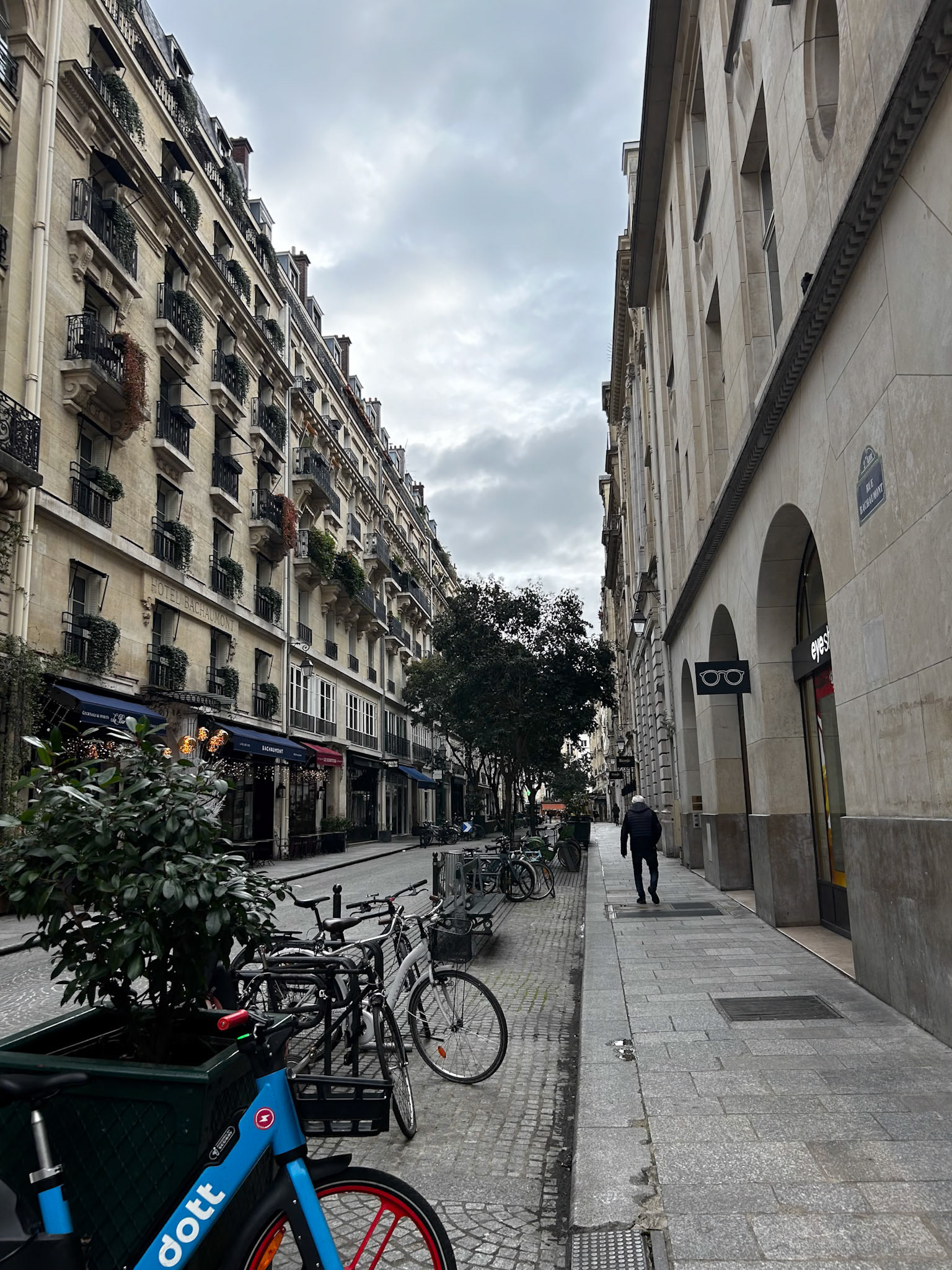
I had finally arrived in Paris on Christmas Eve. I made a painful and expensive decision to Uber to my hotel rather than figuring out the metro (and in my defense, I'd had enough of public transportation for a while and was too tired to figure out yet another language on signage).
~11:20 AM
I checked into my hotel, the Marriott Opera Ambassador Hotel, within walking distance of the famous Palais Garnier Opera House. I literally dropped everything, including myself, as soon as I reached my room. I'd chosen its location because it was close to the major tourist sights I wanted to see - the Christmas market at the Jardin de Tuileries, the Louvre, Notre Dame, and shopping districts.
But sleep would have to come later. I was in Paris on Christmas Eve, and I wanted to see everything I could before dinner at 7:00 PM in the hotel restaurant.
I quickly changed into a more festive (and warm) outfit, and off I went.
~12:00 PM - Pont Neuf
My first planned stop on my impromptu walking tour was the Pont Neuf bridge, as a central point to see several tourist sights. However, I stopped at a few places along the way because they caught my eye.
I stumbled across the Church of Saint-Eustache and fell in love with its 13th-century architectural style.
Having seen many photos of the Galleries Lafayette decorated for Christmas, I mistook La Samaritaine for one of the Galleries and entered. It was still decorated for Christmas, and I was on a hunt for a now extinct perfume company - Atelier Cologne, which went under during the COVID-19 pandemic and now only exists in third-party resale shops.
Next door? The Louis Vuitton storefront was closed for the holidays.
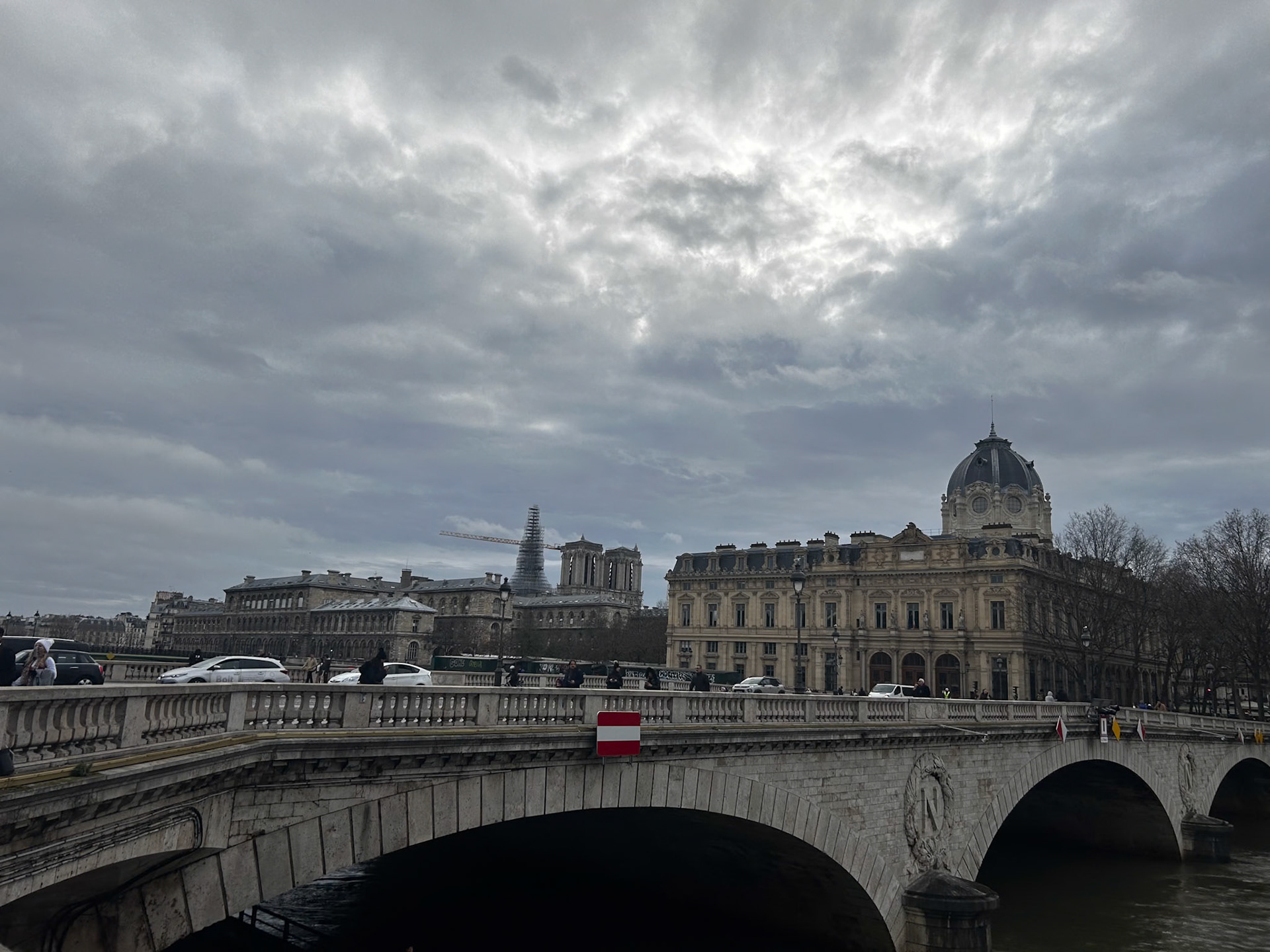
Pont Neuf Bridge
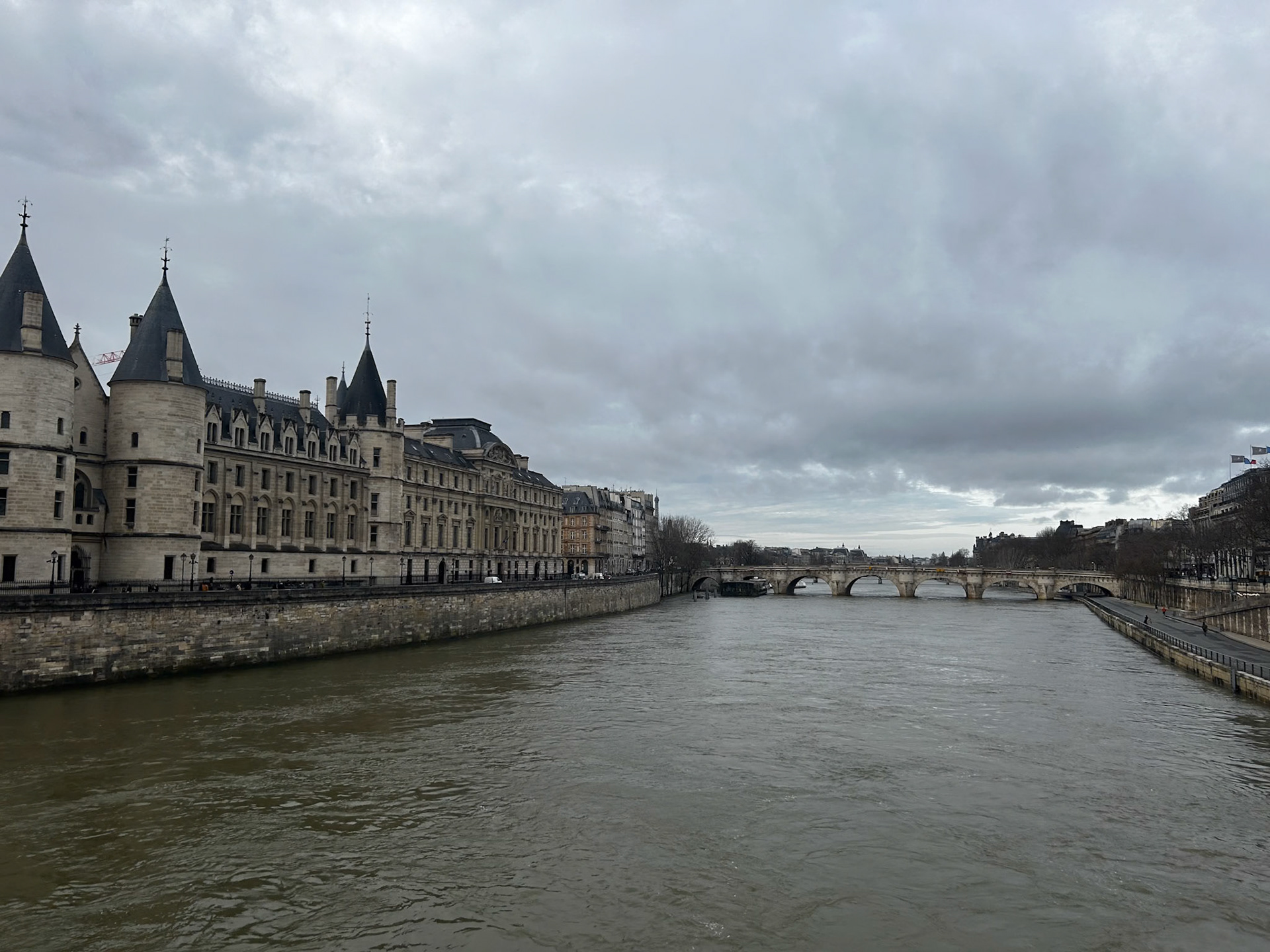
La Seine River
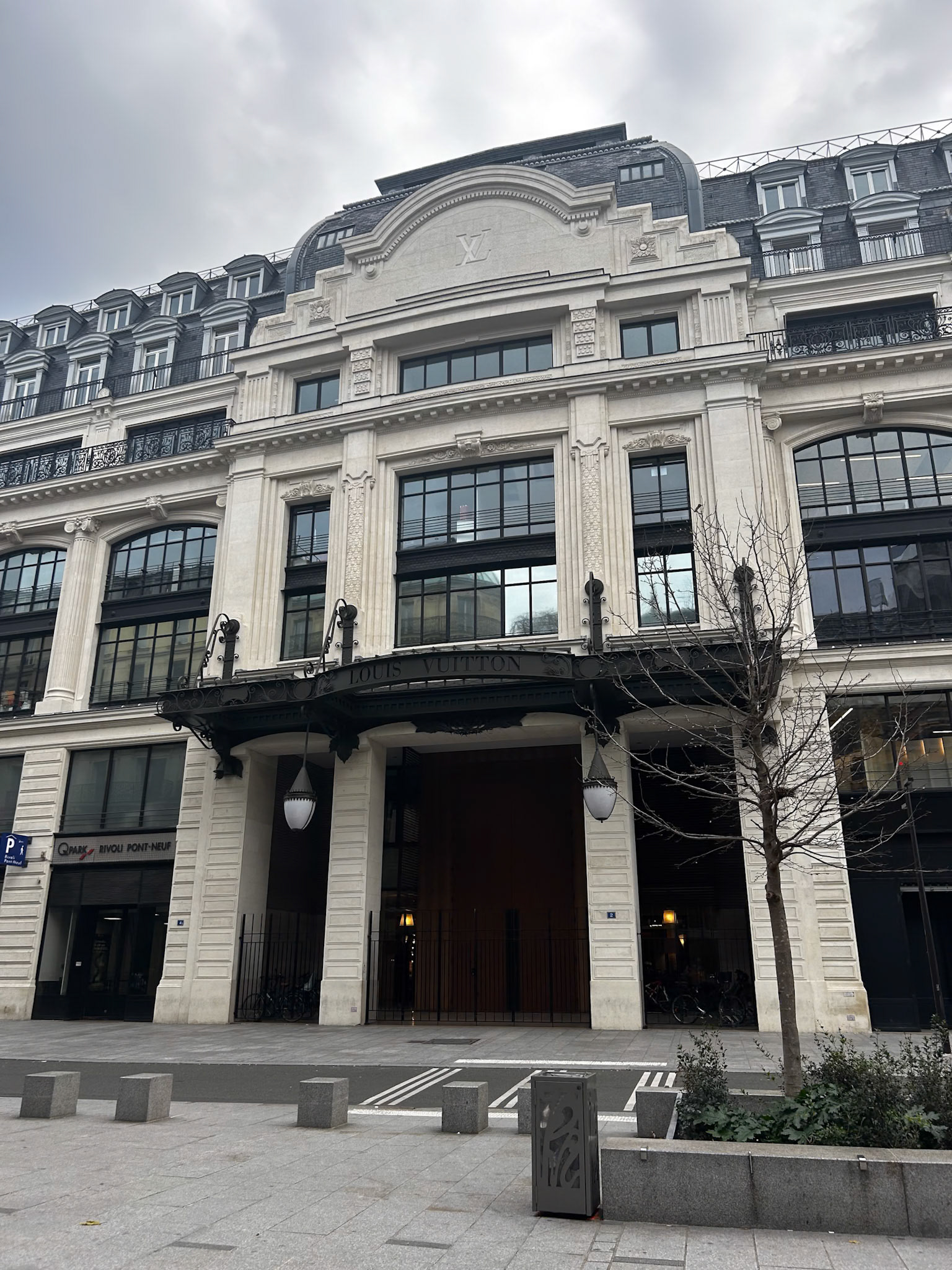
Louis Vuitton storefront
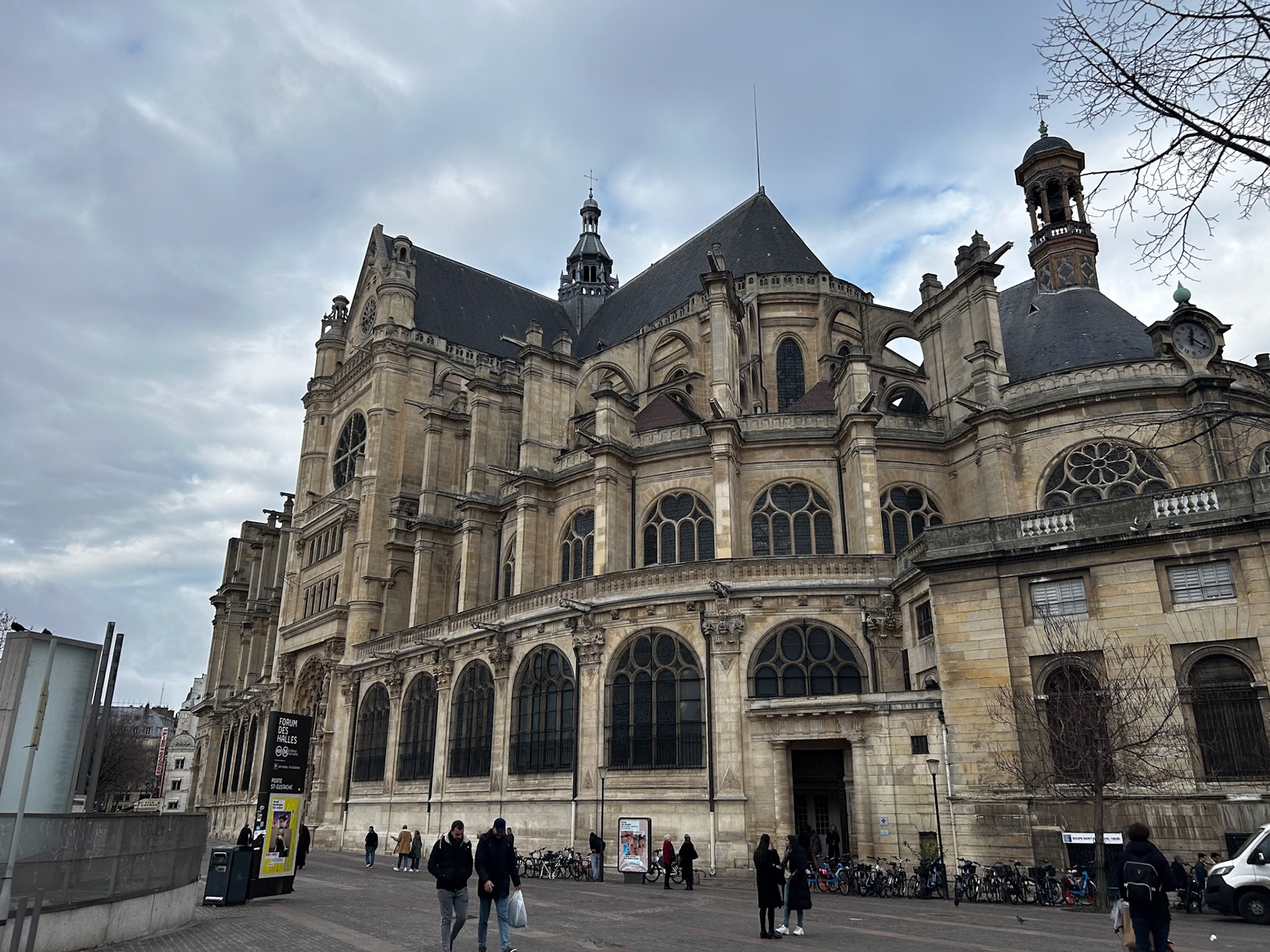
Church of Saint-Eustache
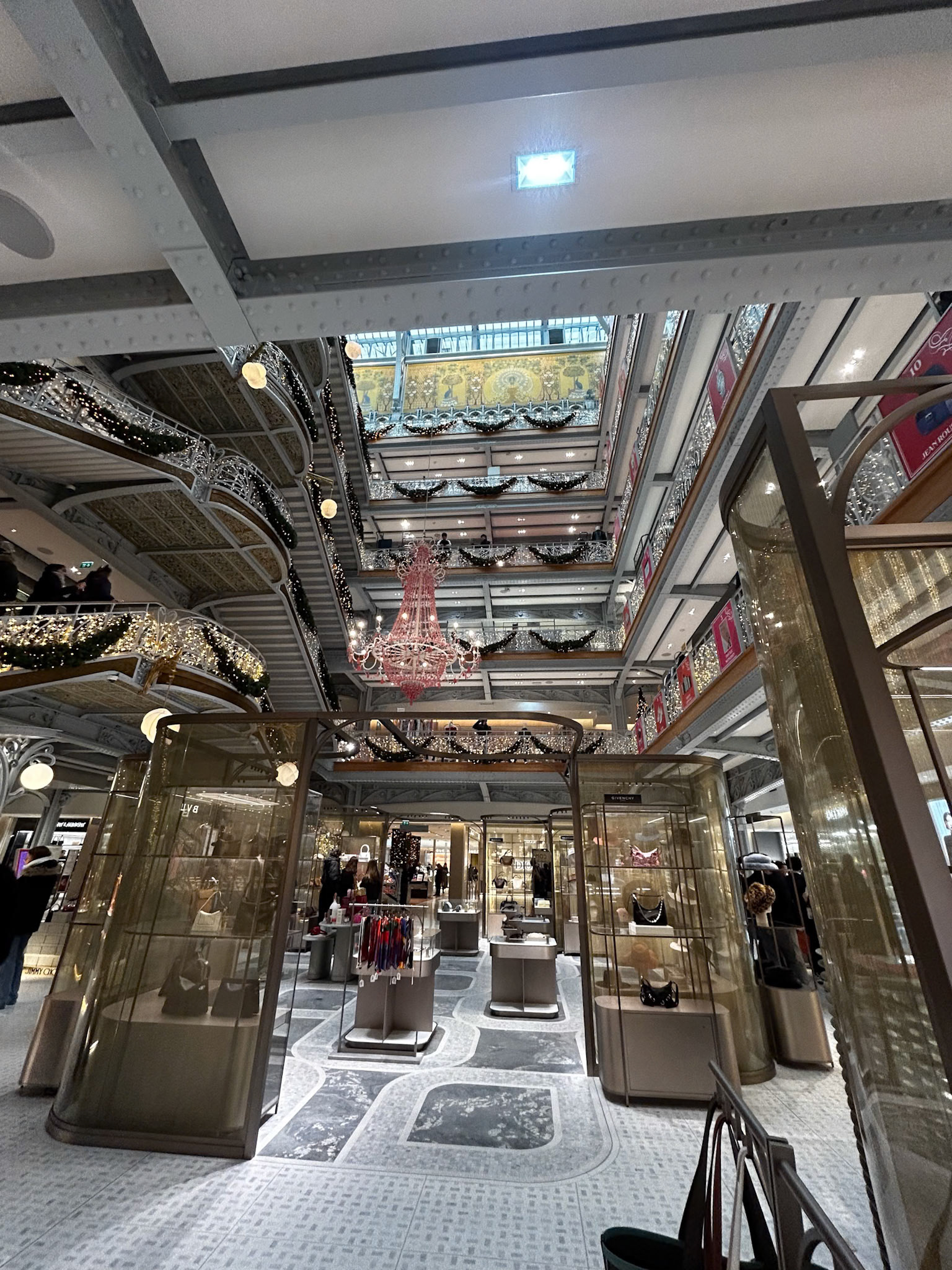
La Samaritane
~12:40 PM
The Pont Neuf bridge is centrally located in Paris and is the city's oldest, dating to 1607. Crossing it takes you over the Seine River and to the Île de la Cité - or Island of the City, where the Notre Dame Cathedral and Saint Chapel are located.
Sainte Chapelle, or Saint Chapel, is a royal chapel in the Gothic style, within the medieval Palais de la Cité, the residence of the Kings of France until the 14th century, on the Île de la Cité in the River Seine in Paris, France.
Construction began sometime after 1238, and the chapel was consecrated on 26 April 1248. The Sainte-Chapelle is considered among the highest achievements of the Rayonnant period of Gothic architecture. King Louis IX of France commissioned it to house his collection of Passion relics, including Christ's claimed Crown of Thorns – one of the most important relics in medieval Christendom. This was later held in the nearby Notre-Dame Cathedral until the 2019 fire, which it survived.
On my way to the Notre Dame Cathedral, I passed a little farmer's market on the island at Place Louis Lépine.
While I didn't have time (or the ticket) to go inside the Notre Dame Cathedral, still under construction after the 2019 fire, I was glad to see it in person.
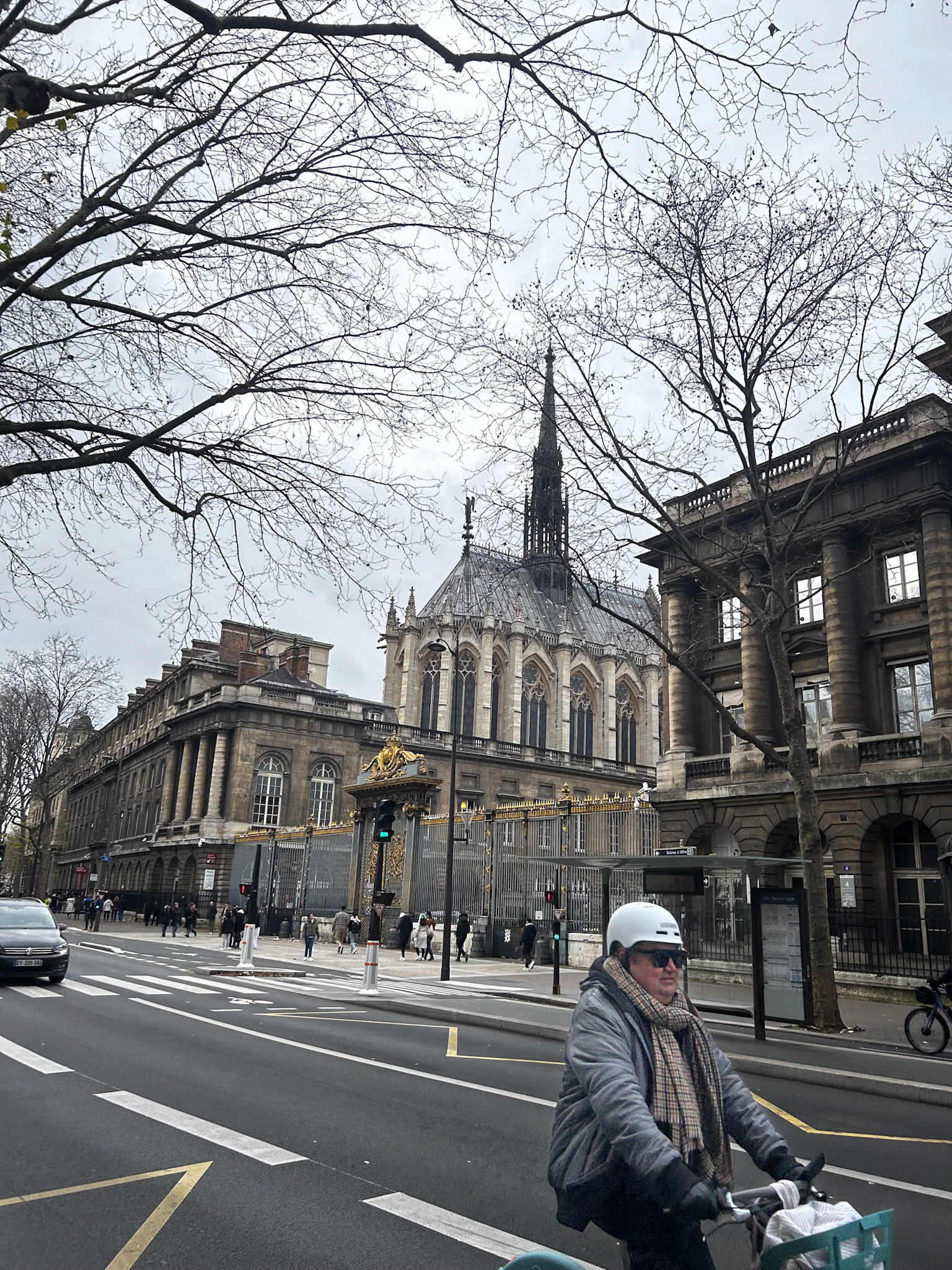
Sainte-Chapelle
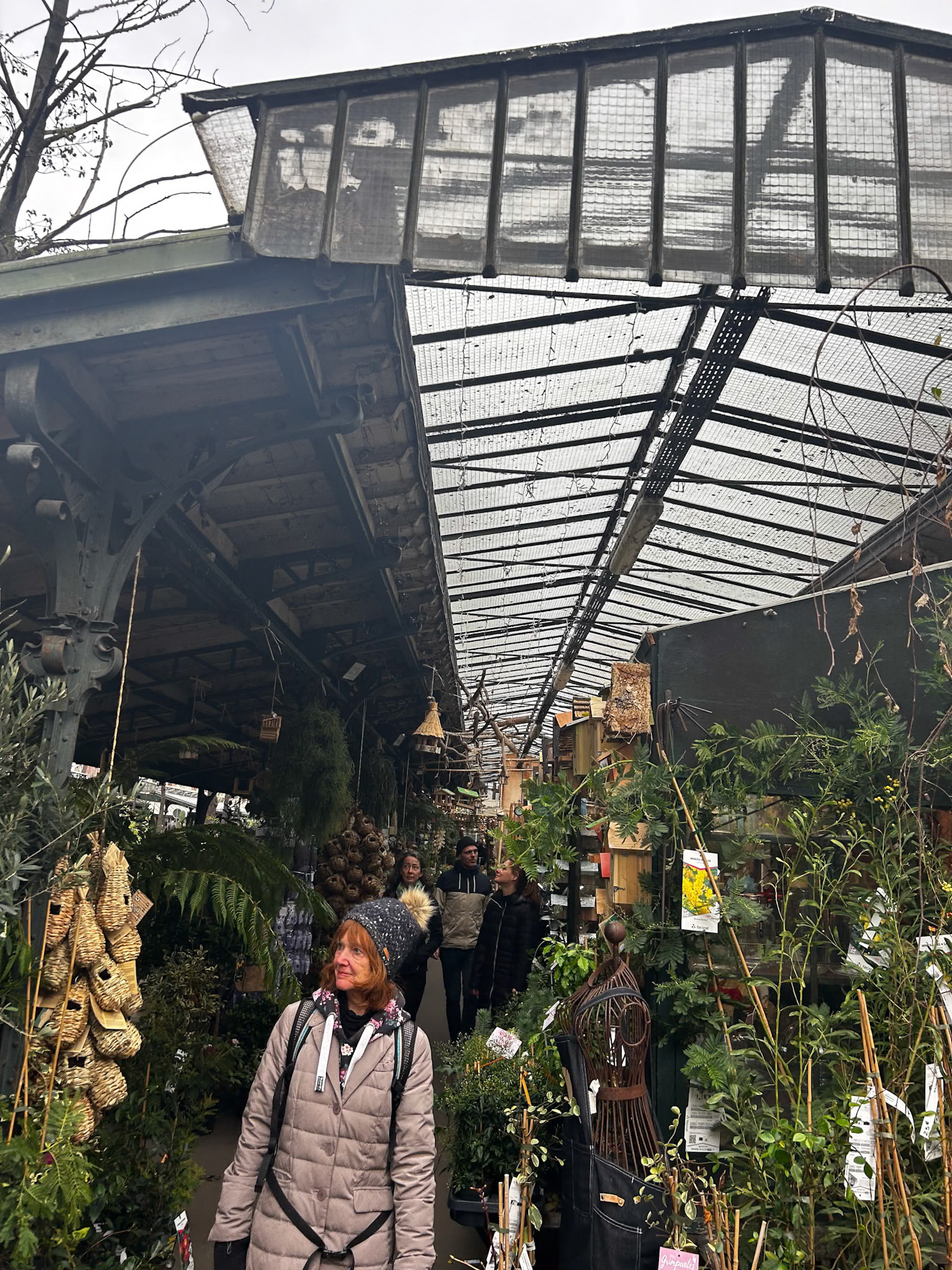
Place Louis Lépine
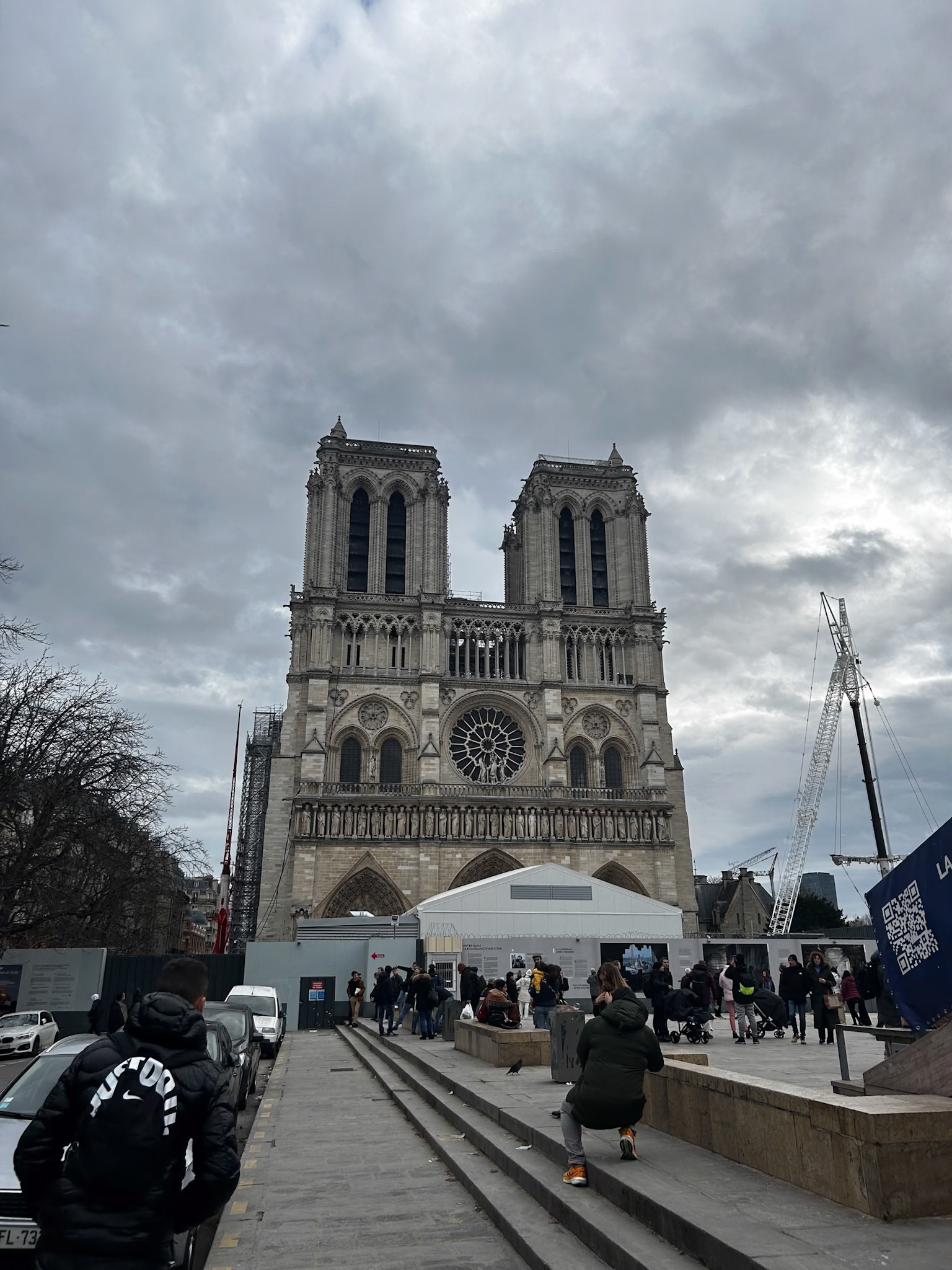
La Notre Dame
~13:00 PM - Les Jardins des Tuileries
I headed back along the Pont Neuf bridge towards my next destination - the infamous Louvre.
I walked along the Quai du Louvre and passed the Saint-Germain-l'Auxerrois church. The current church was built in the 13th century, with major modifications in the 15th and 16th centuries. From 1608 until 1806, it was the parish church for inhabitants of the Louvre, and the church contains the tombs of many notable artists and architects who worked on the palace. During the reconstruction following the Notre-Dame fire on the nearby Ile de la Cite, the cathedral's regular services were moved to Saint-Germain l'Auxerrois.
13:15 PM - La Louvre
Next up - the infamous Louvre Museum. I didn't have time on this trip to get a ticket, as they were sold out for the day, so vowed to come back again. My goal was to see the Christmas markets, so I continued on to Les Jardins des Tuileries, which I'd been recommended to visit for the Christmas market.
It was full of loud music, blaring lights, and stalls whose "I Love Paris" items were not what I was looking for, and along with the towering Carousel, full of tourists.
However, the shining part of the day was heading to Angelina's - a 120-year-old institution that has been delighting sweet tooths from all over the world, respecting the traditions, from its unmissable Mont-Blanc and hot chocolate, to the Belle Époque décor of the famous tea room, passing on the know-how from generation to generation. While I had to wait almost an hour in line to visit the tea room, it was well worth the wait!
I managed to order in French (without being asked to switch to English) an iced chocolate and an avocado toast with sparkling water. The chocolate is thick and rich, and is usually served melted with whipped cream to soften its intensity. The iced version was equally delicious, and the avocado toast has ranked among the best I've ever eaten.
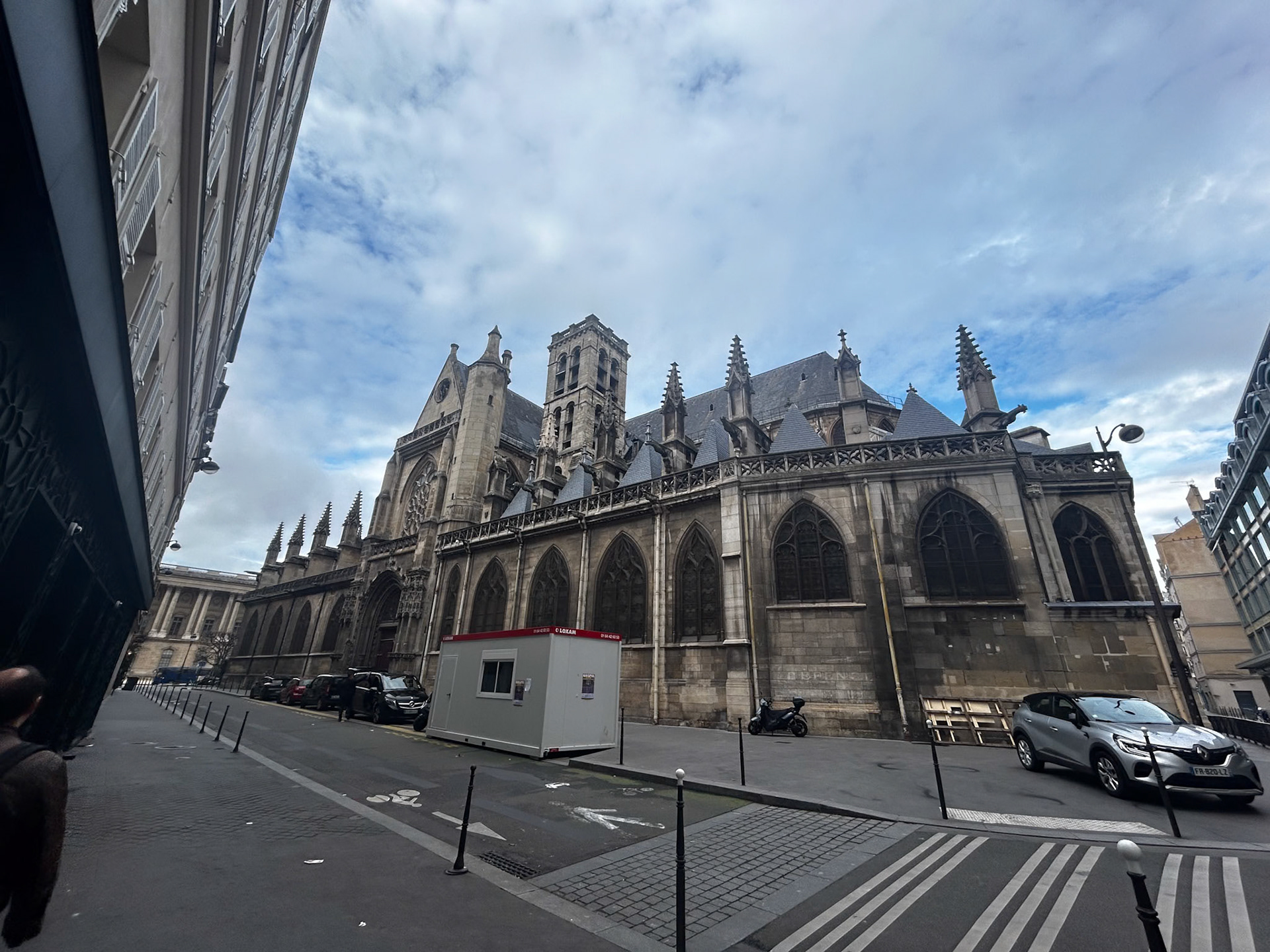
Saint-Germain-l'Auxerrois Church
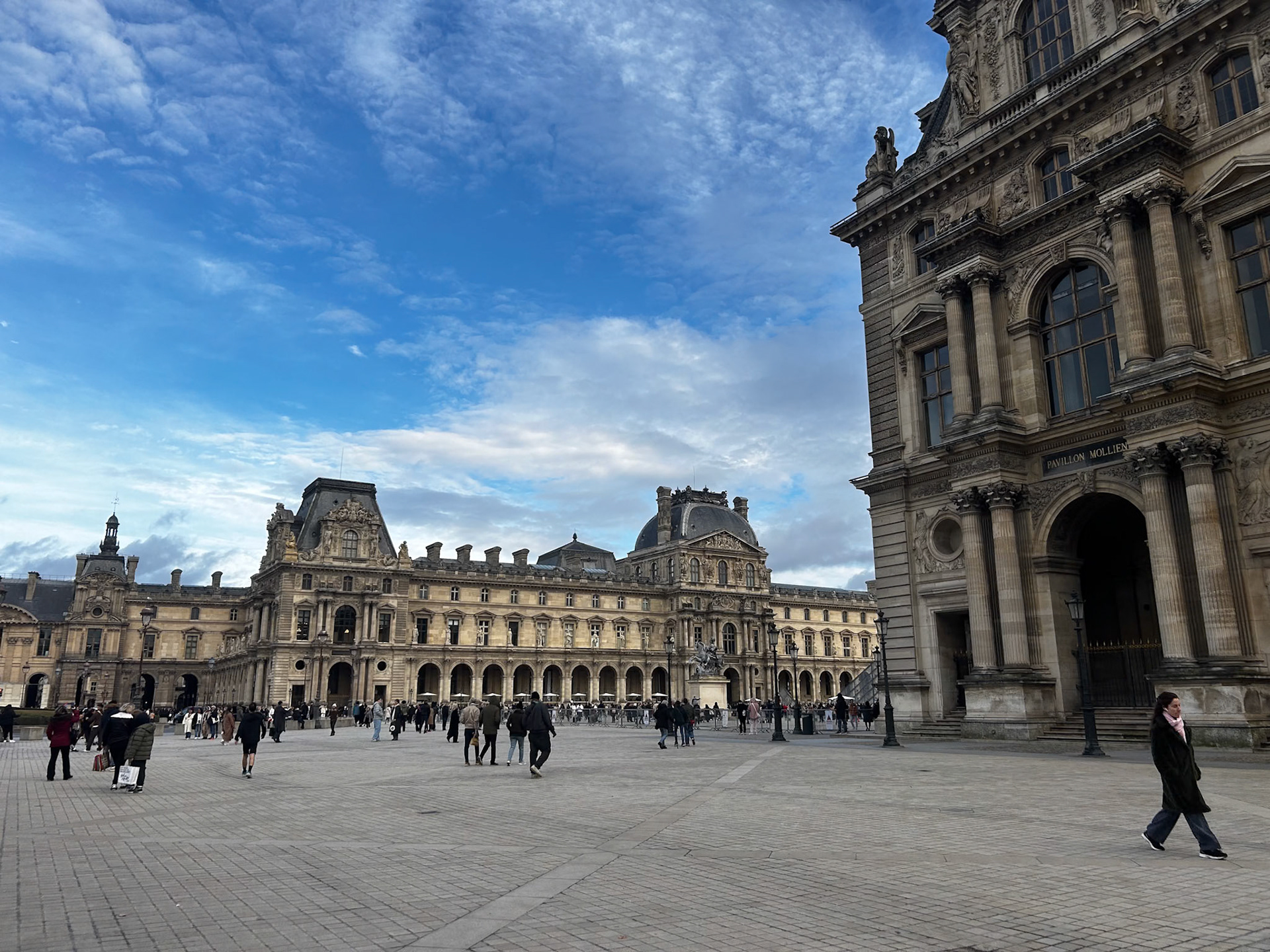
La Louvre
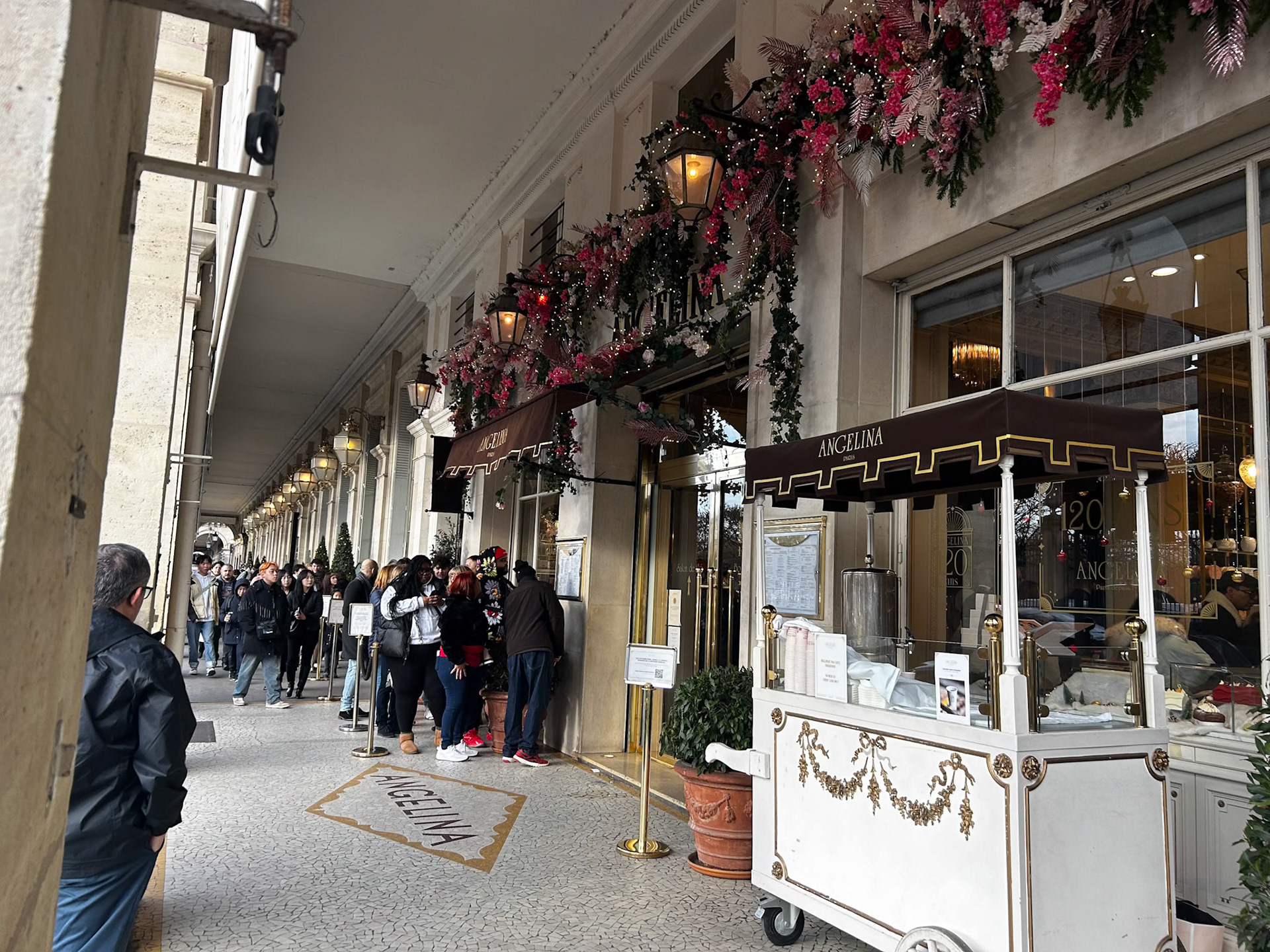
Angelina Chocolate
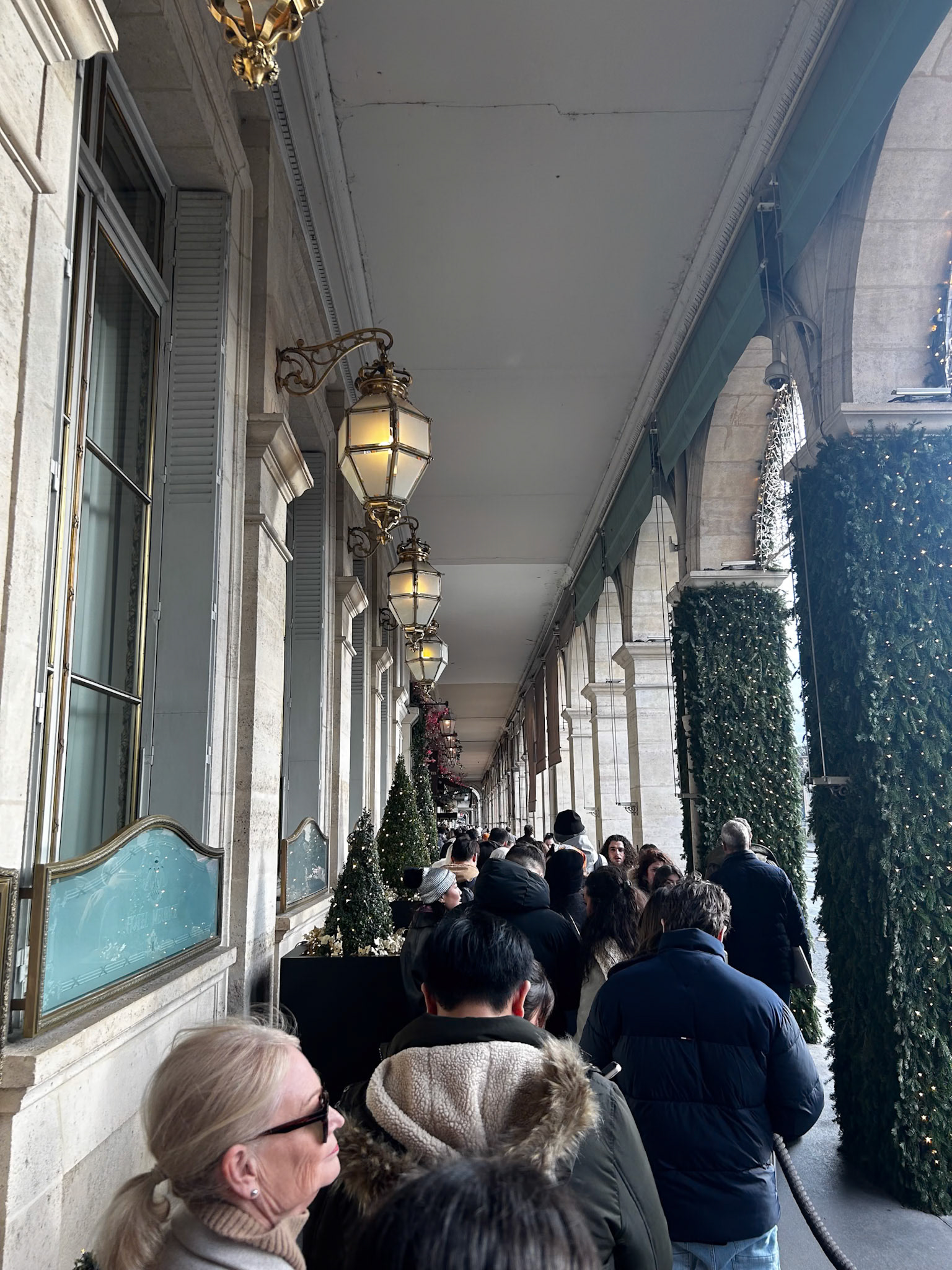
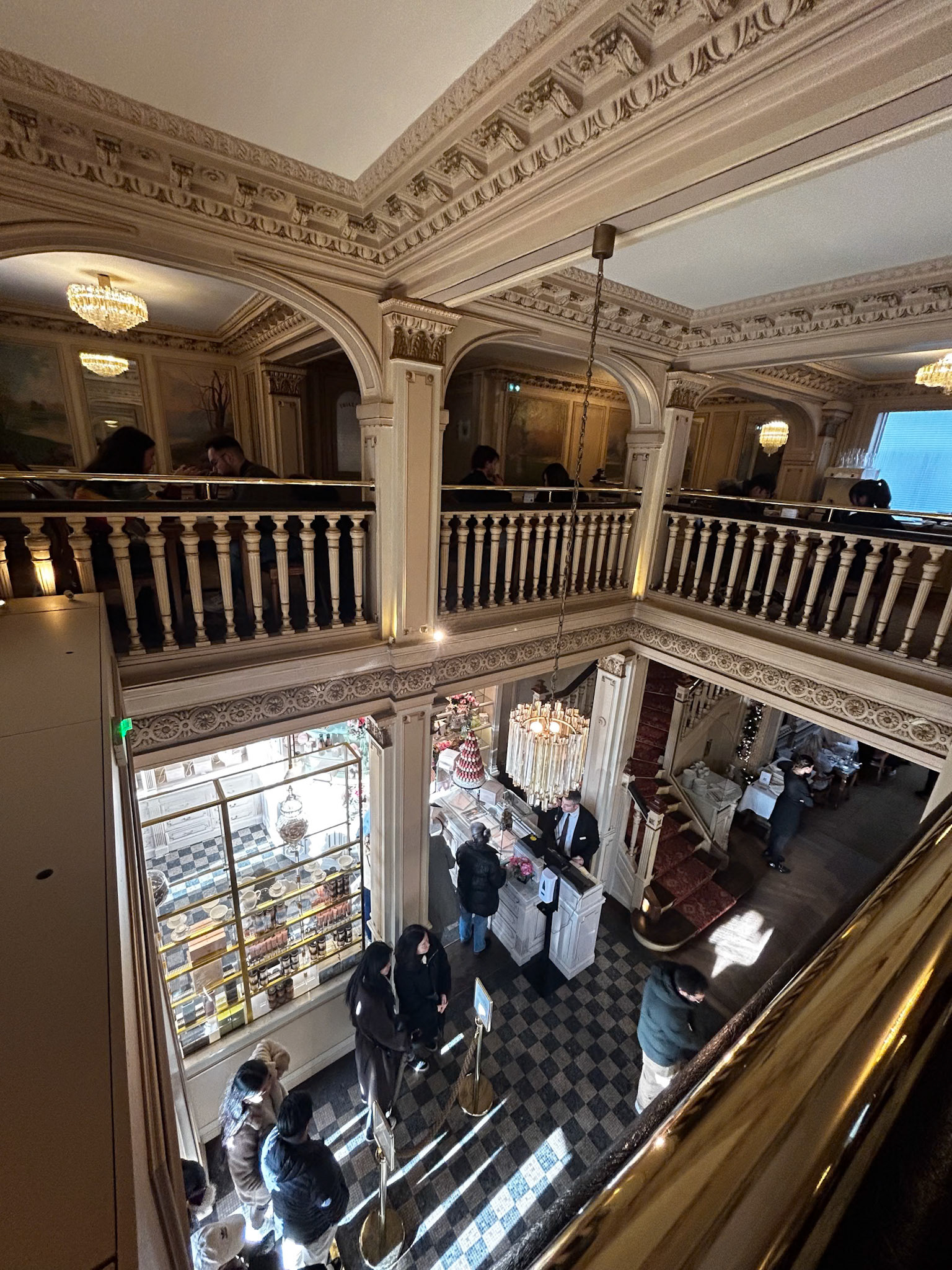
Cafe
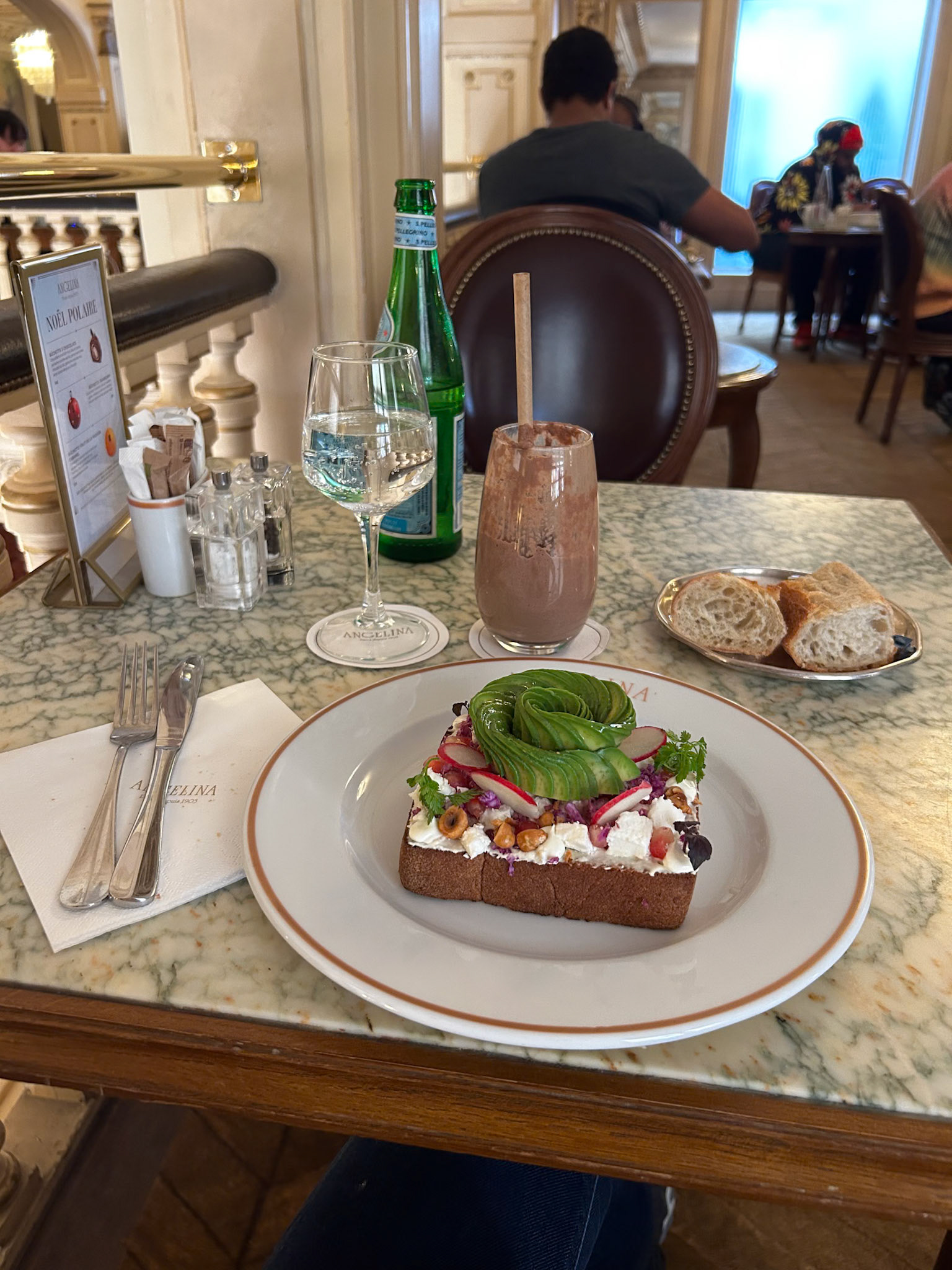
Iced chocolate and avocado toast
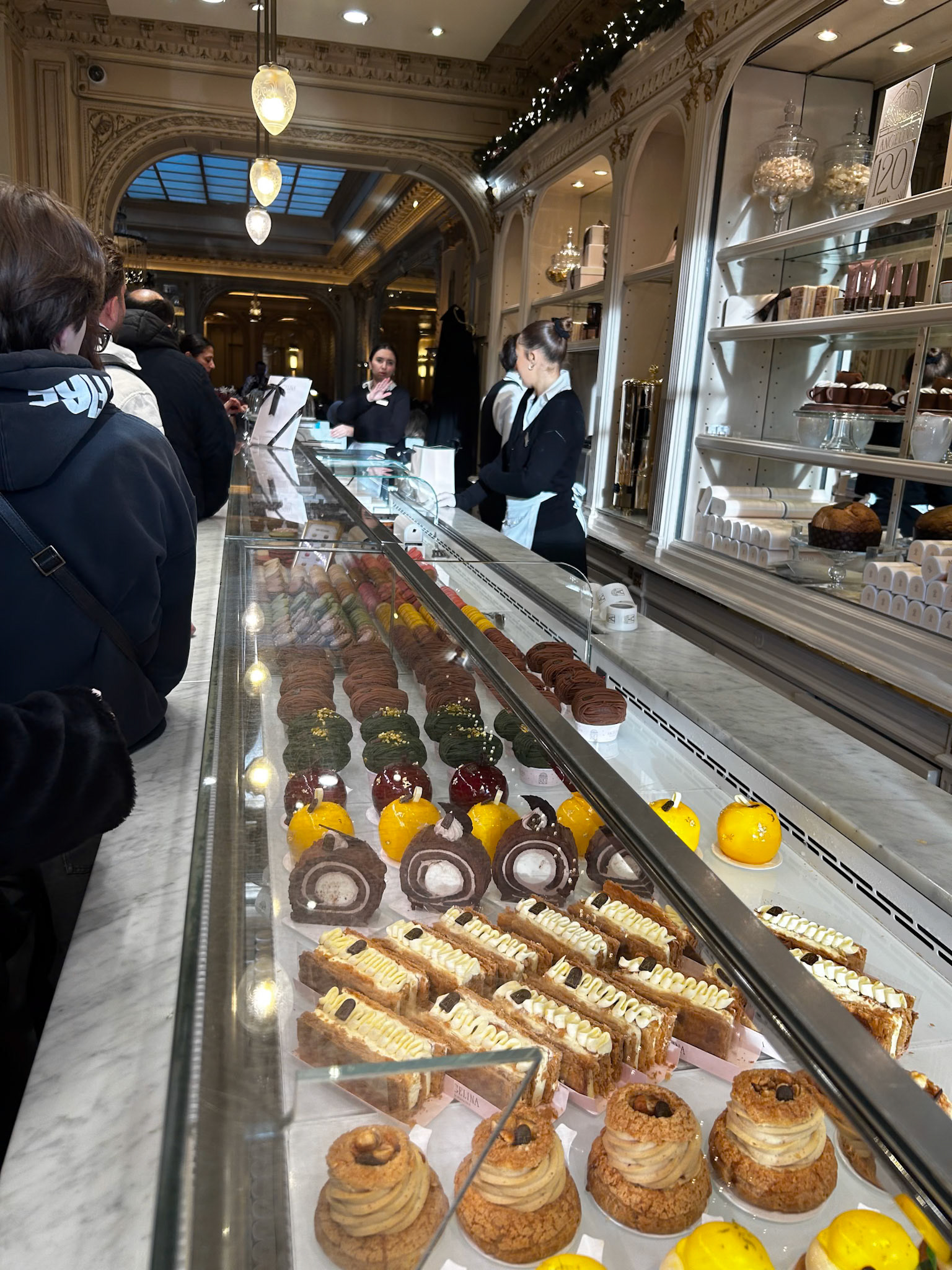
pastries, pastries, pastries
~15:30 PM - La Defense
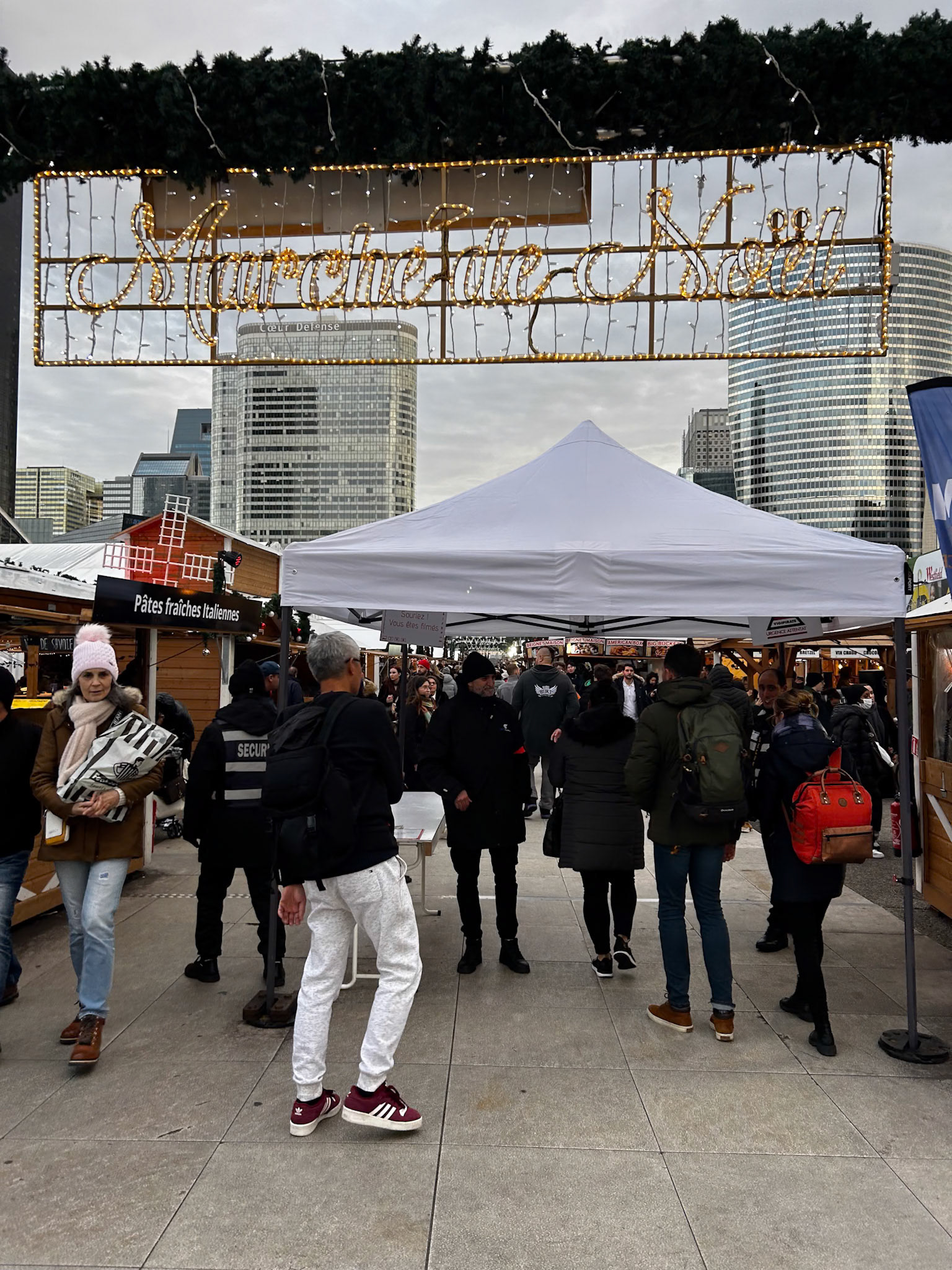
Next up on the itinerary? Heading to La Defense to the Marché de Noël Paris La Défense - my third Christmas market attempt. I attempted to head there by metro, but after getting stuck in the turnstiles and being unable to get out, I decided to leave the station and take an Uber.
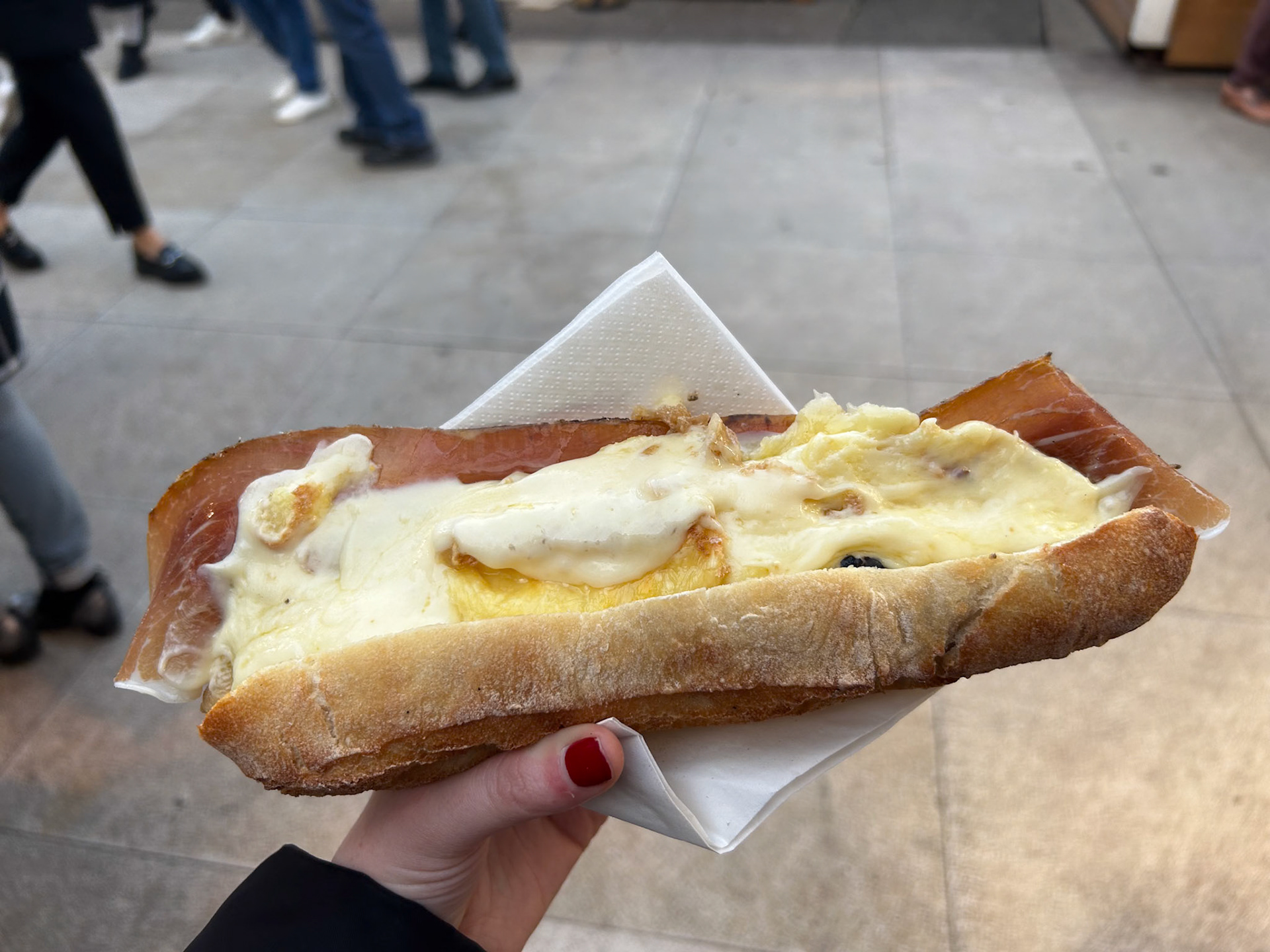
This market was far better - I treated myself to one of several food items that French Christmas markets are known for - a fondue and jamon sandwich. It was fantastic - but after the heavy lunch, I was unable to finish it. Other items at the market included l'escargot (snails), nougat, and a wide variety of meats and cheeses. If I didn't already have a suitcase full of souvenirs, I would have stocked up.
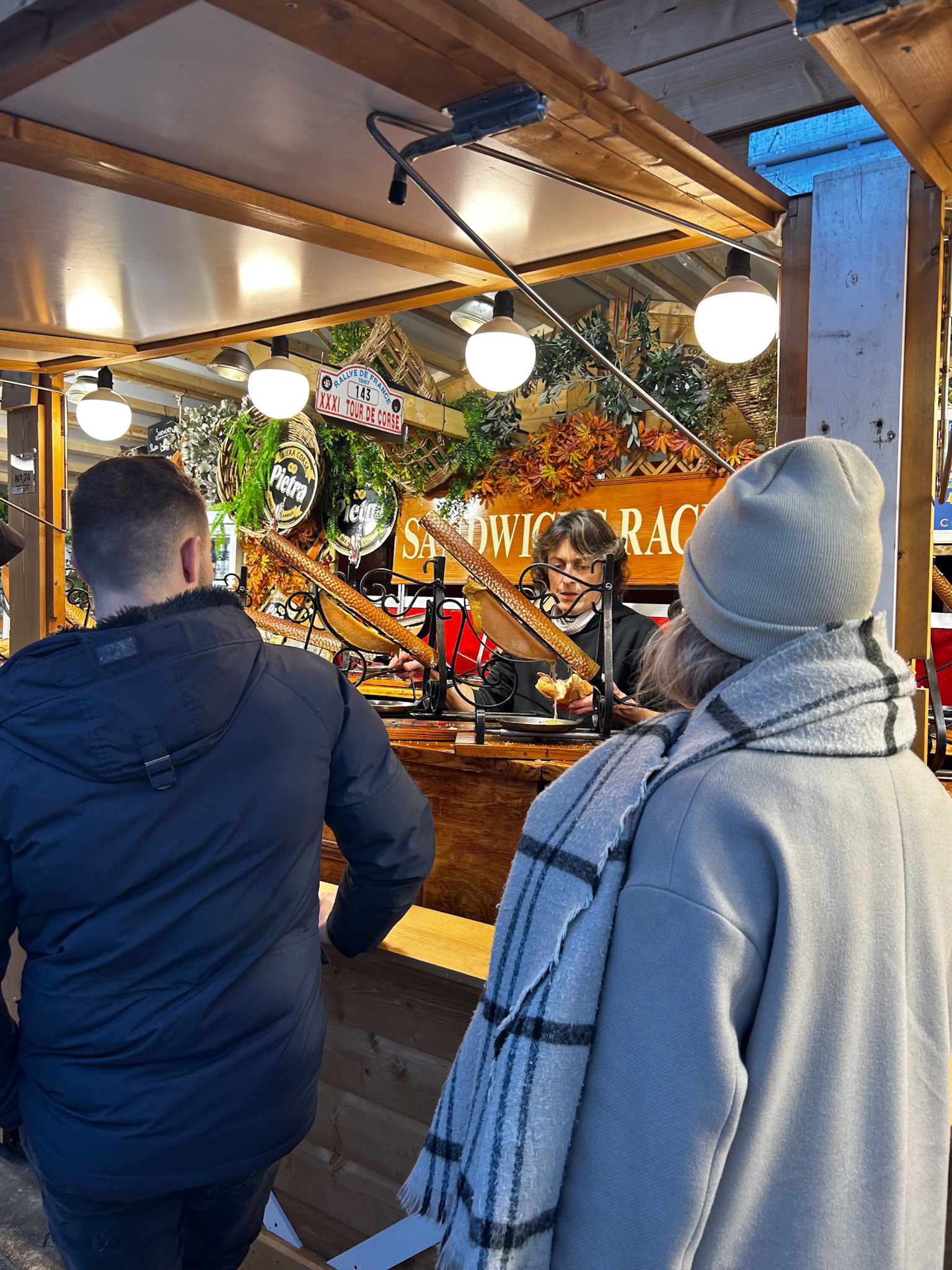
Raclette sandwiches
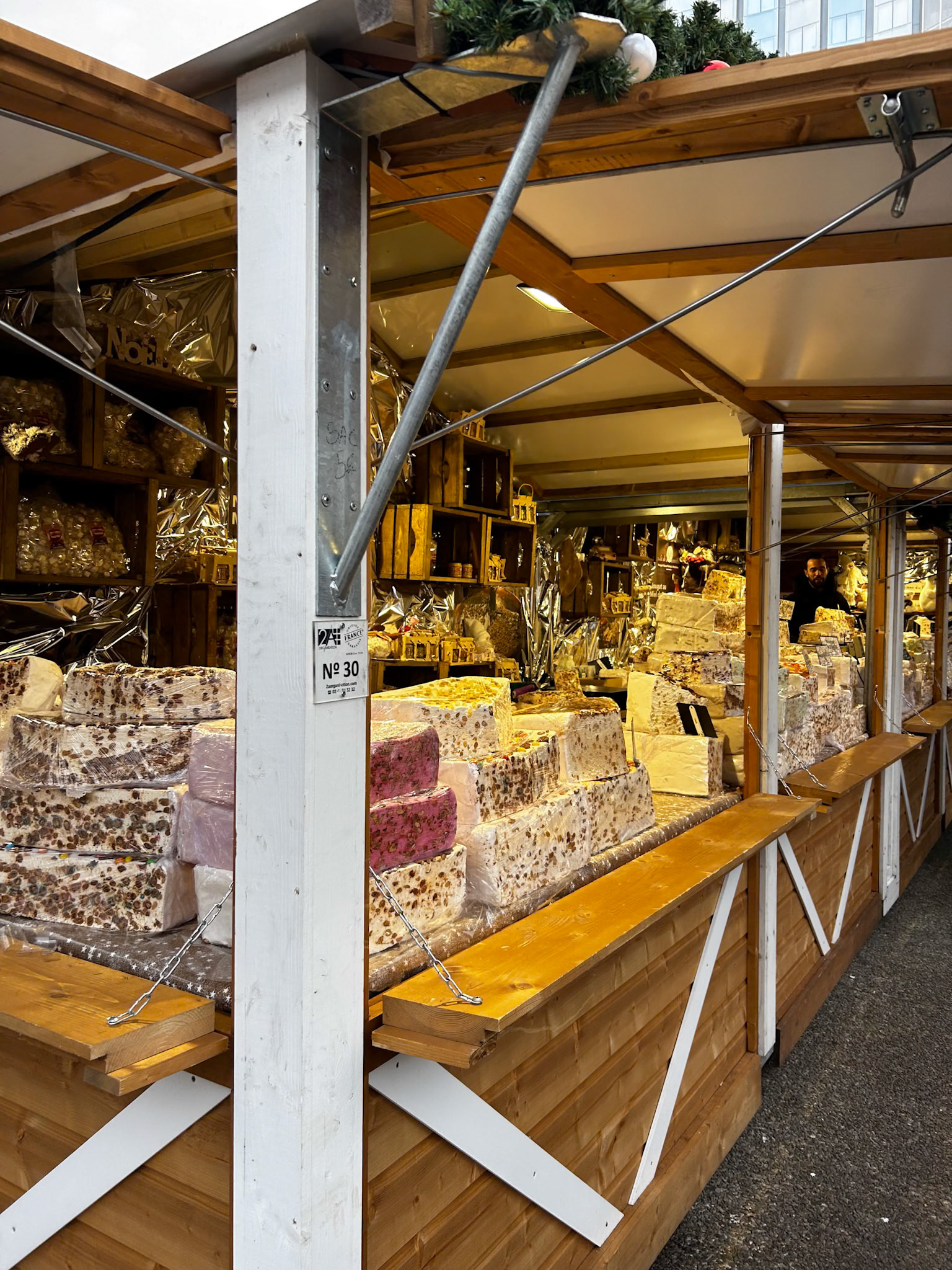
nougat
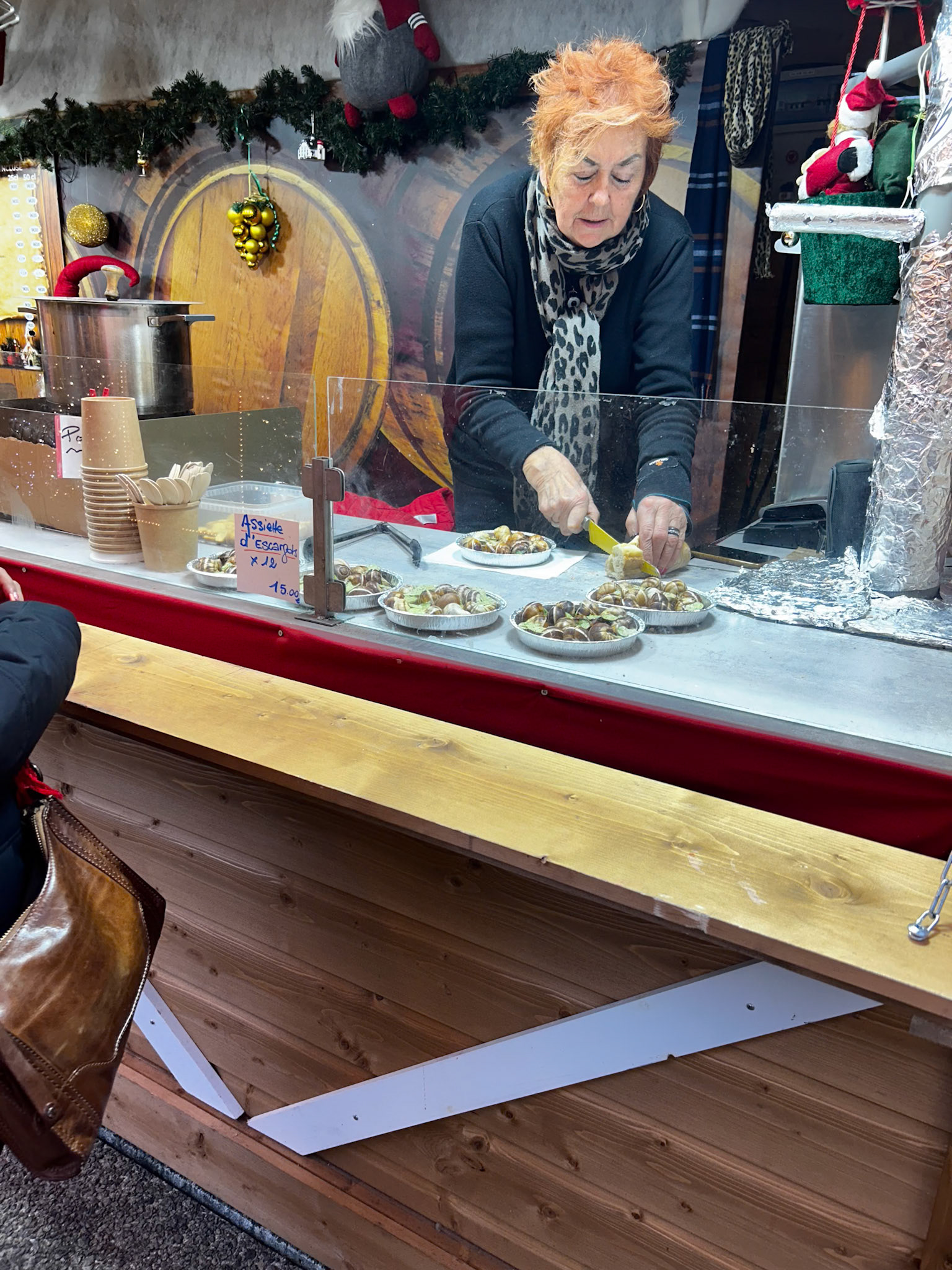
escargot
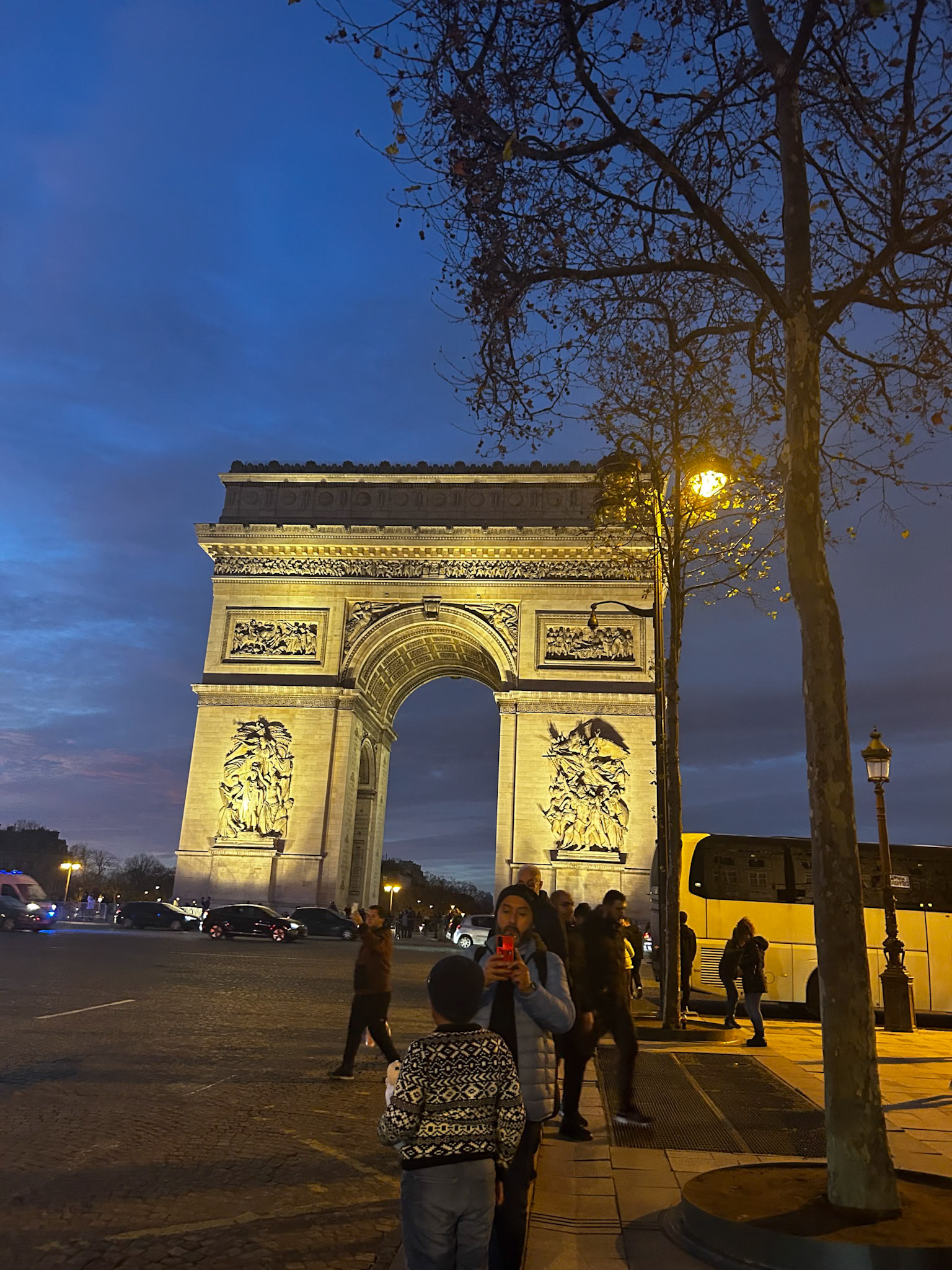
l'Arc de Triomphe
~17:30 PM - Arc de Triomphe
I walked from La Défense to the Arc de Triomphe - which is about an hour-long walk. Les Champs Élysées has over one million lights along the boulevard, and many stores have elaborate displays with mechanical pieces, art installations, or light shows.
Thousands were walking, or jostling, shoulder-to-shoulder along the road to see everything. I spent about thirty minutes fighting my way through five blocks before deciding to call it a night and head back to the hotel. I was starting to feel the effects of staying up all night, and wanted to change into something nice for the Christmas Eve dinner I'd RSVP'd for at the hotel restaurant at 7:00 PM.
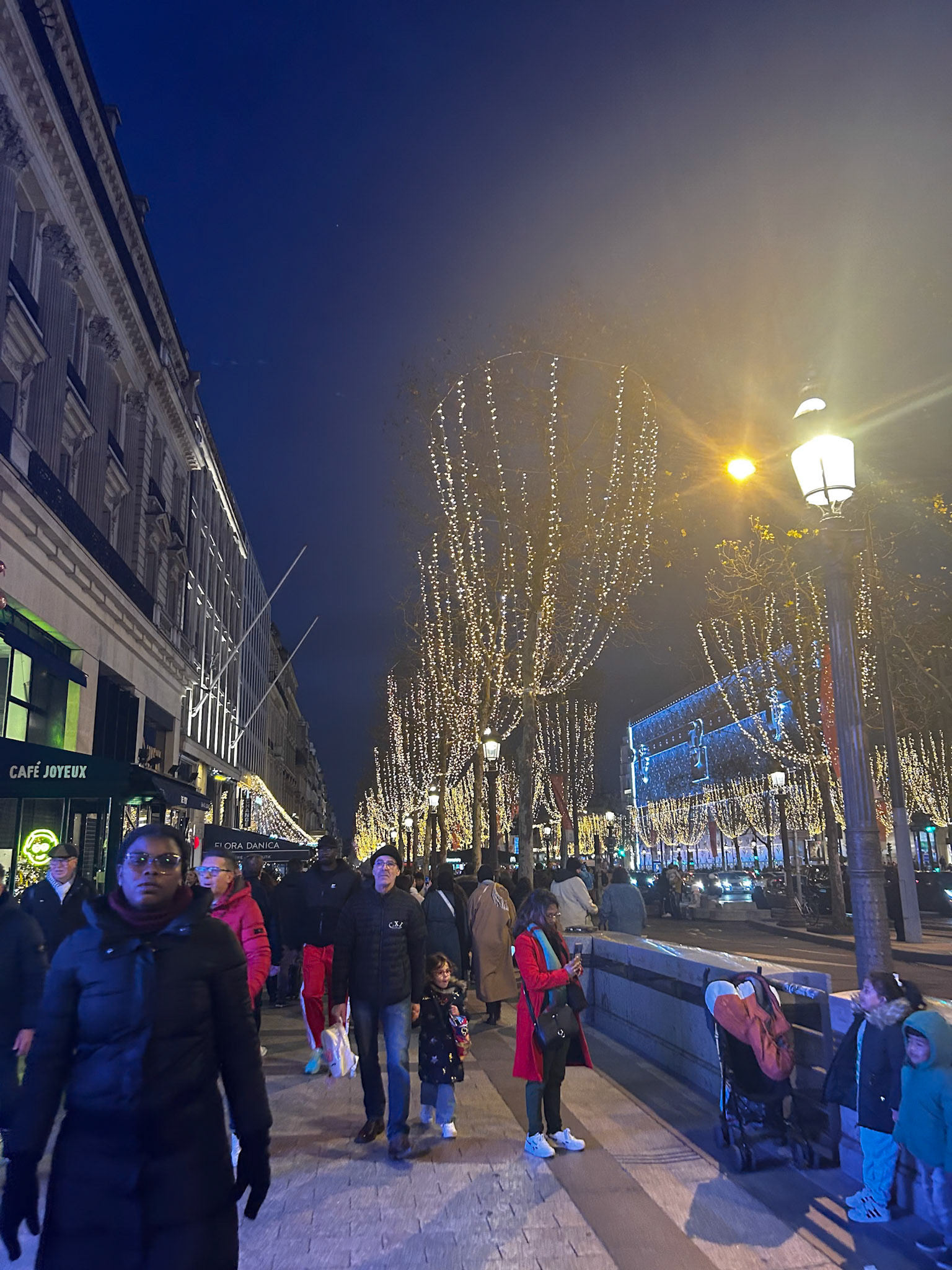
Les Champs Elysees
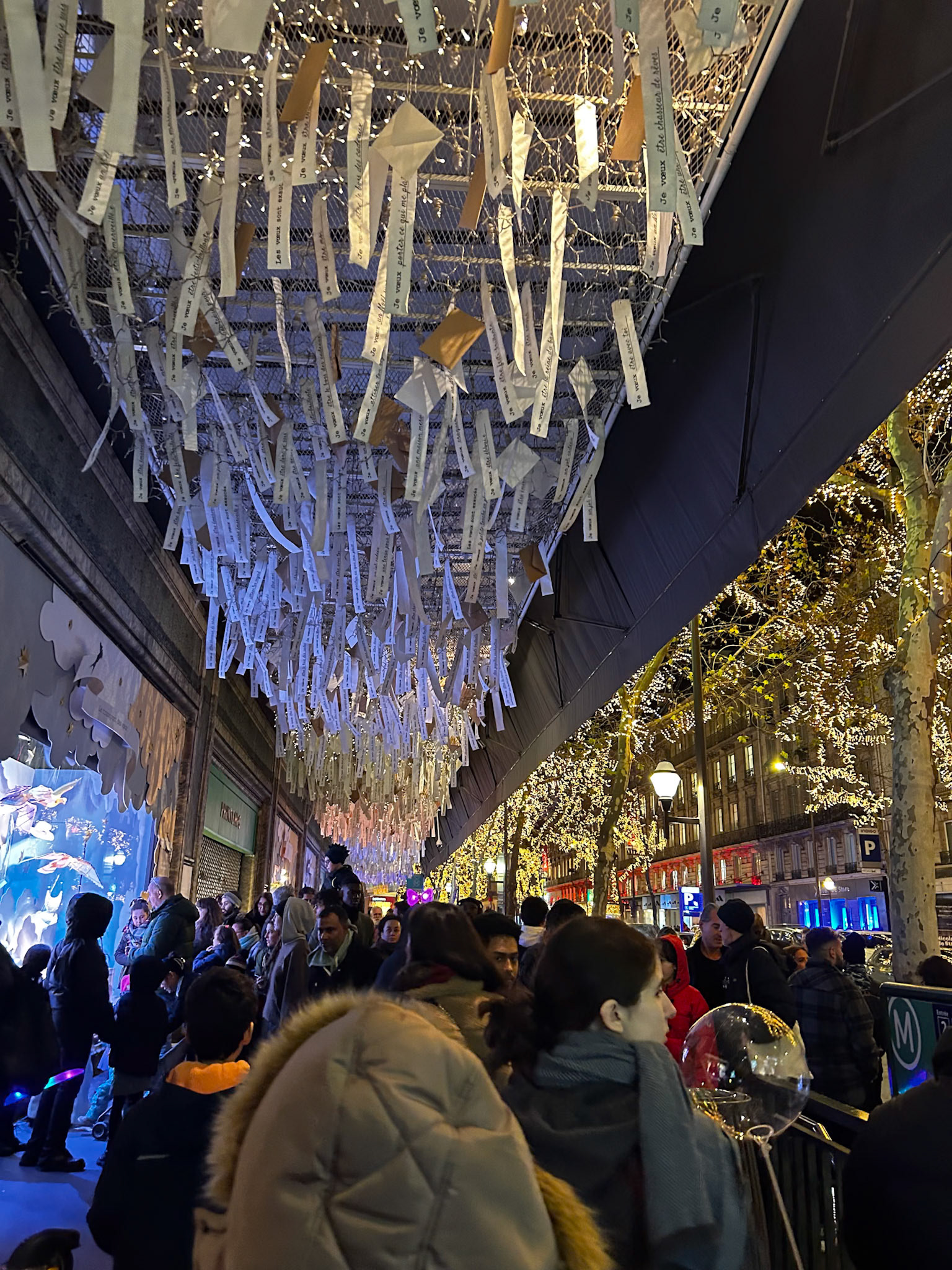
Shop windows
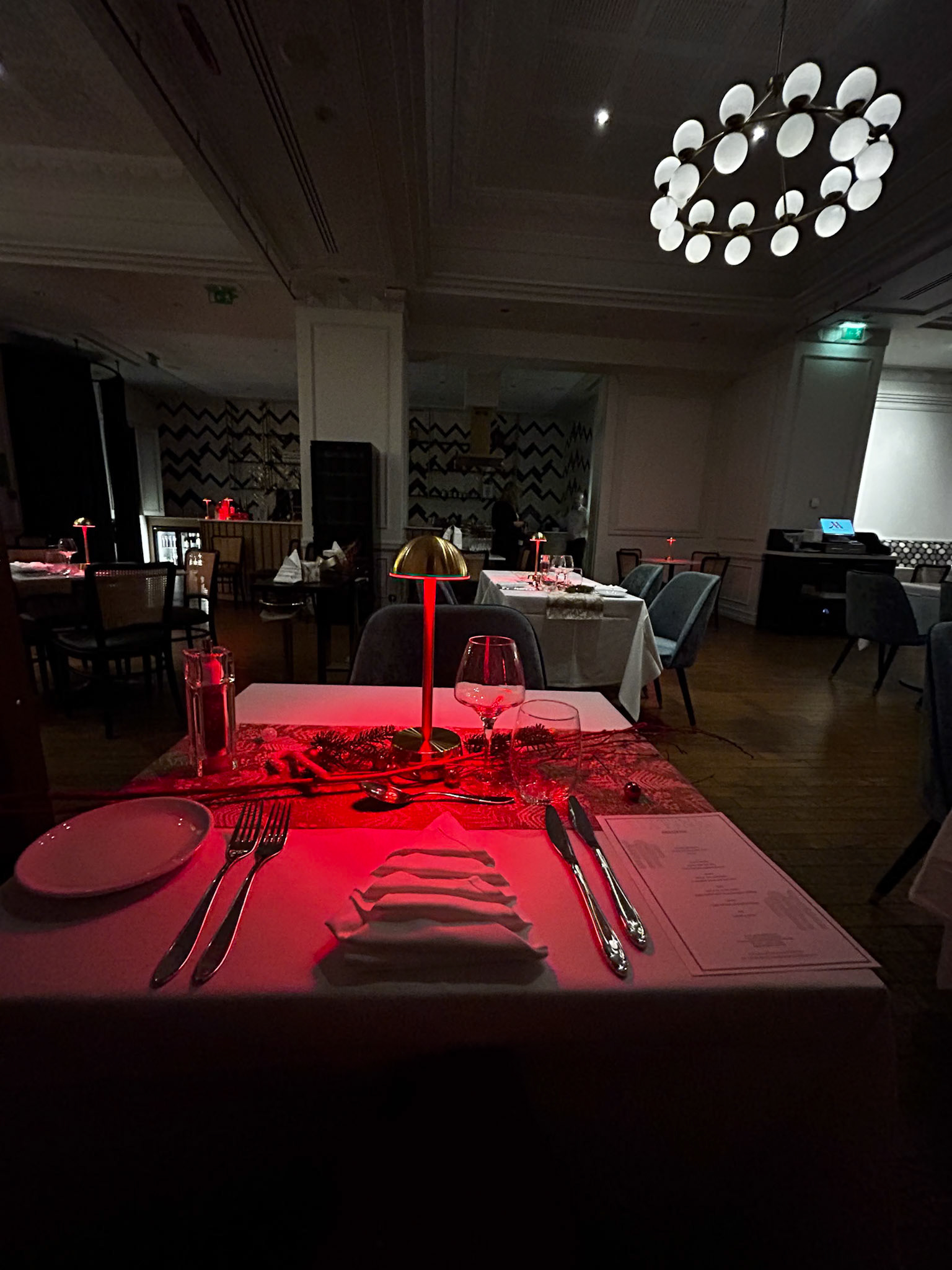
Dinner!
Monday, December 25
Christmas Day saw me leaving the hotel at 08:30 AM to Charles de Gaulle airport for a 12:15 - 15:25 flight back to Casablanca. My first solo trip was complete - and a pro-level course in learning how NOT to travel. I would be much better prepared for my next trip.
First thing I was going to do when I arrived back home? Purchase a smaller duffel bag or backpack for 2-3 day-long trips, which can be used as a carry-on and be much more portable.