History of Fes
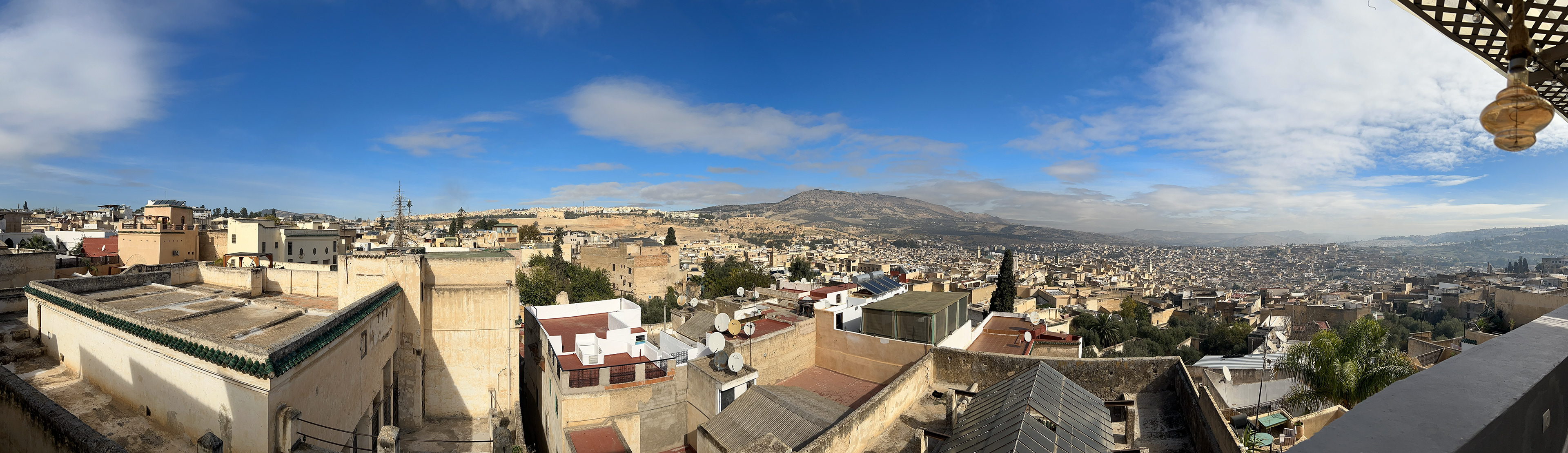
A UNESCO World Heritage site, founded in the 9th century, Fez reached its height in the 13th–14th centuries under the Marinids, when it replaced Marrakesh as the capital of the kingdom. The urban fabric and the principal monuments in the medina – madrasas, fondouks, palaces, residences, mosques, and fountains - date from this period. Although the political capital of Morocco was transferred to Rabat in 1912, Fez has retained its status as the country's cultural and spiritual centre (UNESCO, 2025).
It still feels ancient and alive, with its warren of 60,000 alleys, bustling shops, and a glimmer into the real Morocco - not the glamorous, polished one in Marrakech, the strict and political buttoned-up one in Rabat, nor the business and international scene of Casablanca, but the heart and soul of the Moroccan people colliding on top of each other in a city that seems timeless.
Fez has the best food, the largest selection of Moroccan craftsmen and wares, and cheaper prices than other major tourist centers of Marrakech, Tangier, Rabat, and Casablanca.
Getting lost is part of the adventure - pro tip, if you have lost your way, head for whichever street is heading up or down. The Fez medina is built like a bowl tipped on its side, so you can leave by going up or going down. You'll eventually reach a gate.
Google Map of Recommended Locations:
Timeline of Trip
Friday, Nov 10
0730 : Depart Casablanca
1100 : Arrive Fes, Morocco
1130 : Check-in at Riad
1150 : Walk to Lunch at Ruined Garden
1330 : Explore Marrakech
1900 : Return to Riad
1930 : Dinner at Riad
Saturday, Nov. 11
0800 : Breakfast at Riad
1000 : Walking Tour with Guide
1200 : Lunch
1530 : tea break
1700 : Return to Riad
1900 : Dinner at Riad
Sunday, Nov. 12
1000 : Check-Out of Riad
1030 : Visit Pottery Co-Op
1100 : Depart Fes to Meknes
1300 : Visit Winery for Lunch in Meknes
Getting There:
We left early, around 7:30 AM on Friday, Nov. 10, having taken the day off from work.
I was a passenger on this trip, not even a month after my arrival, with two of my colleagues and a TDYer. We drove via personal vehicle from Casablanca to Fes, which takes about three and a half hours without traffic on the highway route that passes by the olive farms of Meknes. It is an easy drive with a good road and clearly labeled signs.
Be prepared to stop at police stops along the way - because we had diplomatic plates, we were usually waved through. You may have to explain where you are going and show your identification if you are stopped by the police. It is wise to keep cash on you in ranges from 50 - 500 MAD as well if you are asked to pay any fines.
Lodging:
We parked just inside a gate along the edge of the Medina, since the streets are far too narrow to let cars through. Keep that in mind if you stay within the medina - duffel bags are much easier to transport while walking than a carry-on suitcase! Thankfully, we had only a ten-minute walk, and we were met by two employees at the riad who took our baggage for us and guided us to our riad.
We knew from the website that it was going to be a beautiful accommodation, but we were unprepared for the plaster carvings, fresco-style tilework, Atlas-cedar carved wood, and metal work that awaited us inside.
The outside door was standard and looked like most of the others along the alleyway.
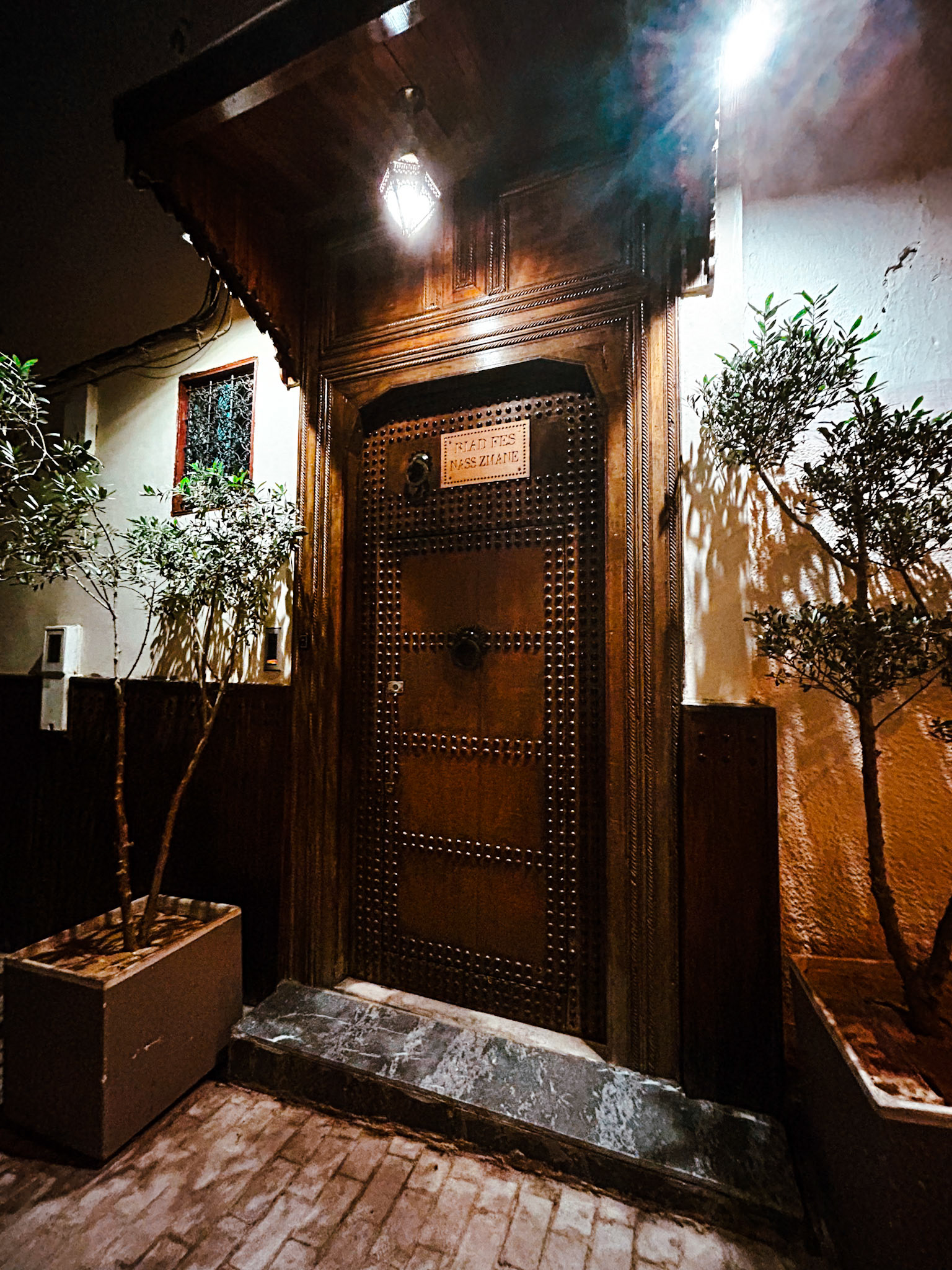
Front door from the alley
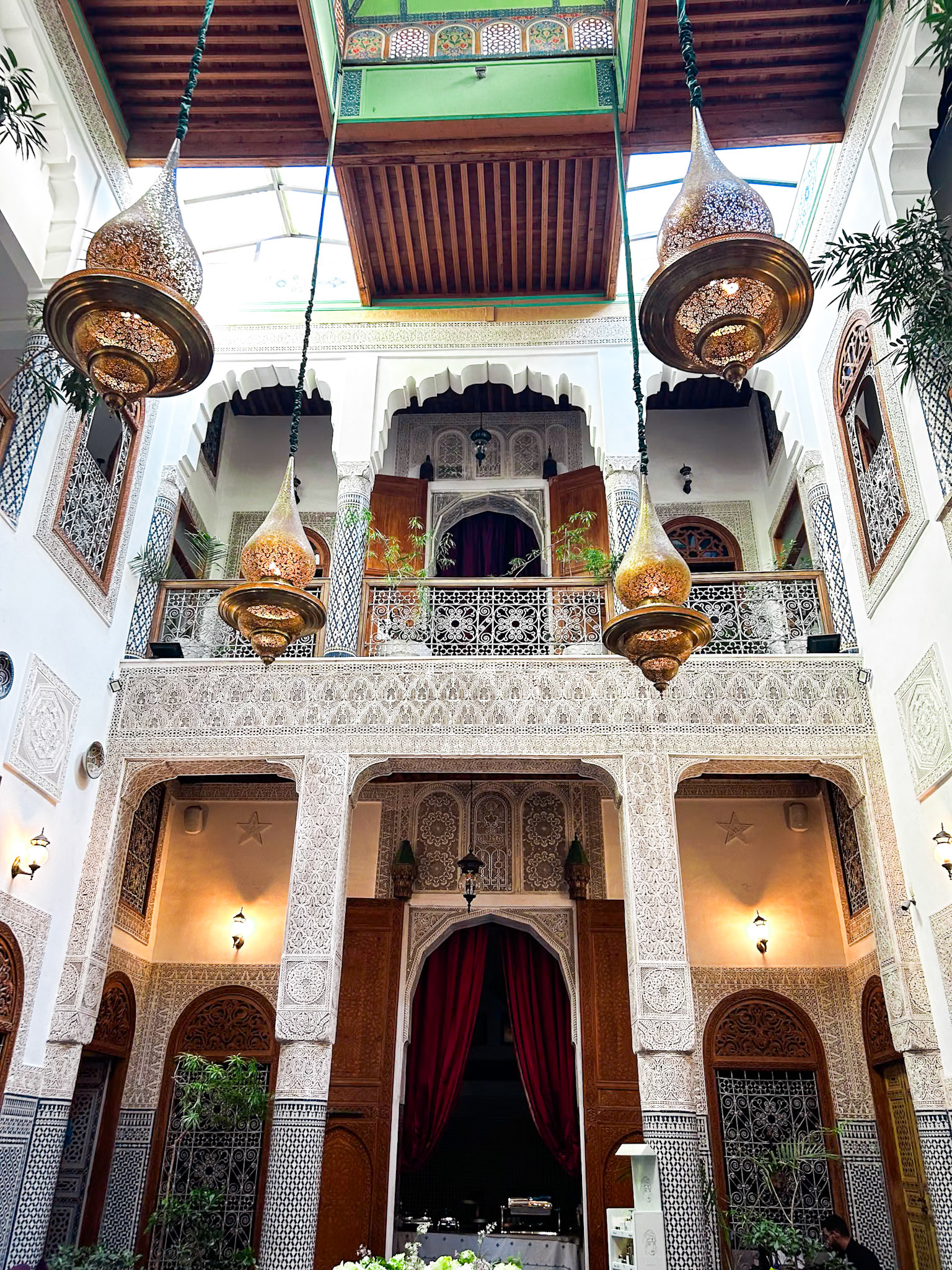
Inner courtyard
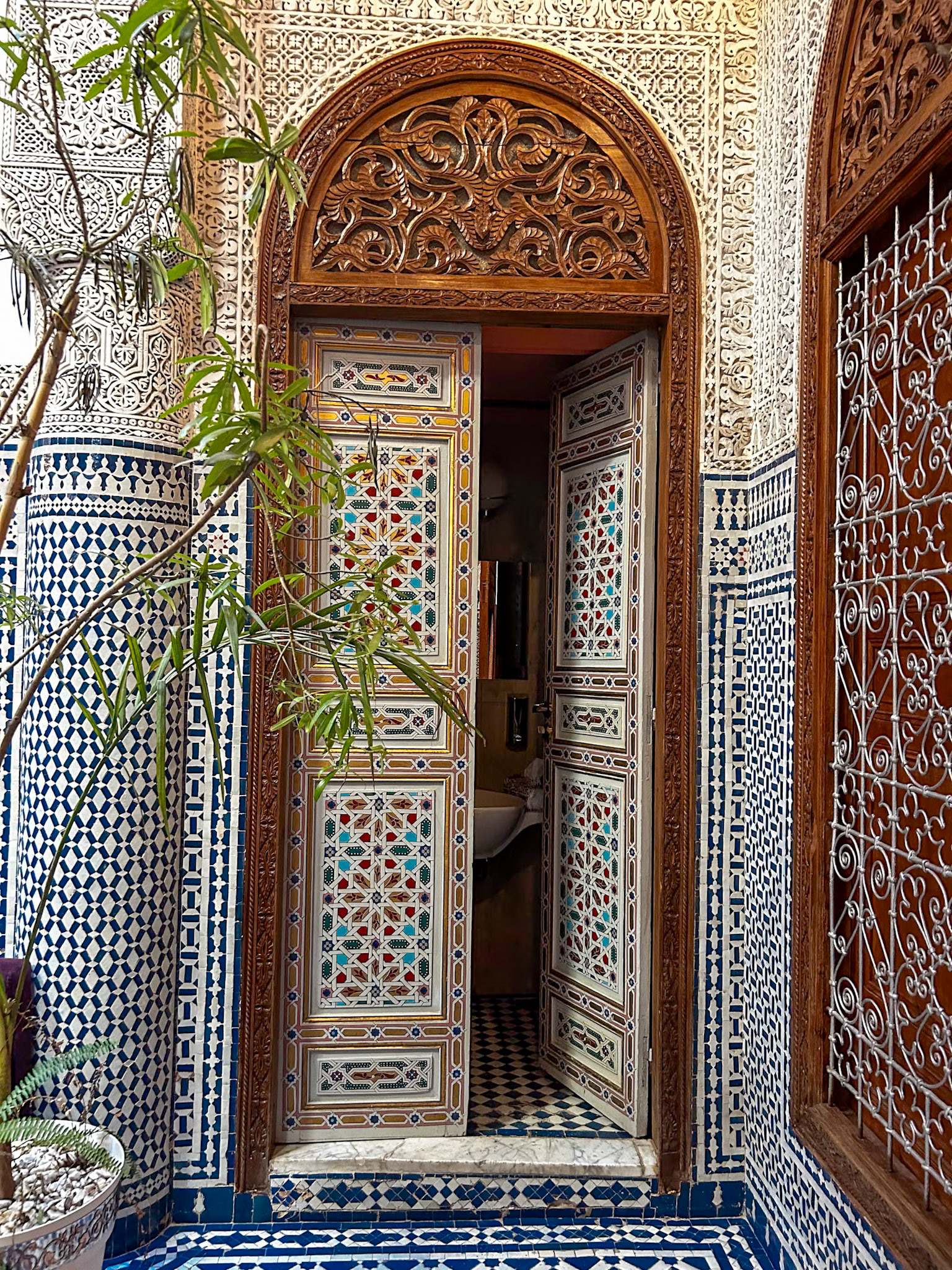
courtyard bathroom door
We checked-in around 11:30 AM to the Riad Nass Zmane Fes, which is a riad-style lodging with roughly 8-10 rooms around an inner courtyard, often having on-site amenities such as a hammam, rooftop terrace, dinner service, and or massages.
A palais, or palace, is similar but on a larger scale and would have a pool instead of a courtyard in the center of the dwelling. Reservations can be made through Booking.com - but beware, reservations should be made at least a few months ahead unless your schedule is flexible. It is a popular location and is frequently booked months in advance.
Riad Nass Zmane Fes has eight rooms, with a variety of bed configurations - it's best to split up your group and be comfortable with having a roommate to make the best use of space. Rates will vary, but in the off-season we were in, the room only cost around $150 for two nights. In the high season, this can rise to around $300 for two nights.
October - November is the best time of year to visit Fes, as crowds are small and the weather is at its most mild. Avoid visiting between April - September as you will encounter large groups of tourists, high prices, and the summer temperatures and humidity are at their highest between May - August.
In our case, the riad was empty, so we each had our own rooms. Wifi was available and fast, and we had the option to schedule in advance a massage or be given recommendations for local hammams (Turkish-style multi-step steam baths).
We were delighted in the afternoon when the owner showed us that the roof could recede, giving us an open skyline view for sunset and dinner.
Lunch and Exploring
We departed around noon to head to lunch at the Ruined Garden, which was about a ten-minute walk away from the Riad.
They serve seasonal dishes with a daily menu for lunch and dinner with staples such as tagines (slow-cooked meat and vegetables), pastilla (meat and nut filling in a flaky crust), and soups such as bissara (fava bean winter soup loved in Tangier) and harira (vegetable and chickpea tomato-based soup eaten to break the fast during Ramadan).
I tried the beef tagine with apricot and prunes with a rich, slow-cooked onion sauce. The beef was super tender and spiced well, juicy, and falling off the bone. We also got a bean and tomato salad, and I chose a lemonade - beware those from the South, lemonade is usually straight lemon juice and water with no sugar added.
Water is ordered in bottles, at the individual 33cl or table-sized 1 liter, in either still (Sidi Ali) or sparkling (Oulmes) brands.
After lunch, we walked through the streets of the medina to explore and visit shops.
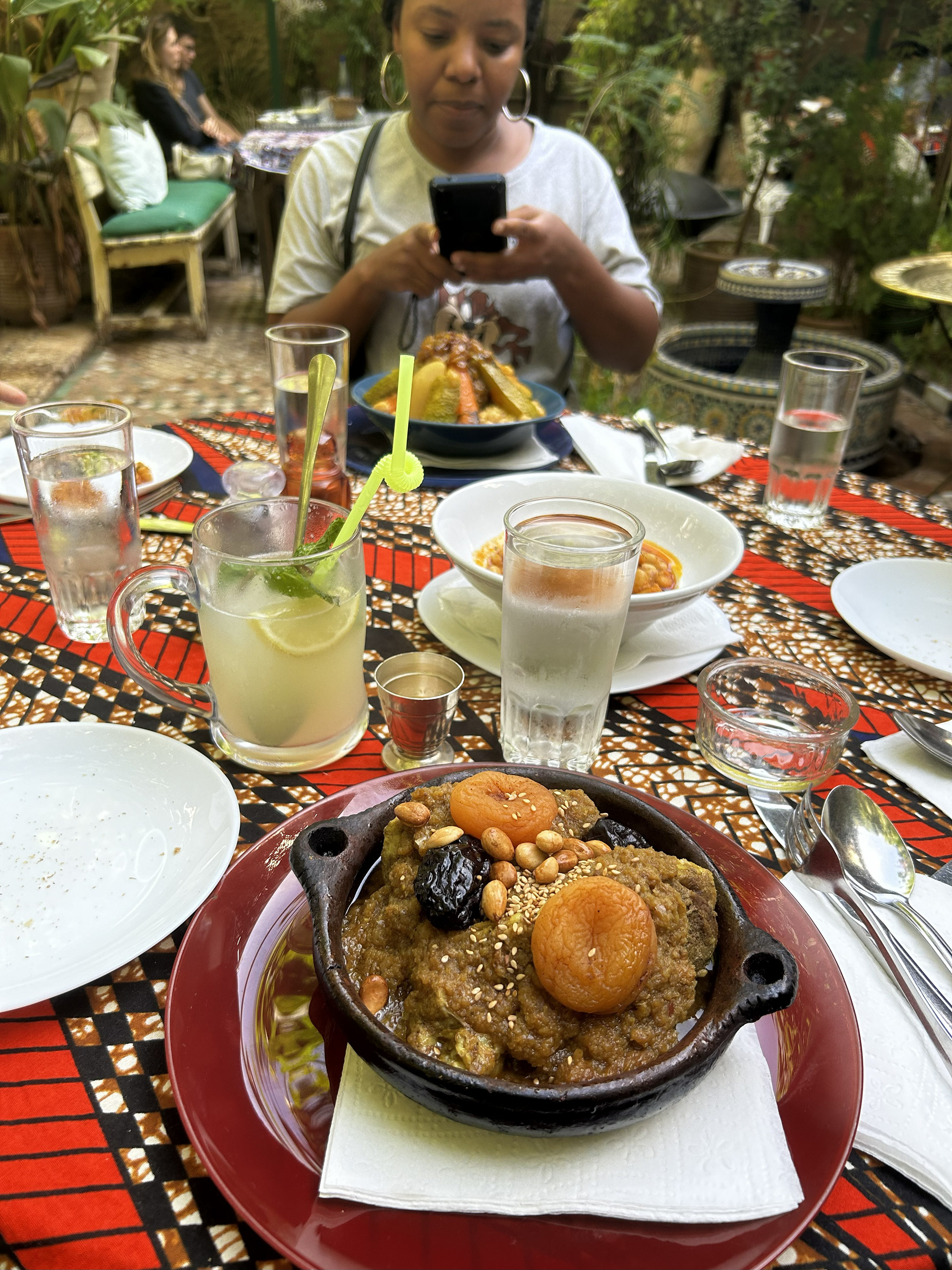
beef tagine with apricots and prunes with a slow-cooked onion sauce
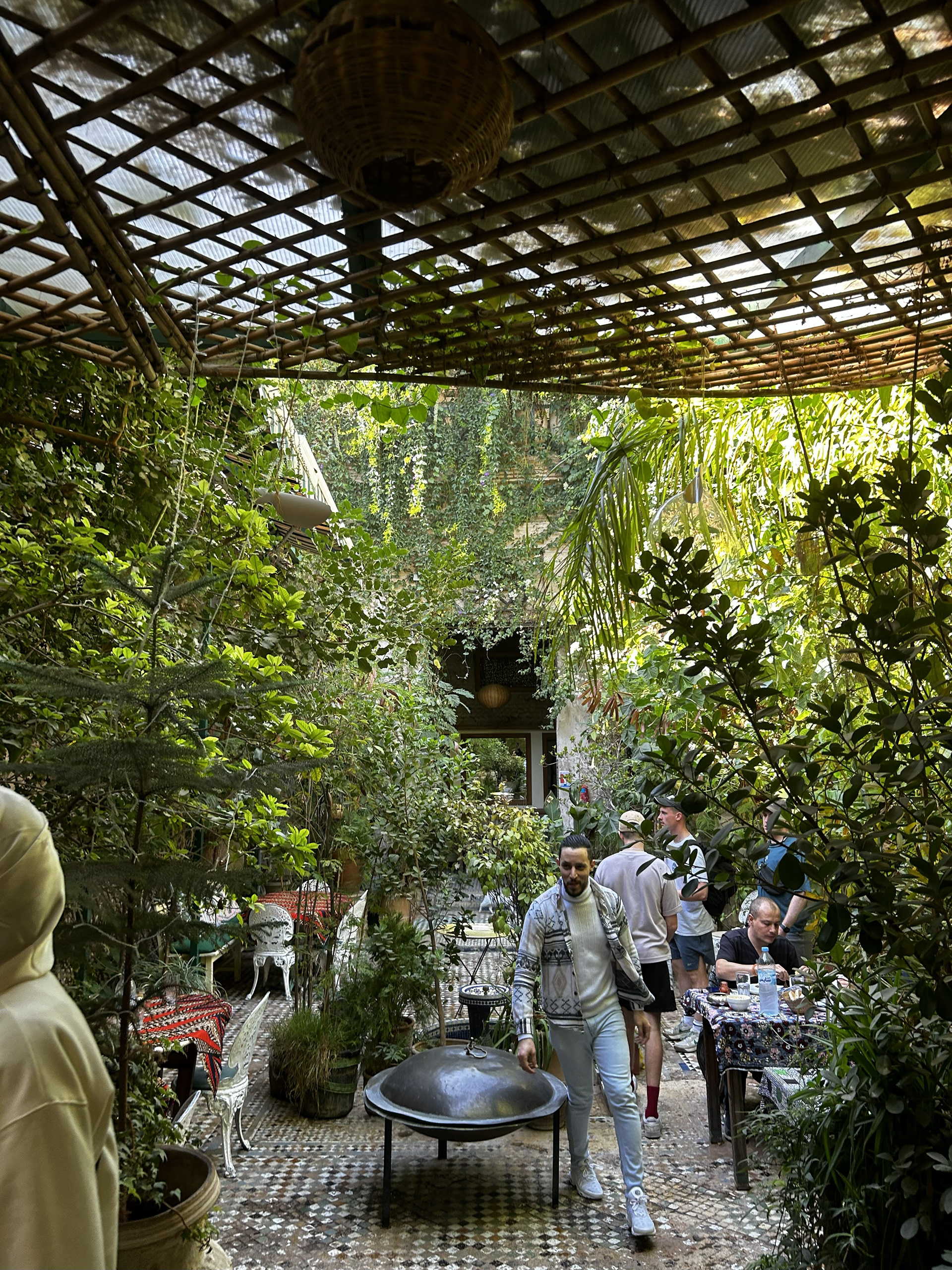
a beautiful garden space with tables set amongst the flora
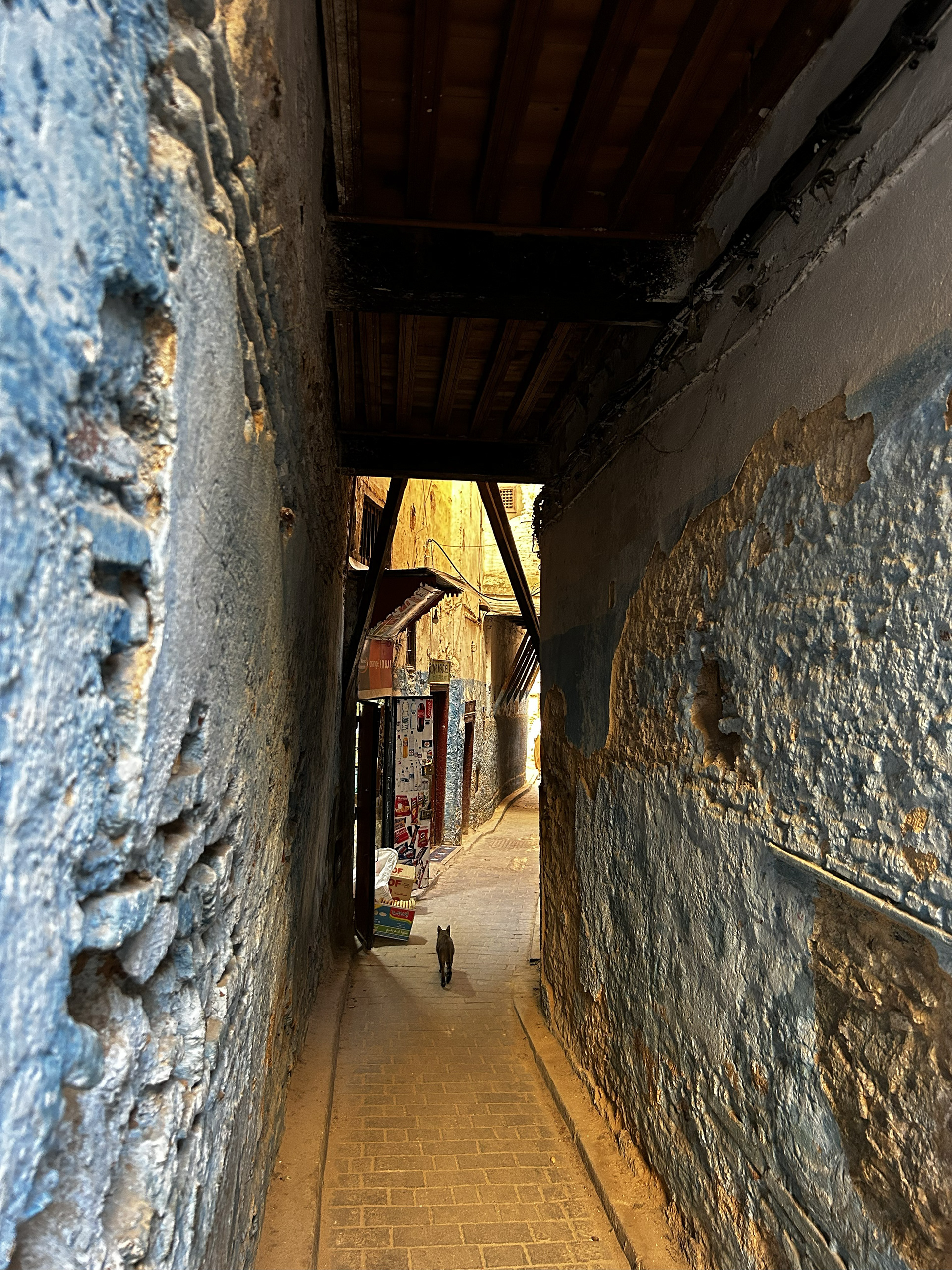
the ubiquitous cat - you can't go far without finding one
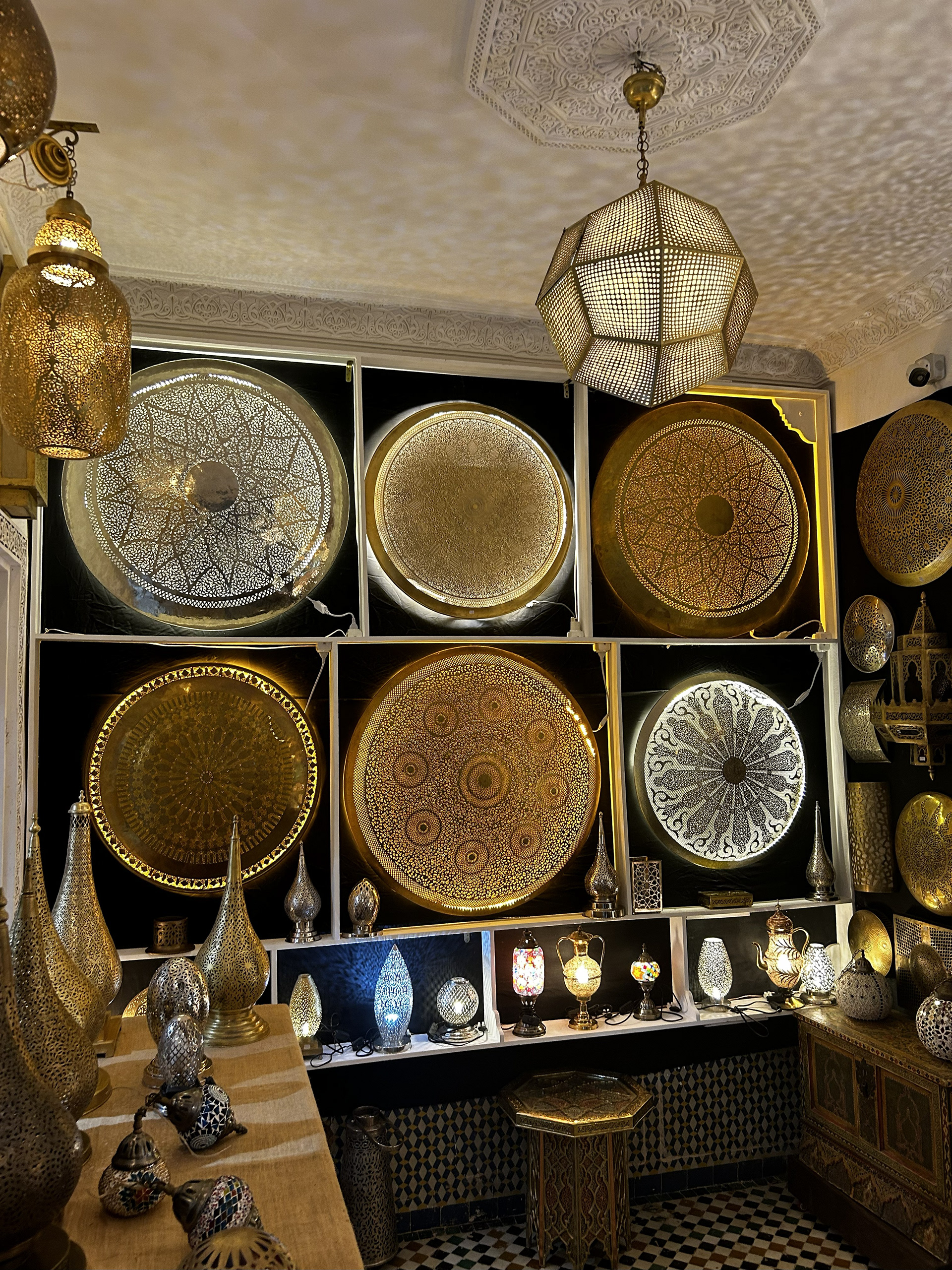
hand stamped metal lanterns
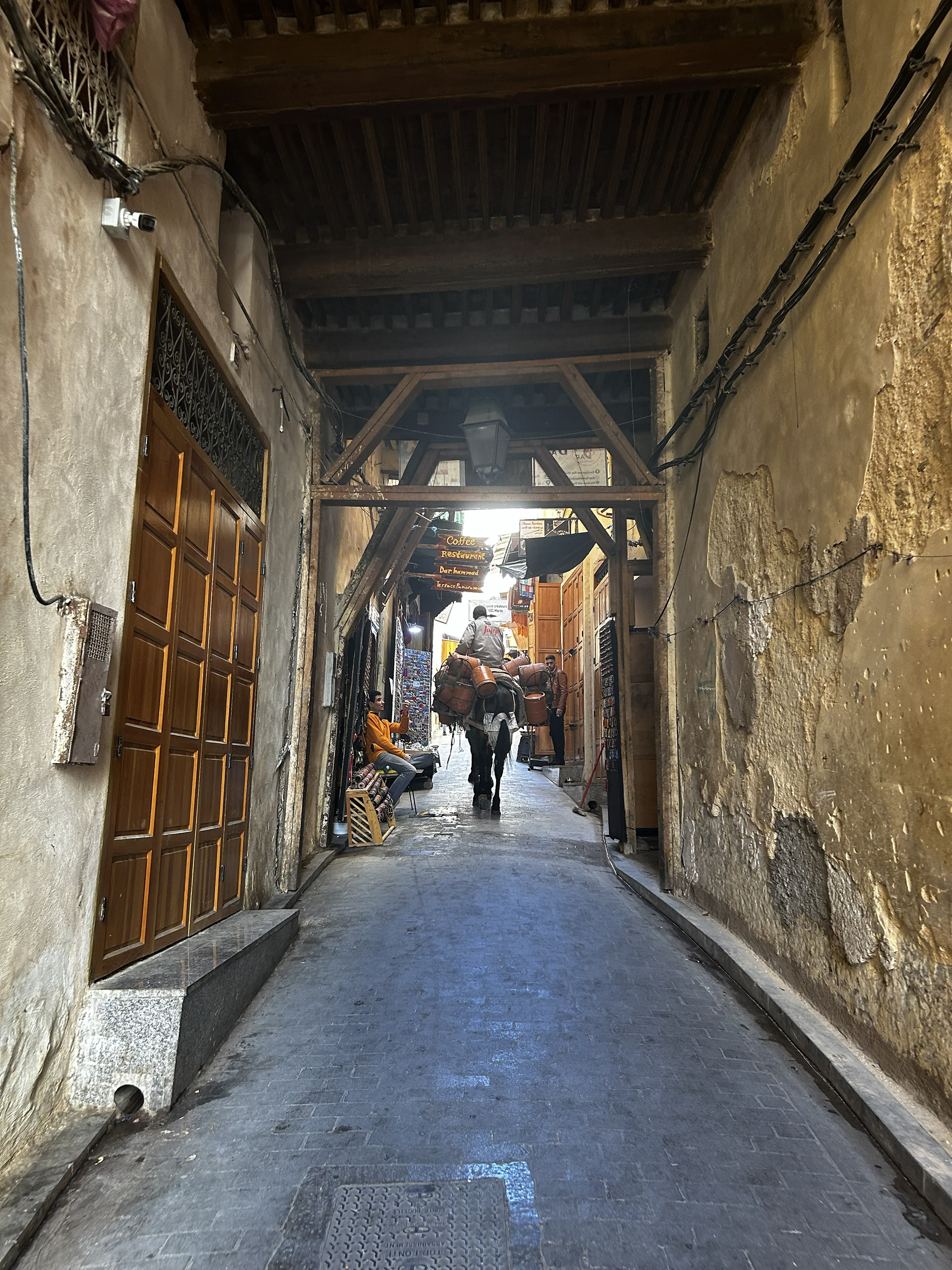
"zeet zeet" is the cry of traders carrying wares on mules through the narrow streets
Day 2: Walking Tour of Medina
We met up for breakfast on Saturday morning around 8:00 AM.
By 10:00 AM, we were greeted at the Riad by our tour guide, a wonderful man who has been giving tours of the medina for over 20 years. Even with my basic French, I was able to understand most of the tour.
One of our most notable stops was the Chouara Tannery.
Local tradition generally holds that the Chouara Tannery, as well as the Sidi Moussa Tannery southwest of the Zawiya of Moulay Idris, dates from the city's foundation by Idris II (beginning of the 9th century). 296 Historical texts make reference to the Sidi Moussa Tannery more definitely in the early 12th century, but the age of the Chouara Tannery is more unclear, and the earlier history of either tannery is not firmly established. Modern historians have said that there is no clear evidence for where the city's earliest tanneries were located, but that tanneries did likely exist soon after the city's foundation and would likely have been located near the main river or near other natural water sources, just as they are today.
Historical sources show that the tanneries were a major industry even in the city's early history and tied to a large part of its economy. The products of the city's tanneries were also prestigious enough that they were reportedly exported all the way to Baghdad. Al-Jazna'i claims that the Almohads (late 12th to early 13th century) counted a total of 86 tanning workshops in the city, while a later source claims that there were around a hundred in the Marinid period (late 13th to 15th centuries). The tanneries, including the Chouara Tannery, continued to be expanded or modified on several occasions, even into modern times. In addition to the Chouara and Sidi Moussa Tanneries, the Ain Azliten Tannery, located in the north of the city, was also created at the end of the 18th century.
The most notable feature of Chouara and the other local tanneries is the numerous stone vats filled with different colored dyes and white liquids. Hides of cows, sheep, goats, and camels are processed by first soaking in a series of white liquids – made from various mixtures of cow urine, pigeon feces, quicklime, salt, and water – to clean and soften the tough skins. This process takes two to three days and prepares the hides to readily absorb the dyes. They are then soaked in the dyeing solutions, which use natural colorants such as poppy for red, indigo for blue, and henna for orange. After the dyeing, they are dried in the sun. The resulting leather is then sold to other craftsmen, who use it to produce Morocco's famed leather goods, such as bags, coats, shoes, and slippers, prized for their high quality. The entire leather production process comprises manual labor only and involves no modern machinery, and has retained methods unchanged since medieval times. (Wikipedia)
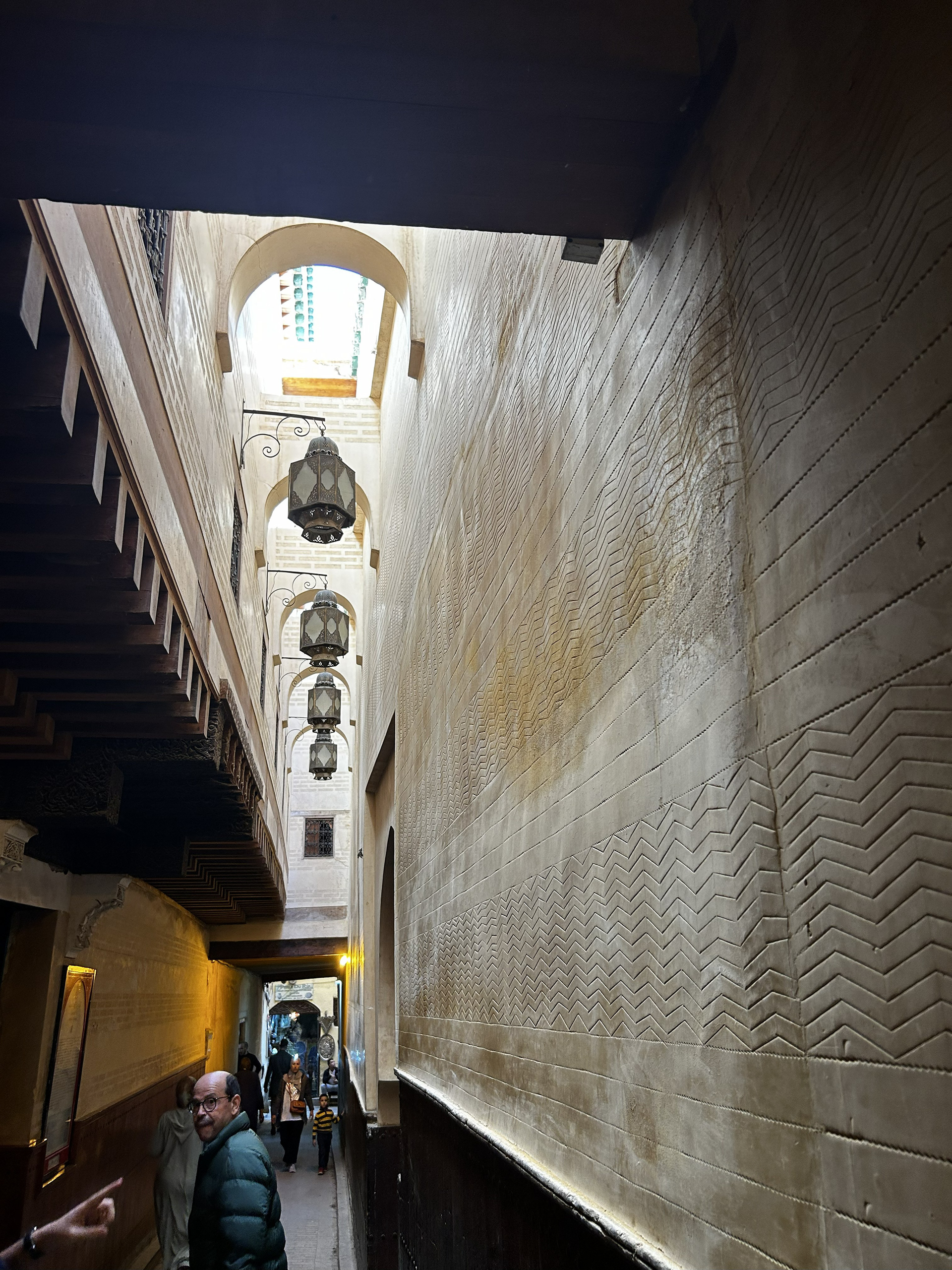
Metal Lanterns - common all across Morocco
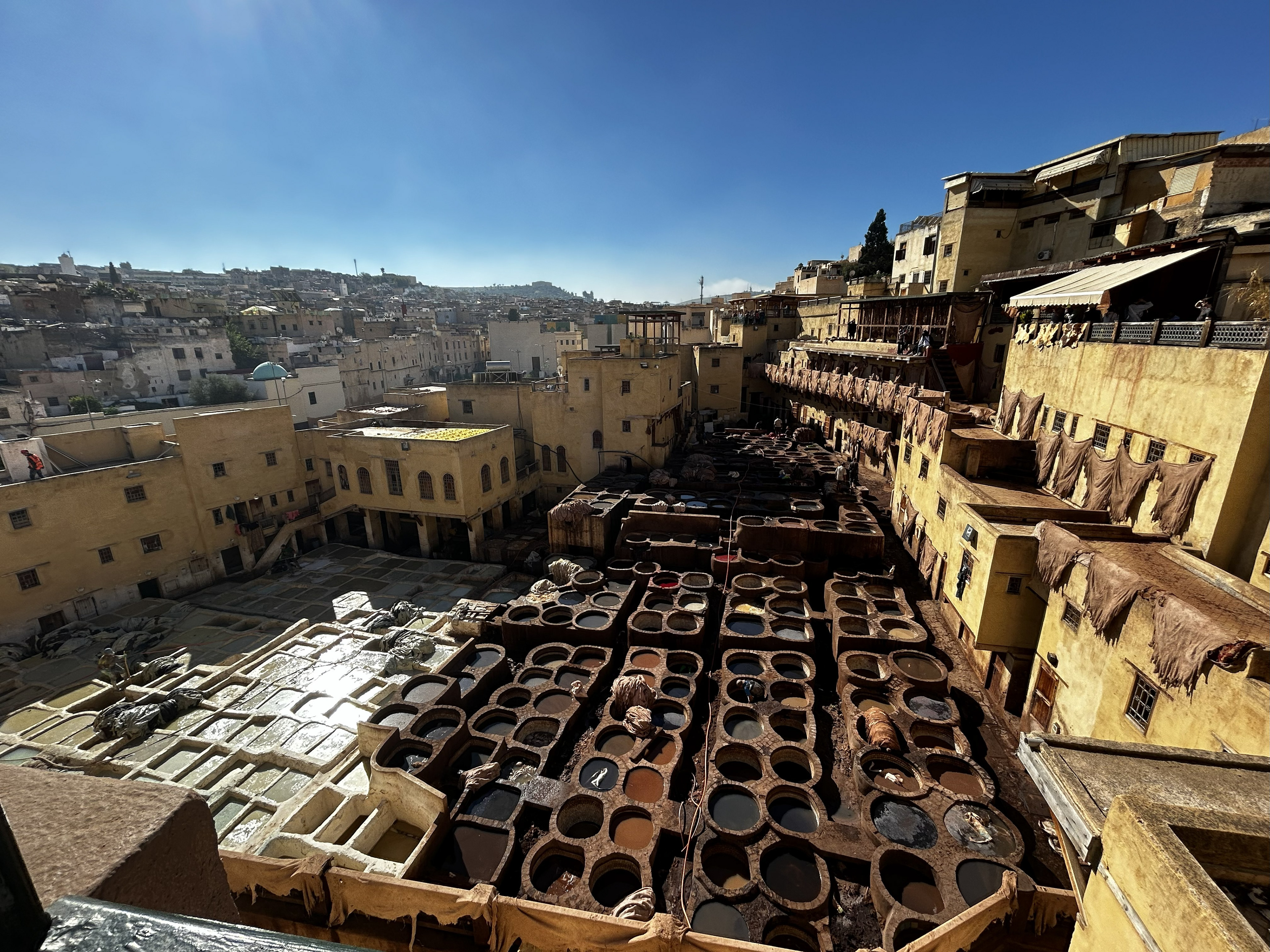
Chouara Tannery
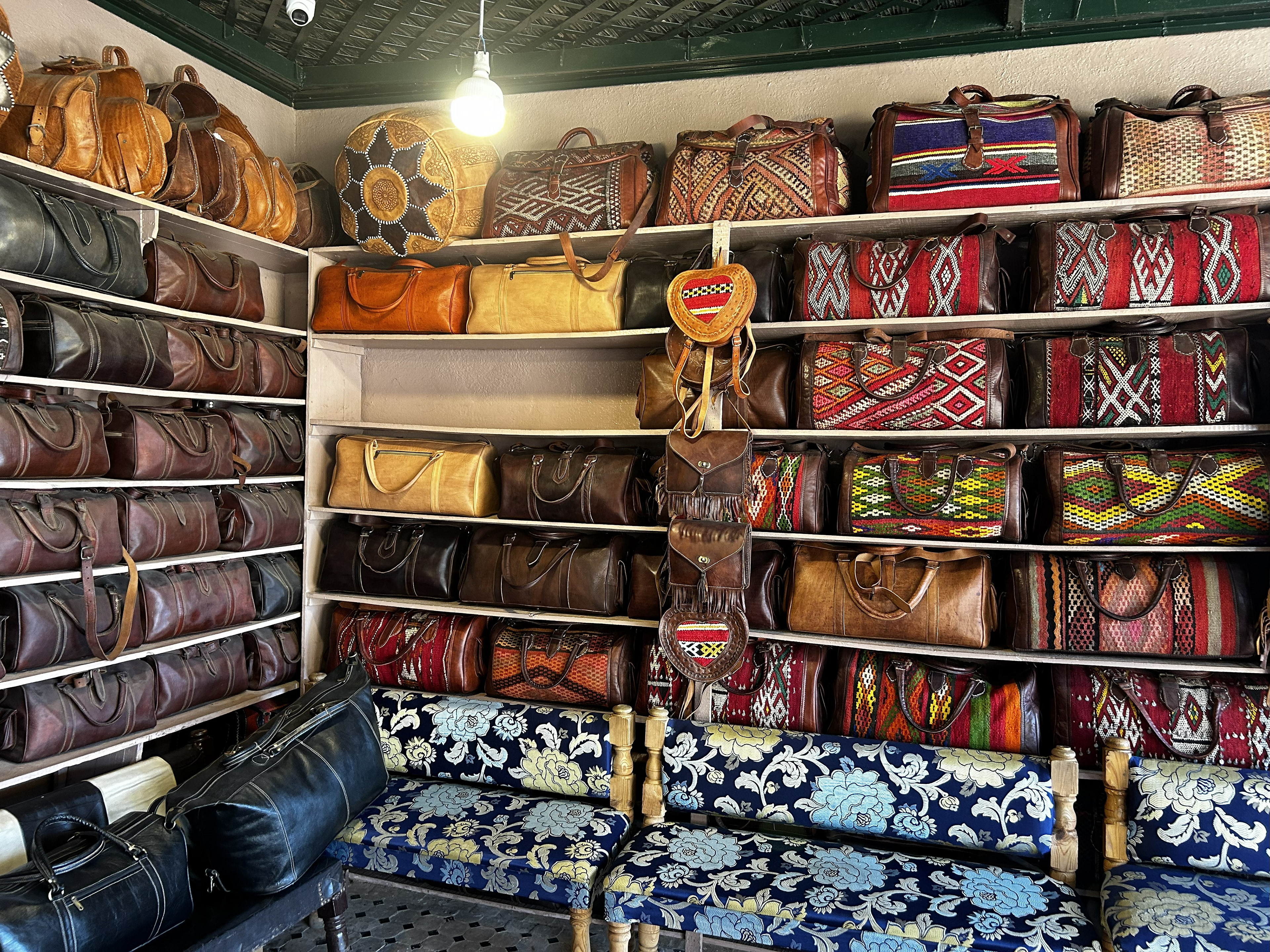
Leather and cloth bags
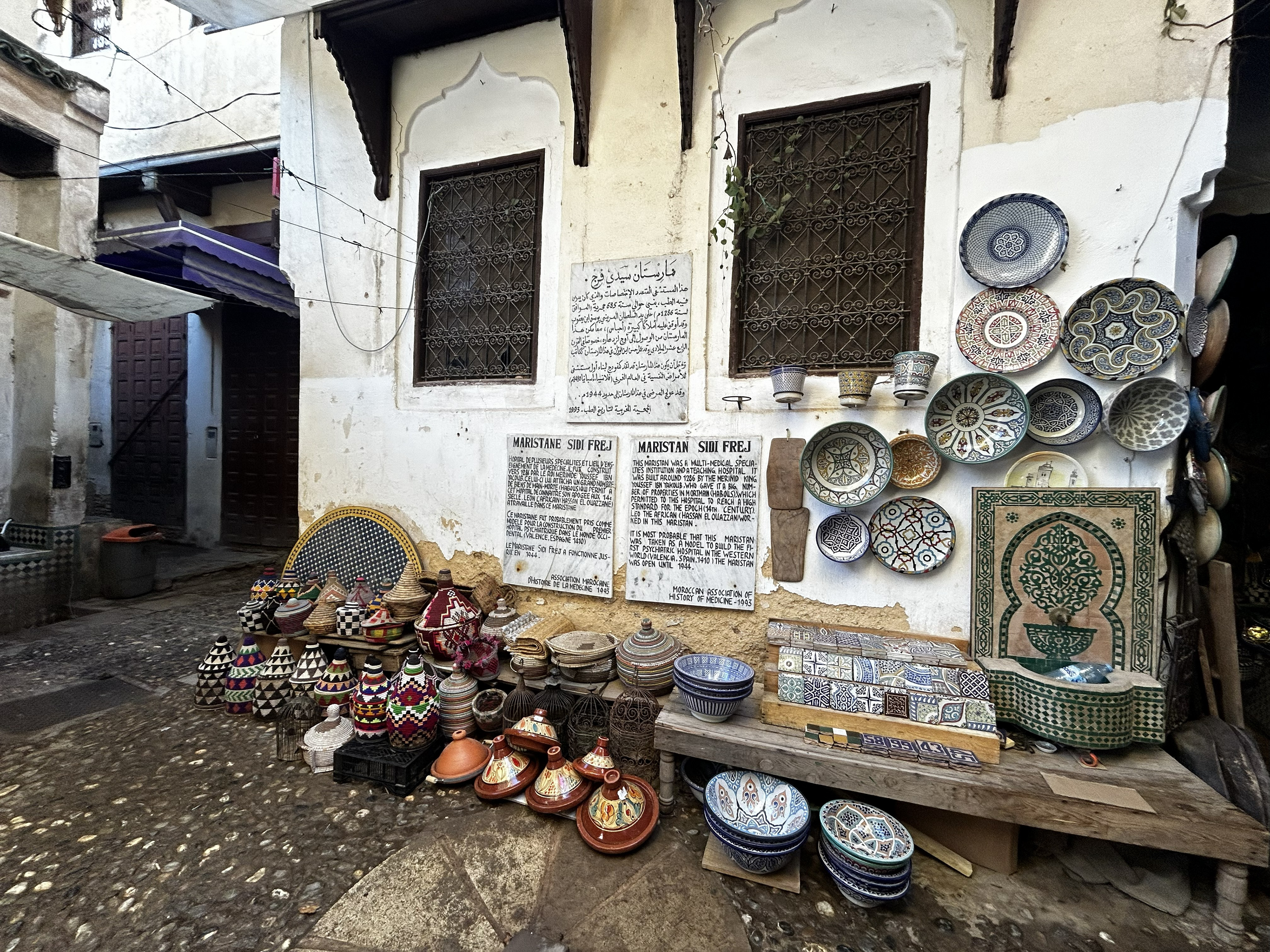
Maristan Sidi Frej - hospital
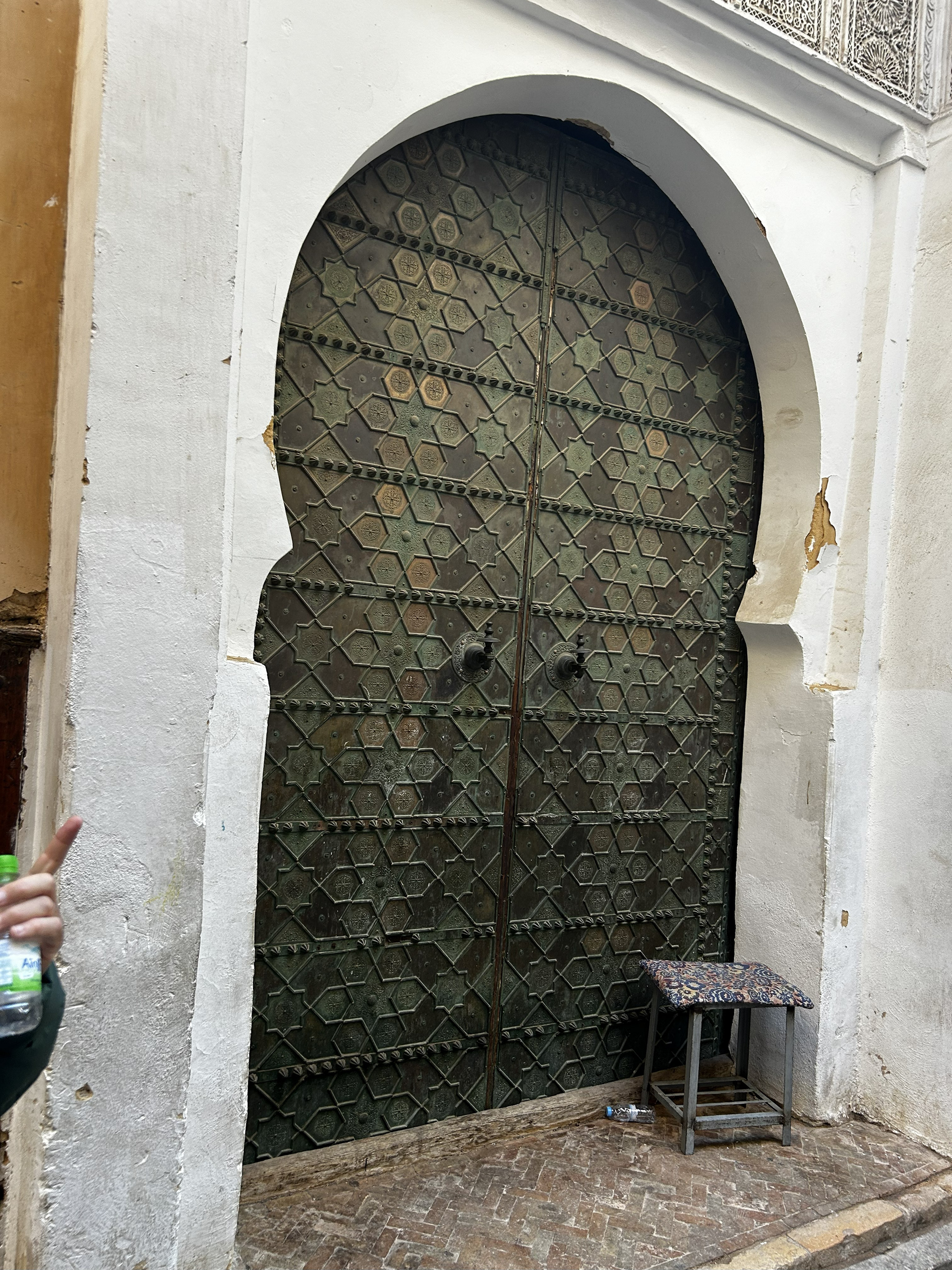
Metal and Cedar doors of Morocco
We also stopped at the Al Attarine Mdrasa.
The sultans of the Marinid Dynasty, which ruled Morocco from the 13th to the 15th century, were known as passionate patrons of madrasas, centers of religious learning that helped them promote Sunni teachings during their various reigns. The al-Attarine Madrasa was built by the Marandi sultan Abu Sa'id Uthman II between 1323 and 1325. Before completing al-Attarine, Abu Sa'id, known as a pious ruler who preferred peace to war, had already commissioned two important madrasas in Fez, the Fez al-Jedid and Es-Sahrij.
The al-Attarine Madrasa, whose name means “the madrasa of the perfumers,” takes its name from its location at the entrance to a historic spice and perfume market in Fez. But unlike the busy souk that it borders, the al-Attarine Madrasa is a place of unusual calm.
At the heart of the madrasa is an exquisitely ornamented rectangular courtyard that opens onto a square prayer hall. Around these are the student accommodations, simple rooms that contrast greatly with the arcaded courtyard and prayer hall, which provide the main attraction for visiting tourists.
The courtyard is one of the finest examples of Marinid craftsmanship in Fez. The walls are decorated with carved stucco ornamentation, sections of Arabic calligraphy, and intricate zellige mosaic tiles forming colorful geometric patterns. Marble columns rise from the floor, holding elaborately carved wooden arches and cornices, the delicacy and detail of which almost defies belief. The floor is also covered in tiles, albeit far simpler than those decorating the walls, whose geometric patterns are considered too sacred to be stepped upon. (Dunnel, Atlas Obscura)
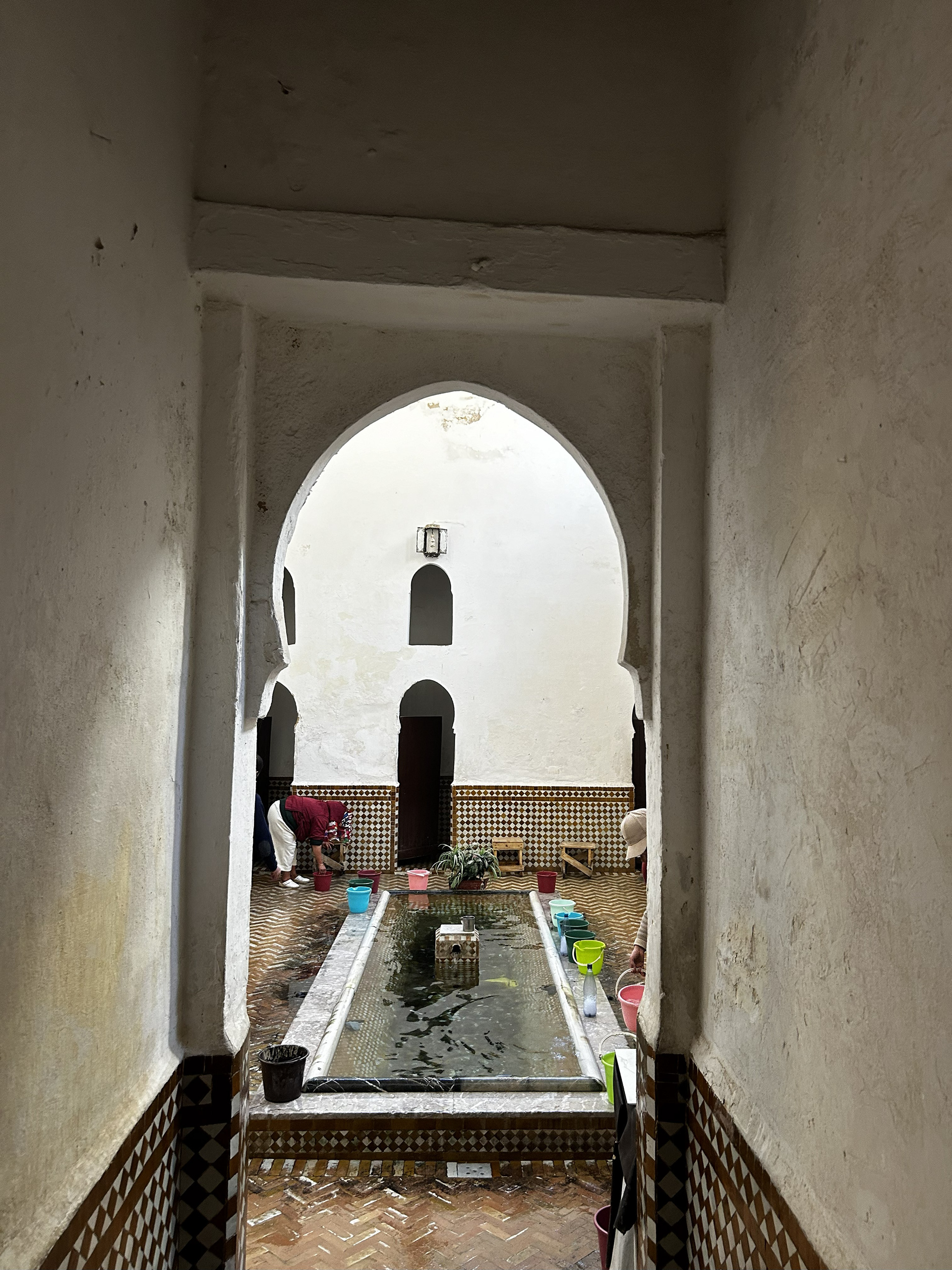
washing chamber of a mosque
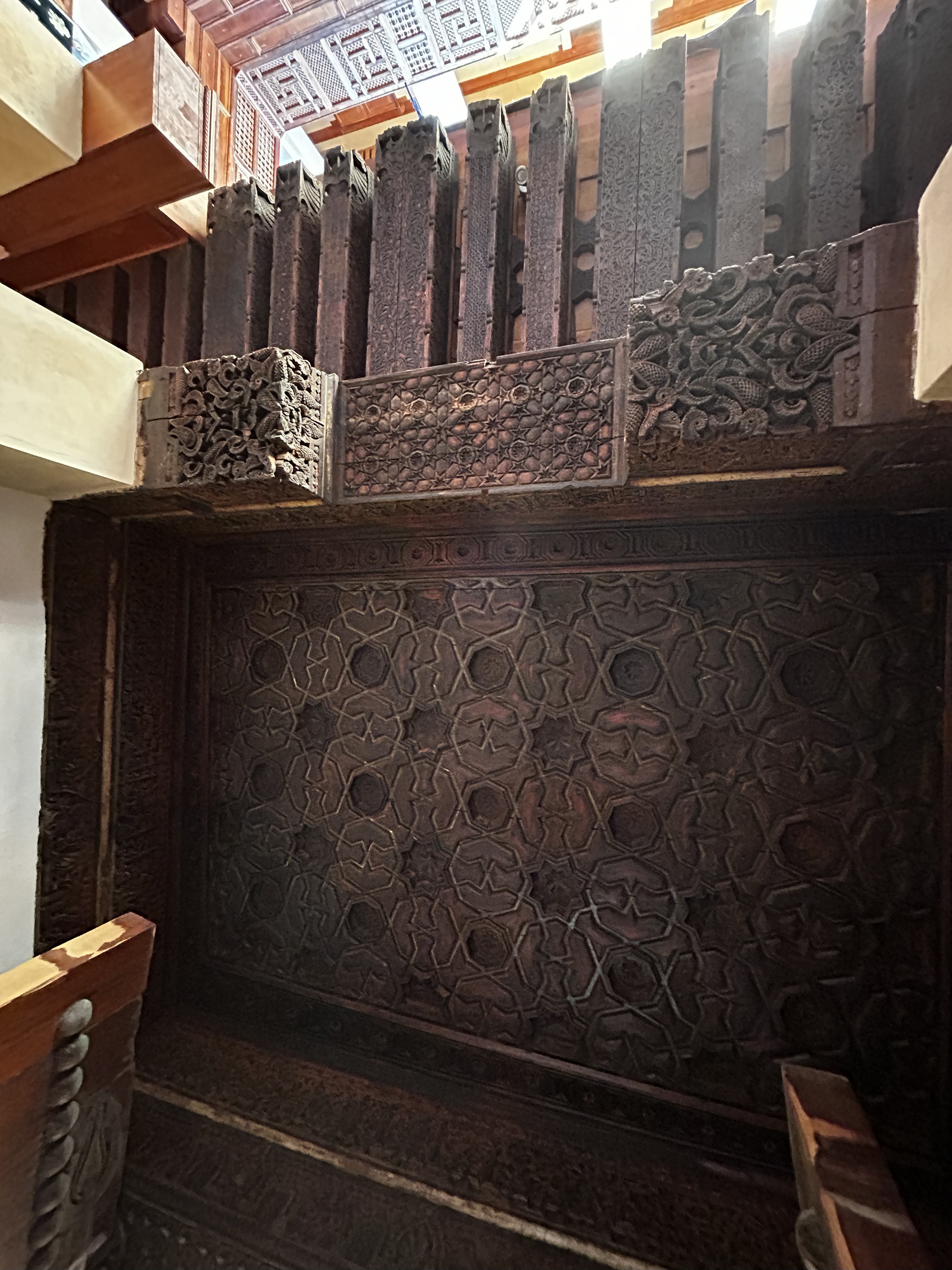
Atlas Mountain Cedar wood ceiling
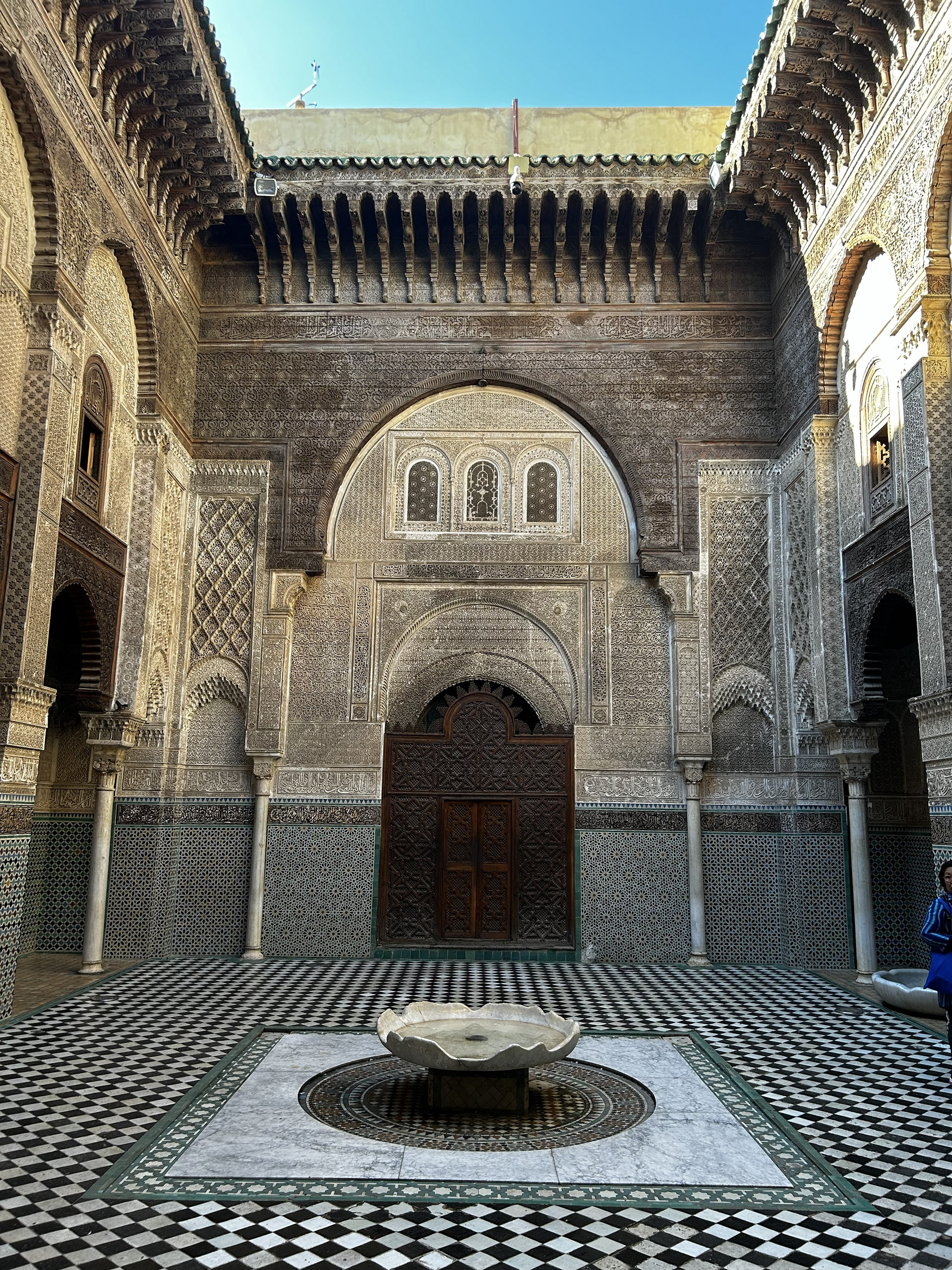
Al Attarine Mdrasa
The rest of our tour featured major stops and iconic scenes through the Fes Medina, as well as interesting architecture. Our guide also worked in different sectors and souks that had a concentration of shops of souvenirs we wanted - I had my eyes on leather goods, a pouf (Moroccan cloth stool), shoes, clothing, and silverware.
We even got to wander into a wedding hall that was being cleaned for an event!
With that, we finished our walking tour around 5:00 PM and headed back to our riad for dinner.
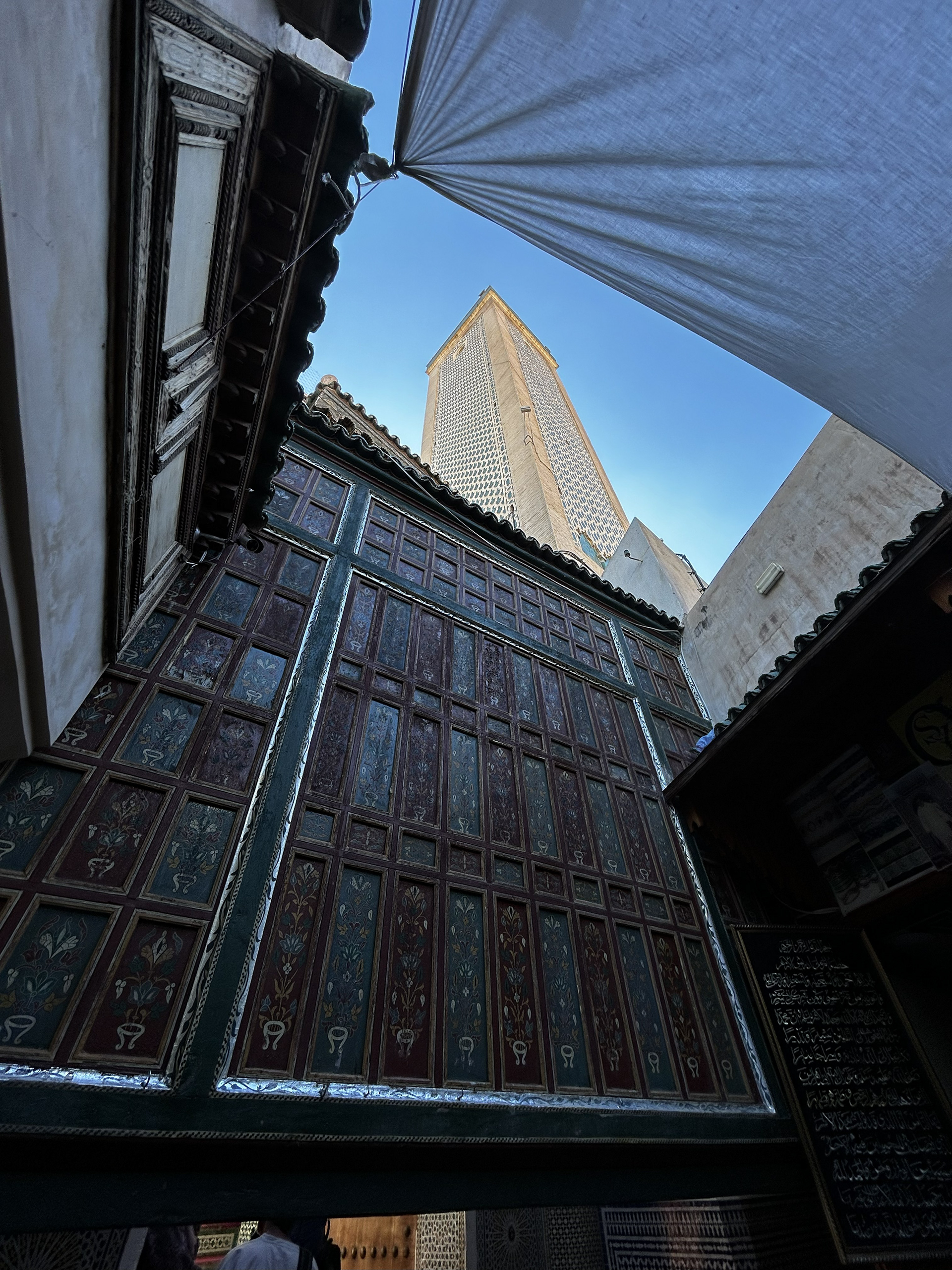
Towering minnaret of a mosque
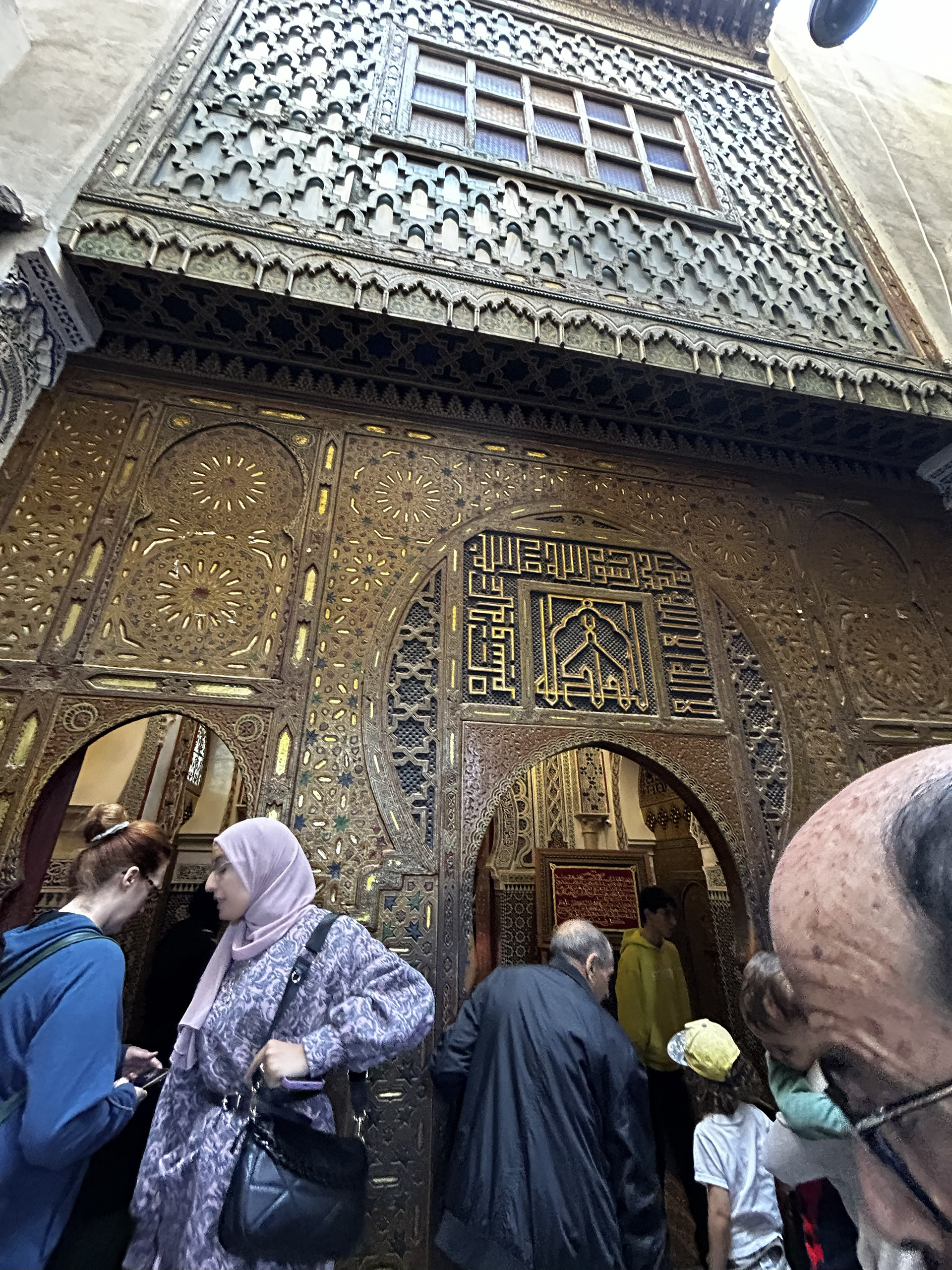
mosque entrance
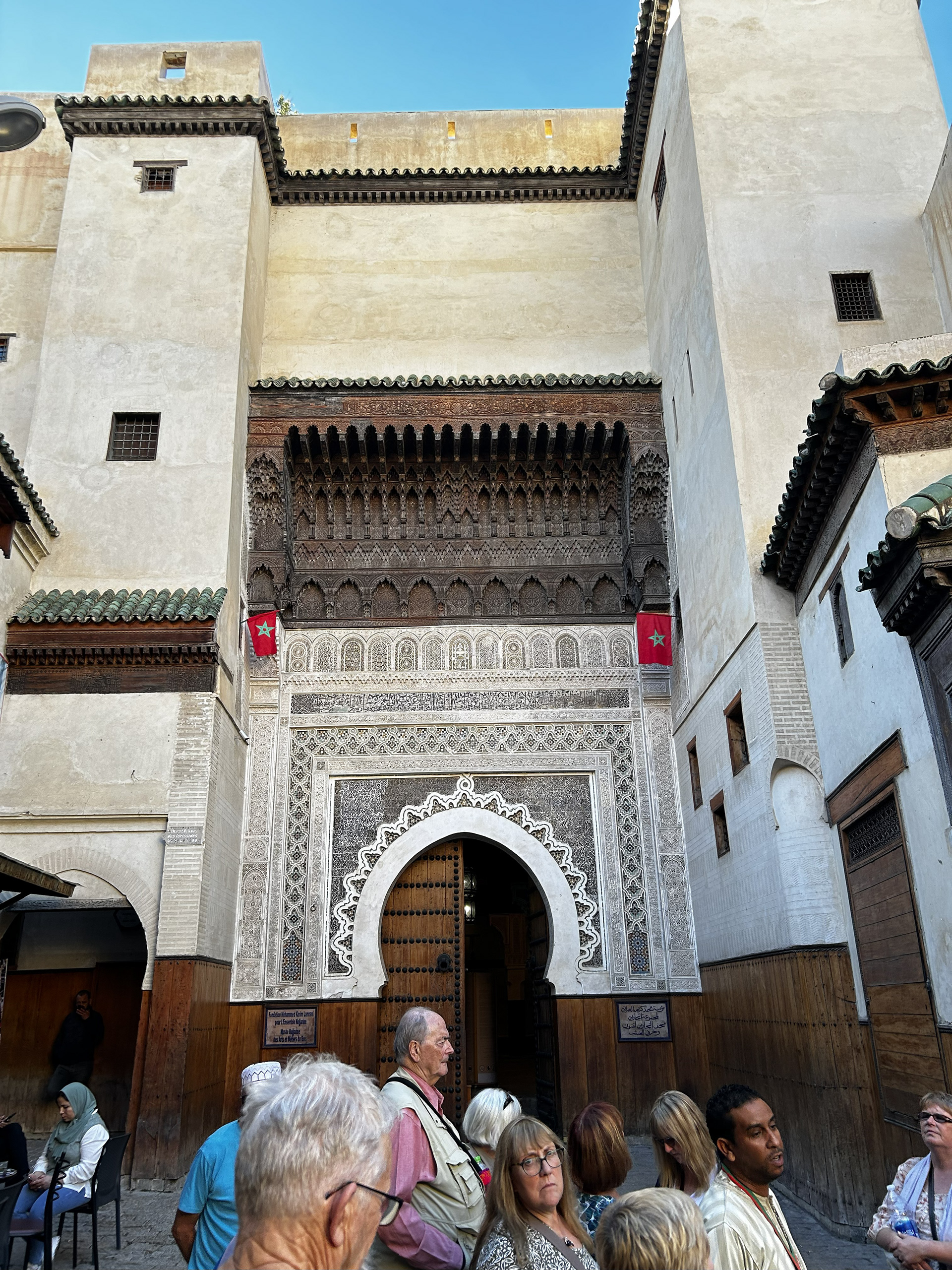
Musee Nejjarine
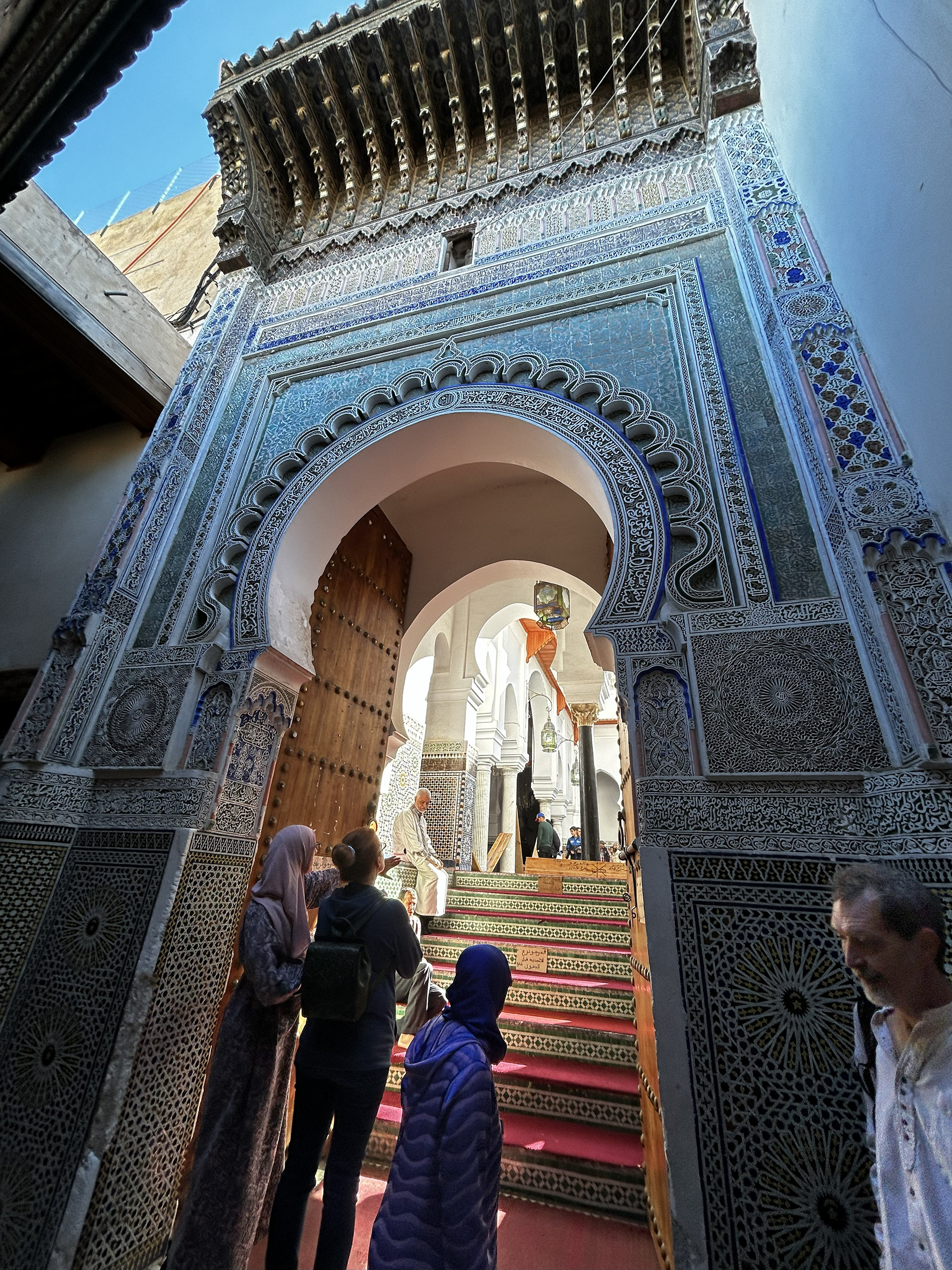
Mausoleum of Moulay Idriss II
Day 3: Return to Casablanca
We checked out of our Riad around 10:00 AM and headed to a pottery co-op just outside of the city.
After that, we headed to Meknes and stopped at a winery and hotel for lunch, before heading back to Casablanca by mid-afternoon.
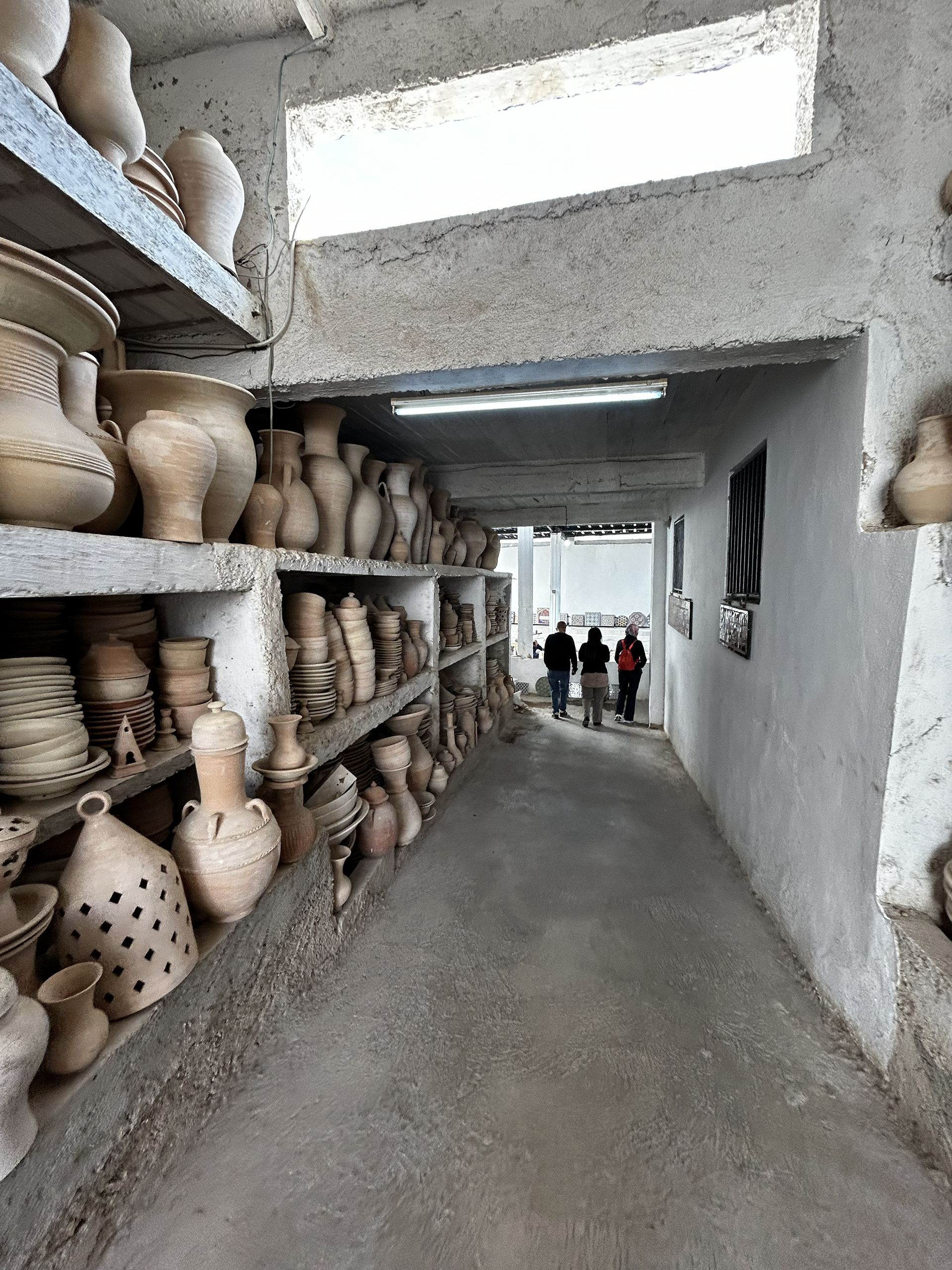
pottery co-op
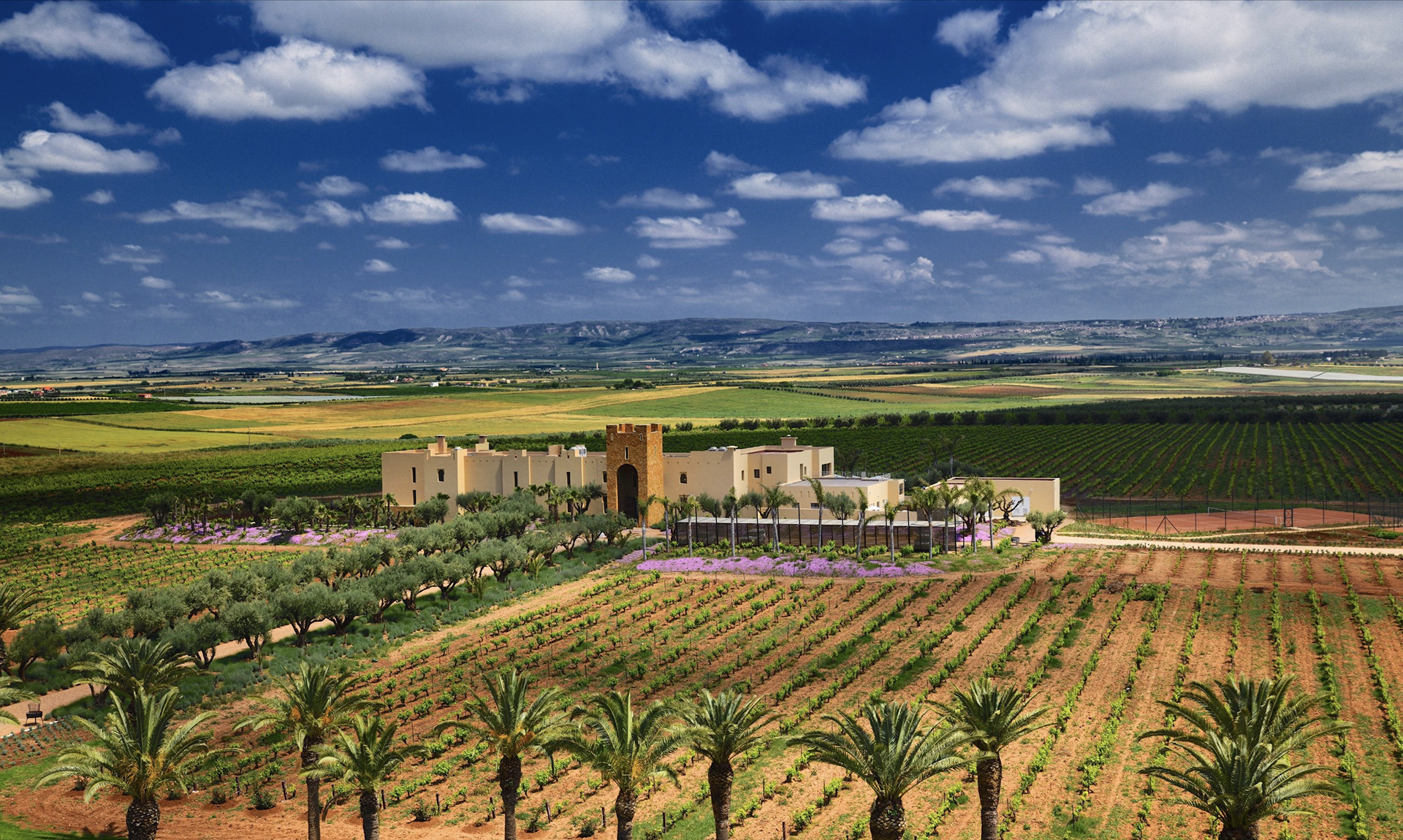
Meknes